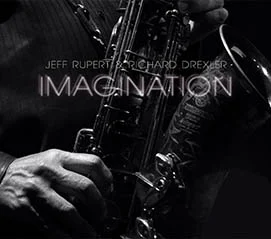
The release of the album Imagination marks a significant milestone in the collaborative history of tenor saxophonist Jeff Rupert and pianist Richard Drexler, offering a profound exploration of the jazz duo format. Recorded live to capture the raw, immediate synergy between the two performers, the album serves as a testament to the enduring power of melodic improvisation and the intimate dialogue possible within a stripped-down musical setting. By eschewing a traditional rhythm section of bass and drums, Rupert and Drexler place the entirety of the harmonic and rhythmic responsibility upon their own shoulders, resulting in a performance characterized by nimbleness, transparency, and a deeply felt creative interaction.
The Evolution of a Musical Partnership
The collaboration between Jeff Rupert and Richard Drexler is not a recent development but rather the culmination of years of mutual respect and shared academic and professional environments. Jeff Rupert, a Yamaha Performing Artist and the Director of Jazz Studies at the University of Central Florida (UCF), has long been a fixture in the jazz world, known for his work with Sam Rivers, Maynard Ferguson, and Mel Tormé. His playing style, often described as having "rounded edges" and a "silken" quality, draws direct lineage from the "Cool Jazz" school of the 1950s, specifically the lyrical approaches of Lester Young and Stan Getz.
Richard Drexler, a versatile multi-instrumentalist who is equally proficient on both piano and double bass, provides the perfect foil for Rupert’s tenor. Drexler’s career includes stints with icons such as Woody Herman and the Jeff Berlin Trio. On Imagination, his role as a pianist is foundational yet highly decorative. He manages the difficult task of providing a steady rhythmic pulse while simultaneously engaging in complex melodic counterpoint. The relationship between the two is characterized by an immediate interplay, where the "passing of the torch" between soloist and accompanist happens with seamless, almost invisible precision.
Analysis of the Live Recording and Track Selection
Imagination is structured as a collection of eight tracks that balance well-known American Songbook standards with bossa nova and original compositions. The decision to record the album live was intentional, aimed at preserving the spontaneity of the moment—a core tenet of the jazz tradition. In a live setting, the "magical dialogue" mentioned by critics is not just a stylistic choice but a necessity for maintaining the energy and flow of the performance.
Track-by-Track Chronology
- Without a Song: Originally composed by Vincent Youmans with lyrics by Billy Rose and Edward Eliscu in 1929, this track opens the album with a display of technical mastery. Rupert’s arpeggios are ebullient, setting a high standard for the technical proficiency that follows.
- I Can’t Help It: This track showcases the duo’s ability to take a familiar melody and infuse it with new life through subtle harmonic shifts.
- Snowfall: Composed by Claude Thornhill in 1941, this piece is a highlight of the album. Rupert’s playing is particularly exquisite here, utilizing a flowing tempo that allows for delicate, hushed notes. The atmosphere created is one of a "rarefied realm," where Drexler’s piano provides a shimmering backdrop that mimics the quiet descent of winter precipitation.
- Strange Meadowlark: A Dave Brubeck classic, this selection highlights the duo’s ability to navigate complex time signatures and sophisticated melodic structures while maintaining a "silken" accessibility.
- Imagination: The title track, a 1940 standard by Jimmy Van Heusen and Johnny Burke, serves as the emotional core of the record. It emphasizes the "hushed tones" that have become a hallmark of Rupert’s style.
- A Felicidade: Written by Antônio Carlos Jobim for the 1959 film Orfeu Negro, this track brings a rhythmic "attack" to the album. Despite the lack of percussion, the duo manages to convey the driving energy of the samba, demonstrating their internal rhythmic cohesion.
- My Mistress’ Eyes: A Jeff Rupert original inspired by Shakespeare’s Sonnet 130. This track bridges the gap between classical literature and modern jazz, showcasing Rupert’s skill as a composer who values melodic integrity and thematic development.
- Soul Eyes: The album concludes with Mal Waldron’s 1957 masterpiece. Known for its deep emotional resonance and complex chord changes, "Soul Eyes" allows Rupert and Drexler to engage in their most profound dialogue, ending the album on a note of pure subtlety.
Technical Mastery and Stylistic Lineage
The "nimbleness of sound" achieved on Imagination is the result of specific technical choices made by both artists. Rupert’s tenor saxophone work is characterized by gilded glissandi and a vibrato that is used sparingly for maximum emotional impact. His approach mirrors that of a vocalist, focusing on the "breath" of the phrase. This is a direct nod to the "Prez" (Lester Young) style, which prioritized melody and a light, airy tone over the aggressive, "hot" jazz styles of the era.
Drexler’s pianism is equally noteworthy for its lack of clutter. In a duo setting, there is a temptation for the pianist to overplay to fill the silence. Drexler, however, understands the value of space. His "impulse to adorn simple melodies" is balanced by a disciplined sense of timing. The dynamic range between the two instruments is meticulously managed; when the saxophone moves into the spotlight, the piano recedes into the shadows, and vice versa. This "switching of roles" creates a sense of narrative movement throughout the album.
Educational and Industry Implications
As both Rupert and Drexler are deeply involved in jazz education, Imagination serves as a practical textbook for students of the genre. It demonstrates how to maintain interest in a performance using only two voices. In the modern jazz industry, where high-production value and electronic integration are increasingly common, this album stands as a defense of acoustic purity and the fundamental importance of the "human element" in music.
Industry analysts suggest that live duo recordings like Imagination are gaining traction as they offer a more authentic listening experience for audiophiles. The "invisible passing of the torch" mentioned in the album’s review is a skill that takes decades to master, and its presence here highlights the maturity of the performers. The album is expected to find a significant audience among those who appreciate the "Cool Jazz" aesthetic and the technical nuances of the tenor saxophone.
Broader Context: The Resurgence of the Jazz Duo
The jazz duo format has a storied history, from the early piano-trumpet pairings of Louis Armstrong and Earl Hines to the legendary collaborations between Bill Evans and Jim Hall. Imagination enters this lineage at a time when intimate, small-group jazz is seeing a resurgence in both domestic and international markets. This shift is partly due to the economic realities of touring with larger ensembles, but also reflects a growing listener preference for music that feels personal and unmediated.
The recording of Imagination captures what many call a "one-day classic." The use of live recording techniques ensures that the listener hears the room’s natural acoustics, further enhancing the "breathless excitement" of the performance. By focusing on "curved edges" and "harmonically pleasing presentations," Rupert and Drexler have created a work that is "easy on the ears" without sacrificing the intellectual rigors of high-level improvisation.
Final Assessment of the Artistic Contribution
The achievement of Imagination lies in its ability to be simultaneously sophisticated and accessible. The "vitality and brilliance of each invention" is presented in a way that respects the source material while pushing the boundaries of what a duo can achieve. The rhythmic marking is strong throughout, providing a sense of propulsion that compensates for the absence of a drummer.
By drawing from a diverse repertoire—ranging from Shakespearean-inspired originals to Brazilian bossa nova and classic American standards—Jeff Rupert and Richard Drexler have produced a cohesive statement on the state of contemporary jazz. Their "singular voices" are heard clearly, yet they work in such harmony that they create a "group sound" larger than the sum of its parts. As the jazz world continues to evolve, Imagination will likely be cited as a premier example of how technical mastery, respect for tradition, and spontaneous creativity can converge to produce a work of lasting significance.