Preserving the Pulse of the Hill Country: The Musical Legacy of North Mississippi and the Preservation Efforts of David Evans

The North Mississippi Hill Country blues is not merely a genre of music; it is a living, breathing cultural institution that has survived decades of socioeconomic change, geographic isolation, and the shifting winds of the commercial music industry. At the center of documenting this tradition is ethnomusicologist David Evans, whose decades of fieldwork have provided an essential archive of artists like Junior Kimbrough, Robert Belfour, and Napoleon Strickland. As the genre transitions from community-centered house parties to international festival stages, the tension between preservation and commercialization continues to define the legacy of these legendary musicians.
The Architect of a Sound: Junior Kimbrough
Junior Kimbrough remains the quintessential figure of the Hill Country aesthetic. While he first entered the commercial sphere with the 1968 single "Tramp" on the Philwood label, it was not until 1979 that he was fully integrated into the broader blues documentation movement. Evans, introduced to Kimbrough by graduate student Sylvester Oliver, recalls the visceral impact of witnessing a Kimbrough set in a rural Mississippi juke joint. Unlike the standard 12-bar blues prevalent in urban centers, Kimbrough’s work was characterized by hypnotic, repetitive riffs and unconventional song structures designed specifically for the dance floor.
Kimbrough’s originality was his defining trait. According to Evans, over 90% of his repertoire consisted of original compositions, a rarity even among full-time professionals. While Kimbrough eventually gained international notoriety and toured abroad, his heart remained in the North Mississippi hills. Evans notes that Kimbrough was fundamentally a homebody, possessing a reserved demeanor that contrasted sharply with the more boisterous public persona of his contemporary, R.L. Burnside. The "Junior Kimbrough sound"—built on deep-groove, riff-based compositions—stands as a masterclass in regional musical evolution.
The Harmonic Innovation of Robert Belfour
Robert Belfour represented a different facet of the Hill Country tradition, one defined by technical ingenuity born from necessity. Evans first encountered Belfour in the late 1980s, performing for passersby at Memphis’s Handy Park. Belfour’s equipment was rudimentary—a heavily distorted amplifier that processed both his guitar and his vocals. To the uninitiated, the sound was abrasive; to Evans, it was the raw, unfiltered essence of the blues.
Belfour’s significance lies in his unique approach to the instrument. By altering his tuning—specifically raising the G string to create a permanent "blue note"—he achieved a tonal quality that allowed for sophisticated bent notes and microtonal variations within the key of E. Influenced by the likes of John Lee Hooker and Lightnin’ Hopkins, Belfour’s music relied on pentatonic scales that felt both ancient and immediate. Though it took until 1994 for Evans to produce a dedicated recording for the German label Hot Fox, Belfour’s subsequent tours across Europe cemented his status as a vital bridge between traditional folk blues and the modern era.
The Rhythmic Power of Napoleon Strickland
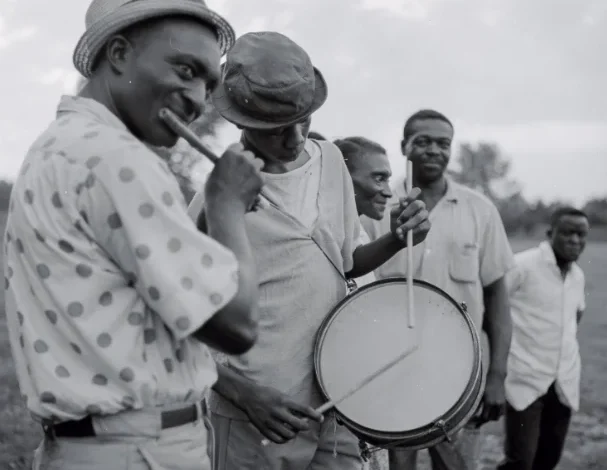
If Kimbrough provided the groove and Belfour the technique, Napoleon Strickland provided the raw, percussive power of the region. A multi-instrumentalist proficient on guitar, harmonica, fife, and the one-string, Strickland was a force of nature. Evans describes him as a musician of immense, albeit inconsistent, power. Strickland’s fife-playing, in particular, was held in high regard, often exceeding the technical prowess of his mentor, Othar Turner. His ability to improvise original songs on the spot made him a singular talent, though his career was marked by the erratic nature of a performer who was as brilliant as he was unpredictable.
From Local Picnics to Global Stages: The Role of Documentation
The 1970s and 1980s represented a critical window in the preservation of Hill Country blues. During this period, the music was still thriving within its native context: weekend picnics and intimate, rural gatherings. Evans played a pivotal role in shifting this music from the private sphere to the public record, working with labels like High Water to document artists such as Jessie Mae Hemphill and R.L. Burnside.
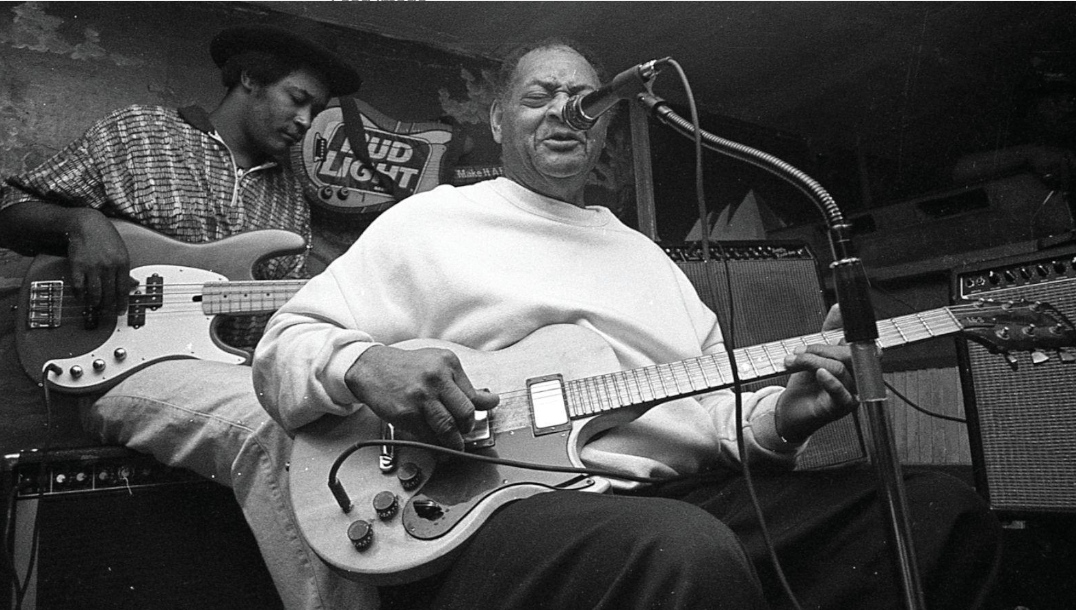
A defining moment for the genre’s exposure occurred in 1982, when Evans coordinated the appearance of a fife-and-drum band on the long-running children’s program Mister Rogers’ Neighborhood. The performance, featuring Othar Turner and Jessie Mae Hemphill, introduced the haunting, ancient sound of North Mississippi to millions of American households. This broadcast served as a catalyst, inspiring a new generation of musicians—including Luther and Cody Dickinson of the North Mississippi Allstars—to explore and carry forward the regional tradition.
The Fat Possum Phenomenon and the Preservation Debate
The entry of Fat Possum Records into the North Mississippi scene in the 1990s marked a departure from the purely ethnographic documentation favored by researchers like Evans. While the label successfully brought Hill Country blues to a younger, rock-oriented demographic, it did so by intentionally curating an "outlaw" image for artists like R.L. Burnside.
Evans views this shift with a critical eye. He argues that the marketing narrative—which painted Burnside as a dangerous, gun-toting man of the shadows—was largely an invention designed to appeal to the sensibilities of a suburban, indie-rock audience. In reality, Evans remembers Burnside as a hardworking family man who balanced his music with manual labor and community responsibilities. While acknowledging the financial success that Fat Possum brought to the musicians, Evans maintains that the label’s tendency to remix and repackage the music sometimes obscured the authentic, community-rooted nature of the original performances.
Challenges of the Modern Era: Sustainability and Generational Shifts
Today, the Hill Country blues scene exists in a state of transition. The picnic culture that once sustained the music as a weekly community occurrence has largely transformed into formalized, ticketed festival events like the Hill Country Picnic and the Cotton Patch Soul Blues Festival. While these events ensure the music is still played, the demographic shift toward a predominantly white, international audience has created a disconnect for younger Black residents of North Mississippi.
The fife-and-drum tradition, once a cornerstone of the local musical landscape, faces the most acute challenges. As the older generation has passed, the mantle has been picked up by artists like Sharde Thomas, but the genre remains largely outside the mainstream of contemporary Black popular music, which is currently dominated by R&B, hip-hop, and gospel. Evans suggests that the lack of uptake among younger generations may stem from this cultural distance, as the music no longer reflects the current sonic environment of the local youth.
The Scholarly and Musical Legacy
David Evans’s own trajectory—from an observer in the 1960s to an active participant and accompanist on the world stage—reflects a life dedicated to the preservation of these sounds. By playing alongside artists like Jessie Mae Hemphill and Hammie Nixon, Evans transitioned from a mere academic to a practitioner, ensuring that the stylistic nuances of the genre were passed down through hands-on collaboration.
His work highlights a broader trend in American folk music: the survival of regional traditions in the face of homogenization. Hill Country blues remains one of the few American music forms that retained its integrity through prolonged isolation from commercial recording centers. While the "blues economy" in places like Clarksdale has turned the genre into a tourist attraction, the underlying authenticity remains linked to the families who kept the music alive for generations.
As we look toward the future, the legacy of Kimbrough, Belfour, and Strickland serves as a reminder of the fragility of cultural traditions. The music was never intended to be an artifact behind glass; it was meant to be played on front porches, at Sunday picnics, and in crowded clubs. Whether it can survive as a living, evolving tradition or will be relegated to the status of a historical relic remains the central question for the next generation of North Mississippi musicians. For now, the work of archivists like Evans ensures that the foundational riffs and rhythms of the Hill Country will continue to resonate, providing a vital link to a musical heritage that defines the soul of the American South.