Slayer Halts Los Angeles Concert Mid-Set to Reprimand Unruly Fans Over Arena Property Damage and Safety Violations

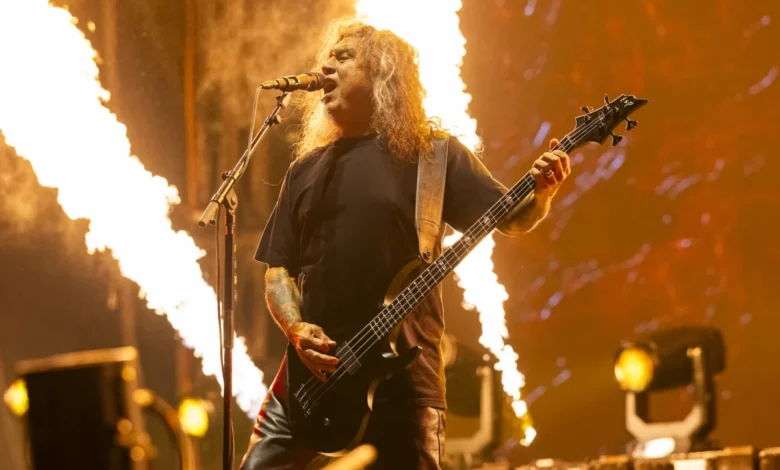
Thrash metal pioneers Slayer experienced an unexpected interruption during their high-profile North American tour finale at the Kia Forum in Inglewood, California. Merely seven songs into a career-spanning performance that had already drawn immense praise from die-hard enthusiasts, lead vocalist and bassist Tom Araya was forced to halt the show entirely. The abrupt pause was triggered by mounting safety concerns and escalating property damage in the arena’s seated sections, where overzealous attendees had begun crossing established boundaries, resulting in hazardous conditions for both fans and venue staff.
The incident underscores a persistent and complex challenge for major heavy metal and hardcore acts performing in modern arena settings: balancing the raw, kinetic energy inherent to extreme music culture with the strict liability, insurance, and structural limitations of multi-purpose entertainment venues. While mosh pits and aggressive crowd dynamics are traditionally accepted and even encouraged within designated general admission floor areas, the overflow of destructive behavior into seated tiers creates immediate logistical liabilities that can jeopardize an entire production.
Chronology of the Interruption
The disruption occurred shortly after the band concluded a sequence of heavily anticipated deep cuts—including rare live airings of "God Send Death," "Bloodline," and "The Antichrist"—which the band had not performed in nearly a decade. The energy inside the storied Los Angeles venue was palpable, fueled by nostalgia and the weight of the tour’s final night. However, this fervor quickly crossed the threshold from enthusiastic support to destructive chaos.
According to on-site reports and announcements made from the stage, fire marshals intervened backstage, notifying production management that escalating crowd behavior in the upper tiers of the arena had created an untenable safety hazard. Faced with the immediate threat of a complete show shutdown by municipal authorities, Araya stepped up to the microphone, halting the concert for a mandatory five-minute cooling-off period.
Rather than deflecting responsibility, Araya directly confronted the perpetrators, addressing the crowd with characteristic bluntness.
"The fire marshal said we’re gonna pause. We’re gonna pause until you guys get your shit and your act together," Araya told the thousands of fans packed into the arena. "There’s no one to blame but you. You know who I’m talking about."
Araya’s Address and the Economics of Venue Destruction
During the unexpected hiatus, Araya elaborated on the broader implications of destructive behavior at large-scale concerts, drawing upon decades of touring experience in massive arenas worldwide. He emphasized that the band itself frequently bears the financial burden for property damage inflicted by fans during performances.
"Quiet! I just need your attention," Araya said, addressing the audience directly. "I don’t know how many times I had this conversation when we first started playing fucking huge places, I kept telling everybody, ‘Man, you gotta fucking maintain yourself. You can’t start destroying shit, because they’ll shut this shit down.’"
The frontman drew a clear geographical distinction between acceptable areas for extreme physical expression and zones governed by stricter safety regulations. He pointedly instructed those wishing to engage in aggressive dancing to relocate to the general admission floor.
"Listen, if you guys wanna have fun, you have fun right down here in front of us. Do it over here where there’s nothing you can destroy except each other. When you start doing shit on the outside of the line over there, they’re gonna shut the place down," Araya explained, referencing the boundary line separating the general admission pit from the permanent seating tiers.
He continued by highlighting the inherent dangers of moshing in seated areas, where infrastructure such as plastic seating, handrails, and concrete risers significantly increases the risk of severe injury.
"You guys get so fucking crazy you start hurting each other," Araya noted. "I know it’s hard to fucking contain yourself, it’s hard to fucking maintain yourself, I know that. But you have to be respectful of the people around you, especially if you’re sitting in fucking seats."
The Broader Cultural and Legal Implications
Araya’s comments touched upon a larger sociological observation regarding accountability and contemporary event culture. By remarking on the perceived absence of personal consequences in modern public spaces, the vocalist framed the incident not merely as a localized concert disruption, but as a symptom of a wider behavioral trend.
"We’re in a time when there’s no consequences for the shit you fucking do. We need consequences. If you guys keep that shit up, we’re gonna go home, and hope you guys don’t do it next time we come," Araya warned, injecting a note of genuine frustration into the exchange. "Have you ever heard me talk to you like this? So you need to get your fucking heads on straight and behave like human fucking beings unless you’re in this fucking area in the front."
From a legal and operational standpoint, major entertainment venues operate under rigorous occupancy and safety codes enforced by local fire departments and municipal authorities. When crowd behavior threatens structural integrity or obstructs emergency egress routes, venue management possesses the absolute authority to terminate an event immediately. Such a shutdown not only results in financial losses for promoters and artists but can also damage a venue’s willingness to host heavy metal and rock acts in the future. Furthermore, insurance underwriters closely monitor venue incidents, and repeated instances of property damage can lead to skyrocketing insurance premiums or outright bans on specific genres within premier metropolitan arenas.
Resolution and Tour Conclusion
Despite an initial wave of mixed reactions from the audience—which briefly included a chorus of boos and traditional soccer-style "Ole, ole" chants directed at the stage—the crowd ultimately heeded Araya’s directives. The cooling-off period successfully restored order, allowing the venue staff and security personnel to stabilize the seated sections without necessitating further intervention from local law enforcement or emergency medical services.
With safety protocols re-established and order restored, Slayer resumed their setlist, delivering an uninterrupted remainder of the performance. The concert culminated in a definitive, full-length rendition of their landmark 1986 thrash metal masterpiece, Reign in Blood, followed by a high-intensity encore performance of "Black Magic."
The successful completion of the evening preserved what was intended to be a celebratory milestone in the band’s touring history. While the mid-show reprimand served as a stark reminder of the volatile friction point between extreme musical subcultures and corporate venue management, it ultimately demonstrated the enduring authority of veteran artists in self-regulating their audiences when faced with the tangible threat of a premature shutdown.
Related posts: