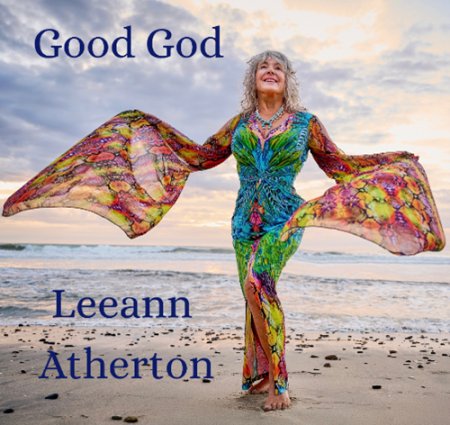
Leeann Atherton has officially released her highly anticipated full-length album, Good God, under Rainstorm Records, marking a profound creative homecoming for the seasoned Southern singer-songwriter. Spanning 13 tracks and a runtime of 46 minutes, the record represents a deeply personal exploration of traditional gospel sounds melded with secular instrumentation, blues sensibilities, and contemporary soul. Recorded entirely in Southern California and expertly produced by TJ Moss, the album captures Atherton as she fully immerses herself in the rich musical traditions that first captivated her during her formative years growing up across Alabama, South Carolina, and Texas.
The release of Good God arrives at a pivotal juncture in Atherton’s expansive career, adding a vibrant and spiritually resonant chapter to a discography already celebrated for its authentic roots-music integrity. Featuring an eclectic mix of original compositions and carefully curated covers spanning decades of spiritual and secular history, the album has already begun drawing attention from roots-music critics and enthusiasts alike for its seamless synthesis of faith, history, and masterclass musicianship.
Background Context and Musical Roots
To understand the artistic gravity of Good God, one must trace the geographical and cultural coordinates of Leeann Atherton’s upbringing. Raised in the Deep South—spending formative years in Alabama, South Carolina, and Texas—Atherton was immersed in a sonic landscape deeply rooted in storytelling, blues, and sacred music. However, it was during her time as a music student in Charleston, South Carolina, that she experienced a watershed cultural moment. Stepping into local churches to witness live gospel music firsthand, the young musician was entirely transfigured by the raw power, dynamic vocal harmonies, and emotional intensity of the performances.
Though Atherton has spent years carving out a respected career performing secular roots, blues, and Americana music, the gospel sounds of Charleston never truly left her. Good God serves as the long-gestating fulfillment of that early artistic revelation. By channeling her decades of vocal experience into the gospel idiom, Atherton bridges the gap between her secular career and her deeply rooted spiritual inspirations. While the lyrical themes of the album explicitly celebrate notions of faith, divine grace, and belief in God, the musical framework remains decidedly secular. This juxtaposition creates a dynamic tension, offering listeners a rich blend of traditional gospel arrangements driven by the driving rhythms of blues and soul.
Chronology and Recording Process
The journey toward Good God culminated in Southern California, where Atherton and producer TJ Moss assembled an elite lineup of session players and vocalists to bring the project to life. The recording sessions were designed to capture a live, organic energy, prioritizing authentic room acoustics and interplay among the musicians over clinical studio perfection.
The album’s roster boasts an impressive array of talent. Guitar duties were split between Johnny Vernazza and Mac McNabb, both of whom inject the tracks with fiery, blues-infused slide work and rhythmic punctuation. The keyboard landscape is anchored by the dual talents of Rob Lamonica and Bob Berman, whose organ and piano work provide the sacred, church-vault atmosphere essential to gospel music. The low-end groove is handled by a formidable trio of bassists—Mike Burnham, Kevin Cooper, and TJ Moss—while the rhythmic engine room is driven forward by drummer Edward “Hot” Cleveland. To complete the sonic wall of sound, the project utilized a stellar backing vocal ensemble comprising Austin Atherton, Johnny Vernazza, Jane Willcock, and HeartBeat Pro.
The final tracklist of 13 songs is thoughtfully sequenced to balance Atherton’s original songwriting with historical touchstones from both the gospel and secular canons.
Deep Dive into the Tracklist: Originals and Covers
Good God features three original compositions penned by Leeann Atherton, each offering a distinct perspective on her personal faith journey. The standout track "Call On The Lord" acts as an immediate statement of intent, driven by a blistering, emotive slide guitar solo that showcases the instrumental caliber of the backing band. Meanwhile, "Joy" embraces a traditional gospel arrangement, featuring swirling organ lines that underscore Atherton’s soulful vocals as she testifies to the enduring happiness found through her spiritual beliefs. Rounding out her original contributions is "Smack Dab In A Miracle," a mid-tempo number characterized by a smooth, soulful lilt where Atherton vividly describes the transformative realization of divine love in everyday life.
Complementing these originals are ten carefully selected covers that span a remarkable historical timeline. The album bridges secular and sacred traditions by including Leiber and Stoller’s classic "Saved," a track historically charged with rhythm and blues energy that Atherton infuses with electrifying slide guitar and powerhouse vocals. Another notable secular crossover is Joe South’s socially conscious anthem "Games People Play," which fits seamlessly into the album’s thematic framework of human behavior, redemption, and grace.
The gospel repertoire runs deep on the record, pulling heavily from the vibrant era of 1970s spiritual ensemble music. Two tracks, "Drinkin’ That Wine" and "More Peace And Love," are sourced directly from the catalog of Gideon & Power, capturing the groovy, socially liberated gospel-funk movement of the early ’70s. These sit comfortably alongside timeless, century-old spiritual standards that date back to far earlier eras of American worship, including "I’ll Fly Away," "This Little Light Of Mine," "Angel Band," and "How Great Thou Art." Across all interpretations, Atherton treats the historical material with profound reverence, delivering each vocal performance with unwavering focus, technical control, and deep emotional resonance.
Analysis of Implications and Industry Reception
In the broader context of contemporary roots and Americana music, Good God arrives at a time when audiences increasingly value authenticity, cross-genre pollination, and historical preservation. By choosing to front a project that overtly tackles faith—a subject often treated with hesitation in secular music circles—Atherton has charted a fearless course. Her ability to keep the music tuneful, accessible, and grounded in the secular blues-and-soul tradition ensures that the album transcends niche religious markets, appealing equally to secular blues purists and contemporary Christian music fans.
Industry analysts note that albums of this caliber rely heavily on the perceived sincerity of the artist. Atherton’s decades-long trajectory in the Southern music trenches grants her the necessary credibility to execute a gospel record without appearing opportunistic. The production choices made by TJ Moss further elevate the project; by favoring organic instrumentation over synthesized loops, the album honors the historical lineage of the songs while maintaining a crisp, modern fidelity fit for contemporary audiophiles.
Broader Impact and Future Outlook
As Good God makes its way into rotation on roots radio stations and streaming platforms worldwide, its long-term impact on Leeann Atherton’s career is expected to be significant. The album not only expands her stylistic range but also cements her status as a versatile custodian of Southern musical heritage. Whether performing in intimate acoustic settings or with the full ensemble assembled for the California sessions, Atherton has positioned herself as a vital voice bridging the sacred-secular divide in modern American roots music.
With distribution secured through Rainstorm Records and physical and digital copies now available to the public, Good God stands as a testament to artistic endurance, creative reinvention, and the timeless power of soulful storytelling.