Sound Underground Explores Introspective Sonics and Organic Production on Chamber Jazz Album Quiet Spaces

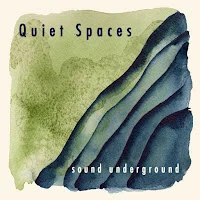
The contemporary jazz landscape continues to evolve through the efforts of avant-garde ensembles willing to push the boundaries of traditional instrumentation. Among the notable recent contributions to this genre is the critically acclaimed studio release Quiet Spaces by the unconventional chamber jazz trio Sound Underground. Composed of saxophonist David Leon, trumpeter Alec Aldred, and guitarist Jonah Udall, the collective has garnered attention for defying standard jazz configurations—traditionally anchored by a rhythm section such as piano, bass, and drums—in favor of a horn-and-strings dialogue that relies entirely on intricate interplay, counterpoint, and textural exploration.
Released to favorable reviews within contemporary and improvised music circles, Quiet Spaces serves as a masterclass in minimalist arrangements and acoustic transparency. Music critics and industry observers have noted that the album bridges the gap between structured chamber composition and spontaneous free-form improvisation. By stripping away the rhythmic safety net typically provided by percussion and bass, Sound Underground forces both the listener and themselves to confront the pure architecture of sound, melody, and silence.
The Genesis of Sound Underground and Their Unconventional Lineup
To understand the artistic weight of Quiet Spaces, one must examine the origins of Sound Underground and the individual trajectories of its members. The ensemble was formed out of a shared desire to experiment with acoustic textures outside the conventional big band or standard quartet formats. David Leon, known for his articulate phrasing and emotive tone on the saxophone, brings a contemporary classical sensibility blended with modern jazz vocabulary. Alec Aldred, a versatile trumpeter, complements Leon’s lines with a warm, round sonic signature that avoids the brassy harshness often associated with the instrument in aggressive settings. Rounding out the trio is Jonah Udall, whose guitar work serves as both a harmonic anchor and a rhythmic driver, utilizing fingerpicking and textural chord voicings to fill the spatial voids left by the absence of a piano or double bass.
The concept of chamber jazz is not entirely new, tracing its roots back to mid-century collaborations involving classical musicians and jazz innovators like Jimmy Giuffre and Modern Jazz Quartet offshoots. However, Sound Underground updates this lineage for the 21st century. Their instrumentation—alto or soprano saxophone, trumpet, and acoustic or semi-hollow guitar—presents a unique acoustic challenge: maintaining harmonic fullness and momentum without traditional low-end support. The trio meets this challenge by rotating roles, allowing the guitar to weave basslines or rhythmic ostinatos while the horns handle counterpoint and melodic development.
Chronology of the Album’s Production and Recording Methodology
The production methodology behind Quiet Spaces is perhaps its most defining characteristic, setting it apart from heavily edited and multi-tracked modern jazz records. The recording sessions were approached with an emphasis on live-room capture, favoring acoustic purity over digital perfection.
- Pre-Production and Compositional Development (2020–2022): The trio spent months workshopping material in rehearsal spaces, focusing heavily on spatial awareness. Compositions were intentionally written to leave structural "holes" that could only be filled dynamically by the acoustic environment and instantaneous interaction between the three musicians.
- Studio Residency and Live Tracking (Early 2023): Rather than recording instruments in separate isolation booths—a standard industry practice designed to eliminate bleed and allow for easy post-production mixing—Sound Underground chose to record live in a single room with minimal microphone separation.
- Post-Production Philosophy (Mid 2023): Eschewing the urge to clean up every sonic artifact, the production team made the deliberate decision to retain ambient noises. Listeners can distinctly hear the breath of the horn players, the mechanical clicking of saxophone keys, the actuation of trumpet valves, and the squeak of fingers sliding across guitar strings.
- Release and Critical Reception (Late 2023–Present): Upon its release, Quiet Spaces received praise for its immersive listening experience, with reviewers highlighting how the unfiltered production style successfully transports the listener directly into the physical recording space.
Musical Breakdown: Analyzing the Tracks of Quiet Spaces
The album’s tracklist is a carefully curated journey through contrasting emotional states, rhythmic motifs, and sonic palettes.
Tracks such as Tiny Kingdom and the title track, Quiet Spaces, showcase the group’s penchant for wistful introspection. These pieces rely on a wide emotional landscape where tempos are fluid, and harmonies hang suspended in the air. The lack of percussion emphasizes the natural decay of notes, forcing the listener to pay close attention to the micro-dynamics of each performance. In Quiet Spaces, the interplay between Aldred’s muted trumpet and Leon’s breathy saxophone creates a hazy, contemplative atmosphere that justifies the album’s title.
In contrast, Awake With A Start offers a more vibrant entry point. Here, David Leon delivers a playful, agile solo characterized by a warm, round tone that cuts through the harmonic framework laid down by Udall’s guitar. The composition moves with a brisk urgency, demonstrating that the trio does not rely solely on slow, atmospheric dirges to maintain interest.
Perhaps the most conceptually intriguing composition on the album is the track titled $2.43 Regular Unleaded. In this cheeky and lighthearted tune, the ensemble uses their instruments to mimic the mundane sounds of daily life. The rhythmic beeps of a car door locking and the mechanical clicks of a gas pump are cleverly translated into musical motifs, resulting in a fun, exhilarating joy-ride of a track that highlights the trio’s sense of humor and sonic ingenuity.
The Intersection of Composition and Improvisation
A central theme running through the critical evaluation of Sound Underground is the seamless integration of written composition and spontaneous improvisation. In traditional jazz, performances often follow a predictable head-solo-head format, where a written melody introduces the tune, followed by extended improvisations over a fixed chord progression, concluding with a restatement of the head.
Sound Underground disrupts this formula. Their music behaves more like a living organism, where composed passages bleed imperceptibly into improvised dialogues, and vice versa. This requires a high degree of emotional and telepathic connection among the members. Because there is no drummer to keep strict time or a bassist to outline the fundamental chord changes explicitly, the trio must listen with heightened intensity.
Musicologists studying contemporary improvised music often categorize this approach as "collective counterpoint." Every voice carries equal weight, and the failure of one musician to maintain structural integrity can cause the entire musical architecture to shift. Yet, Sound Underground navigates this high-wire act with apparent ease, spinning lyrical ideas that display both meticulous compositional craft and captivating immediacy.
Industry Implications and the Future of Chamber Jazz
The release of Quiet Spaces arrives at a time when the music industry is witnessing a fascinating dichotomy. On one hand, mainstream commercial production relies heavily on grid-quantized beats, digital pitch correction, and hyper-processed vocal tracks. On the other hand, there is a burgeoning counter-movement among audiophiles and music enthusiasts who crave organic, imperfect, and deeply human recordings.
Sound Underground’s uncompromising commitment to live, unisolated room recording positions them at the vanguard of this acoustic revival. By refusing to mask the physical realities of music-making—such as breath and mechanical noise—they offer an antidote to the clinical perfectionism of modern digital production.
Furthermore, the commercial and critical reception of Quiet Spaces demonstrates that there is a viable, engaged audience for unconventional chamber jazz. While ensembles of this size and instrumentation rarely achieve mainstream chart success, their influence on the broader jazz ecosystem is profound. They inspire younger musicians to look beyond standard genre boundaries, experiment with unorthodox instrument combinations, and embrace vulnerability in their performances.
Conclusion
Quiet Spaces is a triumph of artistic vision, technical restraint, and emotional connectivity. Through the unique interplay of David Leon’s saxophone, Alec Aldred’s trumpet, and Jonah Udall’s guitar, Sound Underground has crafted a recording that is simultaneously intellectually stimulating and deeply inviting. By stripping away the sonic clutter typical of modern jazz productions and embracing the organic intimacy of live-room acoustics, the trio has delivered a work of lasting artistic value.
For listeners willing to lean in, listen closely, and appreciate the finer points of chamber improvisation, Sound Underground offers a rich, rewarding auditory experience that lingers long after the final note has decayed. The album stands as a high-water mark for contemporary acoustic experimentation and secures the trio’s place as important innovators in modern improvised music.