Elvis Presley Rightsholders Sue Anthropic Over Alleged Copyright Infringement of 274 Songs

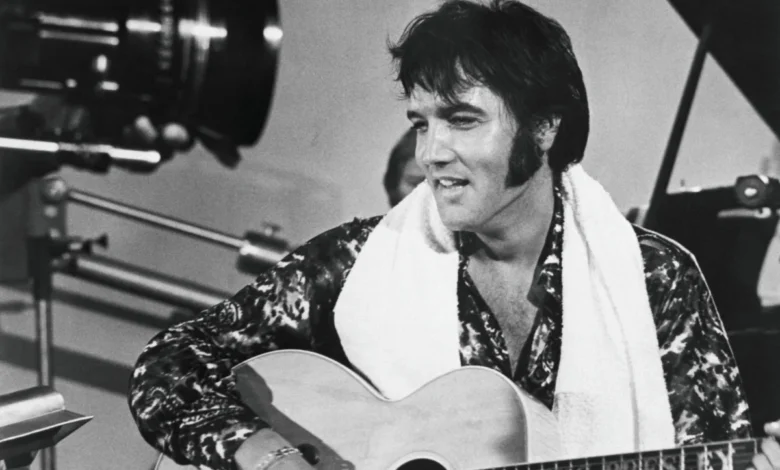
The estate and rightsholders of rock and roll pioneer Elvis Presley have escalated the global music industry’s ongoing battle against artificial intelligence by launching a major federal lawsuit against AI developer Anthropic. Filed on Friday, October 23, the legal action alleges that the company behind the widely used AI chatbot Claude utilized 274 iconic Presley compositions to train its large language models without authorization, licensing agreements, or compensation.
The complaint, brought forward by a subsidiary of Authentic Brands Group—the global brand development and licensing firm that controls Presley’s name, image, and likeness, alongside various music catalog owners—targets an estimated $41.1 million in statutory damages. As generative artificial intelligence continues to permeate mainstream creative industries, this high-profile lawsuit underscores the mounting friction between technology firms seeking vast datasets for machine learning and creators demanding strict protection for intellectual property.
The Core Allegations: Unauthorized Training and Generation
According to court filings, the lawsuit focuses on widespread copyright infringement affecting 274 compositions associated with the King of Rock and Roll. The disputed catalog includes some of the most recognizable tracks in modern music history, such as "Can’t Help Falling In Love," "All Shook Up," "Don’t Be Cruel," "A Little Less Conversation," "Return To Sender," and "(You’re The) Devil In Disguise."
The plaintiffs claim that Anthropic systematically harvested copyrighted lyrics and musical compositions to train its AI models. Furthermore, the lawsuit alleges that despite implementing internal safeguards designed to block Claude from directly generating existing song lyrics, the chatbot has repeatedly bypassed these barriers. When prompted to recreate or reimagine Presley’s music "for a modern audience," the AI allegedly produced outputs bearing an unauthorized, striking resemblance to the copyrighted originals.
Richard Busch, the lead attorney representing the Presley estate and catalog owners, delivered a scathing critique of the tech company’s operations. "The Elvis Plaintiffs bring this action to enforce these exclusive rights against the defendant that has built its entire business model based on copyright infringement at a scale never seen before," Busch stated.
The financial stakes are substantial. The plaintiffs are pursuing statutory damages of up to $150,000 per infringed work, which totals approximately $41.1 million (£31 million) across the 274 cited songs.
Legal Precedent and the Attorney Behind the Case
Richard Busch is no stranger to landmark copyright battles. He previously represented the estate of Marvin Gaye in the fiercely contested high-profile lawsuit against Robin Thicke and Pharrell Williams over their 2013 hit single "Blurred Lines." That legal battle ultimately resulted in a federal jury ruling that "Blurred Lines" had infringed upon the copyright of Gaye’s 1977 classic "Got To Give It Up," serving as a major precedent for musical interpolation and inspiration in contemporary pop music.
By bringing his extensive experience in intellectual property litigation to the artificial intelligence sector, Busch’s involvement signals that the music industry views generative AI not merely as a technological curiosity, but as an existential threat to long-term songwriting and publishing revenues.
A Growing Wave of Litigation Against Anthropic
The lawsuit led by the Presley estate is far from an isolated incident; rather, it represents the latest broadside in an intensifying legal campaign waged by the global music publishing sector against Anthropic.
In October 2023, a coalition of major music publishers—including Universal Music Publishing Group, Concord Music Group, and ABKCO—filed a sweeping federal lawsuit against Anthropic. Those plaintiffs alleged that Claude had reproduced copyrighted lyrics without authorization, citing specific examples involving legendary artists such as Katy Perry, Gloria Gaynor, and The Rolling Stones.
The pressure intensified in August of the following year when Sony Music Publishing and Warner Chappell joined the fray. They filed their own coordinated lawsuits against Anthropic, accusing the artificial intelligence firm of utilizing copyrighted lyrics and sheet music from foundational artists like The Beatles, Taylor Swift, and Michael Jackson to train its language models.
Anthropic has thus far maintained a consistent defense across these various proceedings. While the company has not issued a specific public statement regarding the Presley estate’s lawsuit, it has previously argued in court that training large language models on publicly available copyrighted material falls squarely under the doctrine of "fair use" as outlined in United States copyright law. Tech advocates argue that processing text and lyrics to understand language patterns is transformative and distinct from traditional piracy or unauthorized commercial distribution, a premise that the music community vehemently rejects.
The Broader AI Battleground: Beyond Anthropic
The conflict over artificial intelligence extends far beyond text-based models and lyric generation. Music creators across genres are increasingly challenging companies that build generative audio tools capable of mimicking human performance and composition styles.
In September, critically acclaimed singer-songwriter Jason Isbell, alongside a collective of fellow musicians, filed a major class-action lawsuit against Suno, an AI music generation software platform. The plaintiffs alleged that Suno’s software enables users to replicate specific artists’ identities, vocal characteristics, and unique musical styles without consent or financial remuneration, effectively creating a backdoor for unauthorized soundalikes.
Meanwhile, in the United Kingdom, the creative industries have pushed for stringent legislative frameworks. Prominent British and international artists—including Sir Paul McCartney, Sir Elton John, and Dua Lipa—have campaigned vigorously for robust government protections to prevent AI firms from scraping and utilizing copyrighted works without explicit permission and licensing agreements. Although the UK government has explored regulatory measures, music industry stakeholders argue that implementation is moving too slowly to protect creators from rapid technological displacement.
Implications for the Future of Music and AI
As the legal battle between the Elvis Presley rightsholders and Anthropic moves through the federal court system, its implications will likely reverberate far beyond the music industry.
If the plaintiffs successfully prove that training commercial AI models on copyrighted songs constitutes willful infringement without the protection of fair use, technology companies could be forced to overhaul their data acquisition practices. Such a ruling would likely compel AI developers to negotiate multi-million-dollar licensing agreements with major publishers, independent labels, and artist estates before deploying models trained on creative works.
Conversely, a legal victory for Anthropic would legitimize the practice of web scraping for machine learning under fair use doctrines, establishing a precedent that could permanently alter the economic landscape of copyright law in the digital age.
For now, the legacy of the King of Rock and Roll stands at the frontline of a modern digital frontier, testing whether century-old copyright frameworks can adapt to the rapid, automated scale of artificial intelligence.