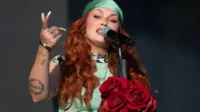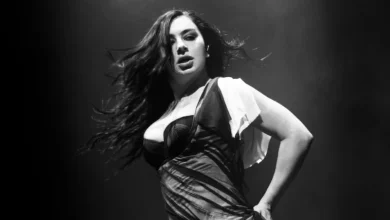
The upcoming untitled Fred Astaire biopic has secured a high-profile ensemble cast, signaling a significant move by Sony Pictures to bring the legendary entertainer’s life to the modern screen. Tom Holland, best known for his portrayal of Peter Parker in the Marvel Cinematic Universe, has been attached to the lead role of Fred Astaire for some time, and the production has now rounded out its primary cast with the additions of Margaret Qualley and Sabrina Carpenter. Qualley is set to portray Adele Astaire, Fred’s sister and early stage partner, while Carpenter will step into the iconic shoes of Ginger Rogers, the performer most famously linked to Astaire’s cinematic dance history. The project is being helmed by director Paul King, whose recent success with "Wonka" and the "Paddington" franchise suggests a tone that balances technical precision with nostalgic charm. The script, a collaborative effort between King and Steven Levenson, aims to navigate the complexities of Astaire’s prolific career and his impact on the evolution of American musical cinema.
A Legacy Reimagined: The Development Timeline
The project has been in various stages of development for several years. Initial reports regarding a Fred Astaire biopic emerged as early as 2021, when Sony Pictures first confirmed that Tom Holland would lead the project. The decision to cast Holland—who possesses a background in dance, most notably his breakout performance in the West End production of "Billy Elliot the Musical"—was widely seen as a strategic choice to ensure the film could feature authentic, high-level choreography without relying exclusively on body doubles or digital trickery.
Following the initial announcement, the project underwent a period of quiet development. The search for the supporting cast proved to be a meticulous process, as the production sought performers capable of handling not only the dramatic weight of the historical figures but also the rigorous demands of 1930s and 40s-style ballroom dancing. The recent inclusion of Sabrina Carpenter, a multi-hyphenate artist whose recent musical career has seen a meteoric rise, and Margaret Qualley, a critically acclaimed actress with a background in professional ballet, rounds out a creative team that appears to prioritize technical dance proficiency alongside acting ability.
The Historical Context: Adele Astaire and Ginger Rogers
The narrative significance of the two new cast members cannot be overstated. Adele Astaire was the primary architect of the Astaire siblings’ early success. Before Fred became a solo film star, the duo dominated the Vaudeville circuit and Broadway as a sibling act. Adele’s retirement from the stage in 1932, following her marriage to Lord Charles Cavendish, was the catalyst that pushed Fred to move to Hollywood, where he eventually met the partner who would define his cinematic legacy.
Ginger Rogers, conversely, represents the pinnacle of Fred Astaire’s career in motion pictures. Appearing together in ten films—including "Top Hat," "Swing Time," and "The Gay Divorcee"—Astaire and Rogers redefined the musical genre. Their partnership was characterized by a seamless blend of elegance and athleticism, often framed by the "RKO" aesthetic of the Great Depression era. By casting Sabrina Carpenter, the production is positioning the film to resonate with a younger demographic while maintaining the narrative focus on the professional friction and eventual synergy that defined the Astaire-Rogers collaboration.
Production and Creative Leadership
Paul King’s appointment as director provides a clear indication of the film’s intended trajectory. King is renowned for his ability to craft whimsical yet emotionally grounded narratives that appeal to multi-generational audiences. His work on "Wonka" demonstrated an aptitude for large-scale production numbers and character-driven musical sequences, both of which are essential requirements for a film centered on a figure as iconic as Fred Astaire.
Steven Levenson, an accomplished playwright and screenwriter known for "Dear Evan Hansen" and his work on "Fosse/Verdon," brings a deep understanding of the pressures inherent in biographical storytelling. His involvement suggests that the script will likely delve into the personal costs of stardom, the grueling nature of rehearsal, and the changing landscape of show business during the mid-20th century.
Family Endorsement and Consultation
One of the most critical aspects of this production is the active participation of the Astaire estate. Ava Astaire McKenzie, Fred Astaire’s daughter, has publicly expressed her approval of the project. The involvement of Tyler McKenzie, her son, as a consultant and co-producer, provides a level of institutional knowledge that is often missing from biographical projects. This familial oversight serves as a safeguard for the film’s historical integrity, ensuring that while the film is a dramatic interpretation, it remains grounded in the realities of Astaire’s personal history and his meticulously curated public persona.
Market Implications and Industry Impact
The film industry has seen a resurgence in the popularity of the musical biopic, a genre that has proven to be both a critical darling and a commercial powerhouse. From the success of "Elvis" to the enduring interest in films about legendary performers, studios are increasingly betting on the intersection of nostalgia and modern star power.
For Sony Pictures, this biopic represents a high-stakes investment in intellectual property that honors the history of MGM and RKO musical traditions. The film’s success will likely depend on its ability to balance the technical demands of period-accurate choreography with a narrative that feels contemporary. The budget for such a project is expected to be significant, particularly given the costs associated with period production design, music licensing, and the specialized training required for the cast.
Furthermore, the casting of Tom Holland, Margaret Qualley, and Sabrina Carpenter highlights a trend in Hollywood where crossover stars—those who can act, sing, and dance at a high level—are being prioritized for tentpole projects. This strategy minimizes the need for CGI-heavy performance capture, allowing for a more tactile, authentic viewing experience that mirrors the classic studio system films of the 1930s.
Analysis of the Choreography Challenge
The central challenge for this production remains the choreography. Fred Astaire was a perfectionist who often spent weeks refining a single routine. Modern audiences are accustomed to rapid-cut editing, but Astaire’s style relied on long, wide-angle takes that showcased the dancers’ full bodies and the continuity of their movement. Director Paul King and his choreographic team will face the daunting task of replicating this style while keeping the pacing relevant for a modern audience.
The background of the cast provides a promising foundation. Margaret Qualley, who studied at the North Carolina School of the Arts and the American Ballet Theatre, brings a level of physical discipline that is rare in contemporary film acting. Similarly, Tom Holland’s extensive history as a trained dancer provides the production with a lead who understands the physical language of the stage. The integration of these skills will be the ultimate litmus test for the film’s success.
Future Outlook
While a release date has not yet been finalized, the completion of the core casting signals that the project is moving toward a formal production phase. As the industry monitors the progress of this biopic, the focus will likely remain on how the film navigates the inevitable comparisons to the original source material.
The production enters a landscape that is increasingly appreciative of the history of the arts, yet demanding of fresh perspectives. By focusing on the interplay between the siblings, the partners, and the man behind the top hat and tails, the filmmakers have the opportunity to create a definitive cinematic record of one of the most important figures in the history of dance. Whether the film can capture the elusive "magic" that Fred Astaire brought to every performance will be the defining question as the production progresses through the coming months of filming and post-production. For now, the combination of a seasoned director, an invested estate, and a cast with the requisite technical foundations positions this biopic as one of the most anticipated musical projects currently in development.