Mastodon Reflect on Wildly Adventurous Blood Mountain on Album’s 20th Anniversary

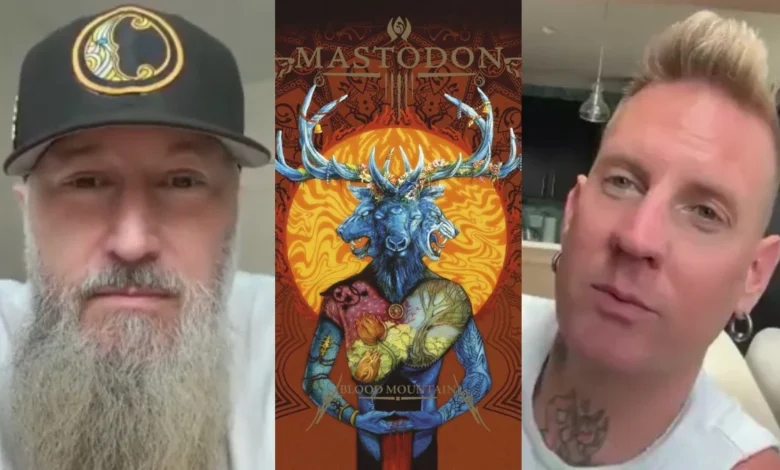
September 12, 2026, marks the twentieth anniversary of the release of Blood Mountain, the third studio album by the progressive metal quartet Mastodon. Released in 2006, the record served as a pivotal transition for the Atlanta-based band, signaling their leap from the underground metal scene to a major-label partnership with Warner Bros./Reprise Records. To commemorate two decades of this seminal work, band members Troy Sanders and Brann Dailor recently sat down to discuss the creative atmosphere, the challenges of the recording process, and the lasting legacy of a project that remains a cornerstone of 21st-century heavy metal.
A Period of Monumental Transition
When Mastodon entered the studio in 2006, the landscape of heavy metal was shifting. Having built a fierce reputation with the raw, chaotic energy of their debut, Remission (2002), and the sprawling, complex narratives of Leviathan (2004), the band was under significant pressure to deliver a follow-up that could justify their major-label signing. Leviathan, a loose concept album based on Herman Melville’s Moby-Dick, had cemented their status as critical darlings. The challenge for Blood Mountain was to maintain that artistic integrity while navigating the expectations of a major label, a scenario that often results in "corporate" dilution of a band’s sound.
Instead, Mastodon doubled down on their penchant for complex arrangements, odd time signatures, and genre-defying experimentation. The resulting album, produced by Matt Bayles in Seattle, proved that the band had no intention of softening their aesthetic. Tracks like "The Wolf Is Loose," "Crystal Skull," and "Colony of Birchmen" showcased a band at the height of its technical prowess, blending elements of sludge, thrash, and progressive rock into a singular, cohesive auditory experience.
Chronology of the Recording Process
The recording of Blood Mountain was characterized by a mix of high-stakes professionalism and, as the band members recall, a degree of hedonistic exploration. The process began in early 2006, with the band relocating to Seattle to work with Bayles, who had previously engineered Leviathan.
For the members of Mastodon—bassist/vocalist Troy Sanders, drummer Brann Dailor, guitarist Brent Hinds, and guitarist Bill Kelliher—the session was marked by a palpable sense of anxiety and excitement. Sanders notes that the shift to Warner Bros. created an internal pressure to deliver something substantial. "I remember being nervous that this was a major label debut with Warner Bros.," Sanders stated in a recent interview. "But I was also witnessing my bandmates playing at a level I hadn’t seen before. Brent was writing some of the most bizarre and awesome music ever written, and Bill was just crushing it."
The social dynamic of the recording sessions became an integral part of the album’s folklore. Dailor recounts that a local Belgian beer bar, situated conveniently behind the studio, provided a distraction that the band embraced with surprising rigor. In a moment of ambition that matched their musical output, the band challenged themselves to sample all 100 beers available on tap. Dailor reflects on this period with a mix of humor and nostalgia, noting, "We were a little bit Mötley Crüe ’82 back then." Despite these extracurricular activities, the output remained remarkably focused, a testament to the discipline underlying their technical compositions.
Technical Analysis: The Sound of the Mountain
Blood Mountain is often categorized as a "prog-metal" album, yet its influence extends across the broader spectrum of rock music. Thematically, the album is a concept piece centered on a protagonist’s arduous journey up a mountain, serving as a metaphor for the struggles of life, growth, and survival.
Musically, the album stands out for its structural complexity. Brann Dailor’s drumming on the record is frequently cited by percussionists as a masterclass in dynamic range and rhythmic displacement. His ability to anchor the shifting guitar melodies of Hinds and Kelliher allowed the band to experiment with longer, more involved song structures without losing the listener. This "wildly adventurous" approach, as Dailor describes it, helped define the "Mastodon sound" that would influence countless acts in the late 2000s and 2010s.
The album’s production also deserves recognition. Matt Bayles managed to capture the grit of their earlier work while providing a clarity that allowed the nuances of the guitar work to shine through. The result was an album that sounded massive, fitting for the mountain-climbing theme, yet intimate enough to capture the frantic energy of the band’s performances.
Broader Impact and Industry Implications
The commercial and critical success of Blood Mountain provided a blueprint for how heavy metal bands could achieve mainstream viability without sacrificing artistic complexity. By hitting the Billboard 200 at number 32—a significant achievement for an extreme metal band at the time—Mastodon proved that there was a substantial audience for music that demanded more from its listeners.
Beyond the numbers, the album’s longevity is evidenced by the fact that tracks like "Colony of Birchmen" remain staples of the band’s live setlists two decades later. The album served as a bridge, allowing the band to eventually evolve into the more experimental, atmospheric sounds found in later works like Crack the Skye and their 2026 effort, Marrow Deep.
The shift in the industry landscape following the release of Blood Mountain cannot be understated. It arrived during the transition from physical media dominance to the early stages of digital consumption, yet it remains an "album-oriented" experience. It is a work that demands to be heard in its entirety, a trait that has become increasingly rare in the era of single-track streaming dominance.
Looking Toward the Future
Twenty years later, the band’s reflection on Blood Mountain highlights a sense of pride in their formative years. While they have grown as musicians and individuals, the adventurous spirit that propelled the creation of the album remains the engine behind their current output.
Mastodon is currently preparing for a fall 2026 North American tour, which will feature material from their latest release, Marrow Deep, alongside deep cuts that nod to their two-decade history. The tour, which includes support from acts like Deafheaven and Alcest, is a testament to the band’s continued relevance and their ability to curate a sonic environment that spans the breadth of their career.
For critics and fans alike, the anniversary of Blood Mountain is more than just a celebration of a past milestone; it is an acknowledgment of a record that challenged the boundaries of heavy music. By successfully balancing technical complexity with visceral, emotional songwriting, Mastodon secured their place in the pantheon of modern metal. As Dailor concluded in his retrospective, "I still love Blood Mountain to this day. I think it’s wildly adventurous, like an album about a mountain should be."
In an era where many bands struggle to maintain their identity past their debut, Mastodon’s ability to look back at Blood Mountain as a defining, successful, and "adventurous" chapter serves as a case study in longevity. The album remains not only a peak in the band’s discography but a high point for the genre of progressive metal as a whole, continuing to inspire new generations of musicians to explore the peaks and valleys of their own creative output. As the band moves forward into their next era, the lessons of the mountain—audacity, persistence, and the willingness to explore the unknown—remain central to the Mastodon mission.