Nicolas Kummert and Lionel Loueke Bridge Continental Divides Through the Release of La Diversité

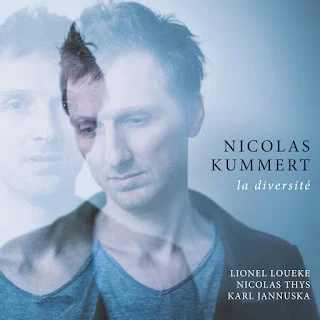
The release of La Diversité marks a significant milestone in the career of Belgian tenor saxophonist Nicolas Kummert, serving as a sophisticated culmination of a decade-long exploration into the intersection of European jazz and West African rhythmic traditions. This 2017 studio recording, which features the world-renowned Beninese-American guitarist Lionel Loueke, represents more than a mere collection of tracks; it is a conceptual manifesto advocating for multiculturalism and artistic synthesis. By integrating the talents of bassist Nicolas Thys and drummer Karl Jannuska, Kummert has assembled a quartet that navigates the complex textures of "world jazz" with a precision that avoids the clichés of the genre, opting instead for a deep, spiritual resonance that reflects his personal history and the global political climate of the late 2010s.
The Formative Years and African Influence
The genesis of Kummert’s unique sound can be traced back to a pivotal period in his adolescence. At the age of 17, Kummert undertook a two-month residency in Senegal, an experience that fundamentally altered his trajectory as a musician. During this stay, he immersed himself in local musical traditions, collaborating with Senegalese instrumentalists and vocalists. This exposure planted the seeds for an affinity for African music that would eventually lead him to explore the sonic landscapes of Benin, Mali, Kenya, São Tomé, Morocco, and Tunisia.
Unlike many Western musicians who approach African music as a stylistic veneer, Kummert’s engagement was rooted in a genuine desire to understand the underlying polyrhythms and melodic structures of the continent. Over the years, he developed a "pan-African" sensibility that seamlessly merged with his formal training in the Belgian jazz scene. This background provided the necessary foundation for his later work, characterized by a saxophone tone that is both robust and capable of delicate, flute-like nuances, mirroring the versatility of the human voice.
The Evolution of the Kummert-Loueke Partnership
The collaboration between Nicolas Kummert and Lionel Loueke is a central pillar of La Diversité. The two musicians first crossed paths in 2008 during a recording session for the Beninese singer Patrick Ruffino. Loueke, who had already gained international fame as a member of Herbie Hancock’s band and a Blue Note recording artist, found a kindred spirit in Kummert. Despite their different origins, both shared a commitment to pushing the boundaries of jazz through the inclusion of non-Western influences.
The relationship matured over several years of intermittent contact and mutual professional respect. By 2015, Kummert formally invited Loueke to join his new quartet, a move that signaled a shift toward a more expansive and rhythmically complex sound. This period of Kummert’s career was particularly prolific; he had recently released Voices in 2014 and Flow in 2015. However, La Diversité was designed to be the definitive statement of this partnership. Loueke’s contribution to the album cannot be overstated; his ability to switch between intricate electric textures and earthy acoustic fingerpicking provides the perfect counterpoint to Kummert’s winding saxophone lines.
Technical Analysis of La Diversité
The album’s structure is a masterclass in balance and restraint. Kummert carefully crafts his compositions to allow for spontaneous improvisation while maintaining a clear thematic narrative. A defining characteristic of the record is the "winding" nature of the saxophone melodies, which often mimic the cadences of West African dialects. This is most evident in the track "Rainbow People," where the West African rhythmic feel is palpable, yet the harmonic language remains firmly rooted in modern jazz.
Loueke’s presence on the album ranges from subtle atmospheric support to boisterous, avant-garde elucidation. On "We’ll Be Alright," the quartet explores a more aggressive, high-energy sound that showcases their collective technical prowess. Conversely, "And What If We’re Not" offers a more contemplative, "antipodean" delivery. In this track, Loueke demonstrates his versatility by moving seamlessly from electric to acoustic guitar, employing bell-like harmonics that add a shimmering quality to the arrangement.
The track "Le Vent Se Lève" (The Wind Rises) further illustrates the quartet’s ability to evoke specific environments through sound. Loueke’s use of harmonics and Kummert’s breathy delivery create a sense of movement and ethereality. In "Le Peuple De L’Arc-En-Ciel" (The People of the Rainbow), Loueke utilizes dexterous fingerpicking techniques that recall the kora music of West Africa, grounding the track in a specific cultural heritage while the rhythm section provides a modern, driving pulse.
The Leonard Cohen Tribute and Interpretive Depth
One of the more surprising and poignant elements of La Diversité is the inclusion of two versions of Leonard Cohen’s "Hallelujah." Recorded shortly after the legendary songwriter’s death in late 2016, these tracks serve as a dual tribute—"Hallelujah" and the acoustic "Hallelujah Again – In Memory of Leonard Cohen."
In the hands of less skilled musicians, the inclusion of such a widely covered song might have felt redundant. However, Kummert and his ensemble treat the piece with a characteristic delicacy that strips away the anthem-like qualities often associated with the song, focusing instead on its inherent vulnerability. The quartet version emphasizes the communal aspect of grief and hope, while the duo version featuring Kummert and Loueke highlights the intimacy of their musical dialogue. This "Gnossienne A Deux" approach reveals a profound chemistry, where every note is placed with intention, ensuring that the emotional core of Cohen’s work remains intact.
The Role of the Rhythm Section: Thys and Jannuska
While the spotlight often falls on the Kummert-Loueke dynamic, the contributions of Nicolas Thys on double bass and Karl Jannuska on drums are essential to the album’s success. Thys provides a warm, woody foundation that anchors the more experimental elements of the guitar and saxophone. His playing is characterized by a deep sense of "pocket," particularly on tracks like "La Terre Ne Ment Pas" (The Earth Does Not Lie), where the bass line acts as the heartbeat of the composition.
Karl Jannuska, a Canadian-born drummer based in Paris, brings a polyrhythmic sophistication to the project. His ability to navigate the shifting time signatures and rhythmic nuances of Kummert’s compositions is vital. Jannuska’s drumming is never intrusive; instead, it serves to heighten the nuances of the lead instruments, providing a textured backdrop that keeps the listener engaged. Together, Thys and Jannuska create a framework that allows Kummert and Loueke the freedom to explore without losing the listener in abstraction.
Socio-Political Implications: Diversity Over Purity
The title of the album and its penultimate track, "Diversity Over Purity," carry a weight that extends beyond the musical realm. Released in 2017, a year marked by intense debates over migration, national identity, and globalization, the album serves as a quiet but firm political statement. Kummert’s choice to champion "diversity" is an explicit rejection of cultural isolationism.
The track "Diversity Over Purity" itself is a languorous, smoldering piece that suggests that the mixing of cultures is not a chaotic process, but a slow, beautiful evolution. By blending the musical DNA of Europe and Africa, Kummert argues that the "purity" of a single tradition is less valuable than the "innovation" found at the crossroads of different heritages. This philosophy is reflected in the track listing, which includes titles in both French and English, such as "Liberté" and "Lighthouse," symbolizing a bridge between different linguistic and cultural worlds.
Critical Reception and Broader Impact
Upon its release, La Diversité was met with critical acclaim within the international jazz community. Critics noted the "mesmerizing, innovative experience" of the album, praising its abundance of nuances and creative ideas. The record has been cited as a prime example of how modern jazz can evolve by looking outward rather than inward.
From a broader perspective, the album contributes to the ongoing dialogue about the "Europeanization" of jazz and its relationship with the African diaspora. By centering Loueke—a musician who embodies the fusion of Beninese tradition and American jazz education—Kummert acknowledges the debt that jazz owes to Africa while simultaneously asserting a contemporary European identity.
The track listing, which includes "Harmattan" (named after the dry, dusty West African trade wind) and "Gnossienne" (a nod to Erik Satie), further emphasizes this synthesis of influences. It is an album that demands active listening, rewarding the audience with a rich tapestry of sounds that are both intellectually stimulating and emotionally resonant.
Conclusion: A Vision of Unity
Nicolas Kummert’s La Diversité stands as a testament to the power of collaboration and the enduring relevance of jazz as a universal language. Through his partnership with Lionel Loueke, Kummert has created a work that is both a personal reflection of his travels and a broader commentary on the value of cultural exchange. The album’s success lies in its ability to be complex without being inaccessible, and political without being didactic.
As the final notes of "Hallelujah Again" fade, the listener is left with a sense of peace and a renewed appreciation for the intricacies of human connection. In an era often defined by division, La Diversité offers a vision of unity, proving that when diverse voices come together, the resulting harmony is far greater than the sum of its parts. Kummert, Loueke, Thys, and Jannuska have not just recorded an album; they have mapped a territory where music knows no borders, and where the pursuit of beauty is the ultimate common ground.