Major League Baseball Labor Crisis Looms as Players and Owners Brace for Potential Federal Antitrust Showdown

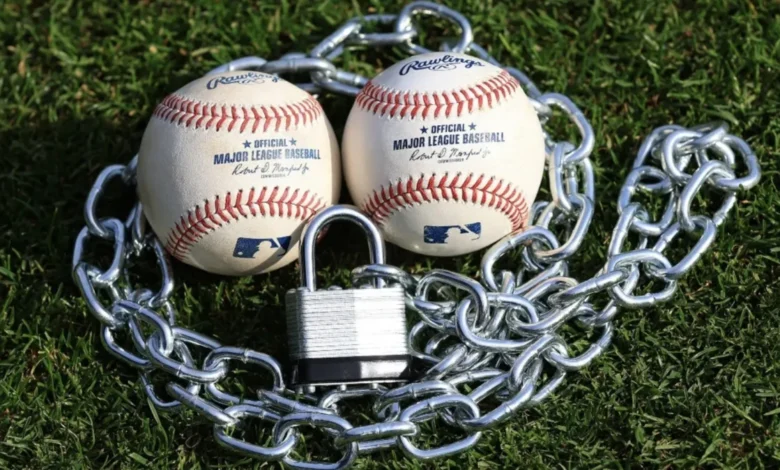
As the expiration of Major League Baseball’s current collective bargaining agreement approaches on December 1, the sport stands on the precipice of a labor dispute that threatens to transcend traditional collective bargaining and spill directly into federal court. League officials and industry insiders are actively preparing for the possibility that the Major League Baseball Players Association may deploy an unprecedented legal maneuver—a "disclaimer of interest"—which would fundamentally alter the dynamics of the American pastime and expose team owners to severe financial and legal liabilities.
With the 2027 season looming as the primary battleground, the unfolding crisis highlights a profound ideological divide over the economic structure of professional baseball. At the heart of the disagreement is the owners’ aggressive push for a salary cap and a corresponding payroll floor, a system that the MLBPA has historically and vehemently resisted. As both sides dig in, the implications of this impending confrontation extend far beyond the negotiating table, threatening the offseason market, regular-season schedules, and the foundational relationship between the sport, its athletes, and millions of fans.
Main Facts and the Core Economic Dispute
The foundational friction driving the current labor crisis stems from the league’s desire to reshape the financial landscape of baseball. Team owners argue that implementing a rigid salary cap, offset by a mandatory payroll floor, is essential to fostering competitive balance across the league. Under this proposed economic framework, smaller-market franchises—which often struggle to compete with the financial might of premier coastal teams—would receive a degree of protection, while runaway spending at the top of the market would be curbed.
Reports indicate that owners have discussed a proposal that would establish a salary cap of $258.2 million alongside a payroll floor of $180.2 million, effective beginning in the 2028 season. For casual observers, a salary cap imposes an absolute ceiling on the amount a franchise can spend on its active roster, while a payroll floor guarantees a minimum baseline of investment.
The players’ union views this proposal through an entirely different lens. The MLBPA maintains that a salary cap is an artificial restriction on player compensation that penalizes elite athletic performance and artificially depresses salaries across the board. By capping the upper limits of team spending, players argue that the economic model unfairly redistributes wealth to billionaire owners at the expense of the labor force that drives the game’s revenue.
This ideological chasm has proven insurmountable in early dialogues, setting the stage for an adversarial winter where a work stoppage appears increasingly likely.
Chronology of Escalation and Preparation
The trajectory toward a potential labor stoppage has accelerated through a predictable yet alarming series of milestones over the past several months. In May, preliminary discussions between the league and the union hit immediate roadblocks, with the MLBPA expressing frustration over the owners’ insistence on centering any economic conversation around the adoption of a salary cap.
As talks stalled through the summer and autumn, the league began operational preparations for a disruption. In October, MLB Deputy Commissioner Dan Halem distributed an exhaustive 34-page memorandum to all 30 club front offices. This manual outlined strict protocols for operating under a potential lockout, mirroring the playbook used during the turbulent 2021-2022 labor battle. The instructions detailed severe limitations on communication between team personnel and players, restrictions on offseason activities, and administrative mandates requiring the removal of player imagery from league-controlled websites and digital platforms.
The tension spilled into the public sphere on November 17, when MLBPA interim executive director Bruce Meyer publicly criticized the league’s negotiating posture in an interview with The Boston Globe. Meyer asserted that while the two sides had found common ground on minor, noneconomic matters, the league’s refusal to negotiate seriously on core economic issues without a preliminary capitulation on the salary cap had poisoned the well.
By late November, reports from financial and sports media outlets, notably The Wall Street Journal, indicated that MLB front offices were bracing for the union’s potential nuclear option: the disclaimer of interest. With the December 1 expiration date fast approaching, the baseball ecosystem finds itself locked in a holding pattern, anticipating an official work stoppage that could freeze the sport for months.
The "Nuclear Option": Understanding the Disclaimer of Interest
To fully comprehend the gravity of the impending dispute, one must examine the legal mechanism known as a disclaimer of interest. Under federal labor law, collective bargaining agreements and the unions that negotiate them enjoy specific protections from federal antitrust laws. These exemptions allow labor organizations and management to collectively agree on terms that might otherwise violate antitrust statutes, such as standardizing salary structures, draft rules, and free-agency constraints.
However, if the MLBPA were to formally disclaim its interest—surrendering its status as the certified collective bargaining representative of the players and reorganizing itself as a traditional trade association—the legal landscape would shift dramatically. By stripping away its union status, the players could theoretically argue that a coordinated owner lockout constitutes an illegal group boycott under federal antitrust law.

Should the players successfully pursue this route and file antitrust lawsuits in federal court, the financial exposure for the league would be immense. Under federal antitrust statutes, victorious plaintiffs are entitled to treble damages—three times the amount of proven financial loss—alongside the recovery of legal fees.
Legal and Historical Precedents
While a disclaimer of interest is a dramatic and high-stakes step, it is not entirely unprecedented in the realm of professional sports. Athletes in other major American leagues have utilized or threatened similar tactics during moments of existential labor strife. During the 2011 lockout in the National Basketball Association, NBA players briefly disclaimed their union representation to file antitrust litigation against the league before a tentative settlement was reached less than two weeks later. Similarly, National Football League players famously dissolved their union during the 2011 labor battle to pursue antitrust claims in federal court.
Tulane University sports law professor Gabe Feldman has aptly characterized the strategy as "the nuclear option," emphasizing its capacity to fundamentally rewrite the rules of engagement between labor and management.
Nevertheless, pursuing this path is not without legal hurdles for the players. Major League Baseball could challenge the disclaimer before the National Labor Relations Board (NLRB), arguing that the move is merely a disingenuous negotiating tactic rather than a genuine abandonment of collective bargaining. Furthermore, baseball’s historically unique relationship with antitrust law—though significantly curtailed by the passage of the Curt Flood Act of 1998 in matters concerning employment—retains complex nuances that federal courts would have to untangle.
Impact on the Offseason Market and Business Operations
The looming threat of a December 1 lockout has already begun to cast a long shadow over the MLB offseason, creating operational uncertainty for general managers, agents, and players alike.
In the wake of anticipated work stoppages, standard offseason rhythm is frequently disrupted. Front offices must navigate deep uncertainty regarding future financial rules. Teams considering long-term commitments worth hundreds of millions of dollars may hesitate to finalize blockbuster deals without knowing whether prospective salary caps or luxury tax thresholds will penalize their future payroll structures.
Conversely, divergent strategies exist within the agent community. Prominent sports agent Scott Boras has publicly suggested that clubs might find strategic value in securing player commitments prior to the implementation of any new, restrictive economic framework. In practice, select franchises have continued aggressive dialogue with premier free agents, proving that the stove has not entirely gone cold. However, the underlying anxiety remains palpable, particularly for mid-tier players who risk being caught in a prolonged freeze if transactions grind to a halt.
Broader Implications for Fans and the 2027 Season
While the immediate confrontation involves billionaire owners, millionaire athletes, and high-powered legal teams, the ultimate collateral damage of a protracted labor dispute invariably falls upon the fans.
Baseball has a painful history of self-inflicted wounds, most notably the 1994-1995 players’ strike that resulted in the cancellation of the World Series, and the 99-day lockout of 2021-2022 that compressed spring training and delayed Opening Day. While the 2022 dispute ultimately resolved in time to salvage a full 162-game schedule, the margin for error narrows significantly when litigation and systemic economic overhauls enter the equation.
A lockout initiated in December does not automatically spell the cancellation of regular-season games. However, as winter transitions into spring, the longer negotiations remain deadlocked, the greater the threat to spring training exhibitions, Opening Day ceremonies, and early-season fixtures.
For passionate fanbases across major markets—such as New York, Los Angeles, Chicago, and beyond—uncertainty hangs over ticket sales, travel planning, and season-ticket investments. Smaller-market clubs, meanwhile, wait anxiously to see whether any new economic model will genuinely bridge the competitive divide or merely create additional financial constraints.
As the clock ticks down to December 1, Major League Baseball faces a critical juncture. The conflict is no longer confined to traditional debates over revenue splits and luxury tax thresholds; it threatens to evolve into a sprawling federal courtroom battle that could test the structural integrity of the sport. Whether cooler heads will prevail at the negotiating table or whether both sides are destined to detonate the nuclear option remains one of the most pressing questions in modern sports history.