Okeechobee Music and Arts Festival Confirms Indefinite Hiatus Following 2026 Edition and Return to Independent Status

The future of one of Florida’s most prominent multi-genre music gatherings has been cast into serious doubt following a quiet announcement distributed to past attendees. Organizers of the Okeechobee Music and Arts Festival have confirmed that the event will not return in 2027, opting instead to take an indefinite pause following its upcoming 2026 installment. The decision marks another turbulent chapter for a festival that has already faced extended periods of inactivity, structural shifts in ownership, and the mounting economic pressures currently reshaping the live entertainment sector across North America.
The disclosure was delivered through an unconventional medium rather than a formal press release or a public address across the festival’s primary social media channels. Instead of an explicit status update regarding the event’s long-term viability, organizers embedded the news within a promotional email campaign. The correspondence was primarily designed to market a digital yearbook titled the 2026 Family Photo Album and a commemorative poster created by legendary psychedelic rock poster artist Nigel Waymouth, whose career dates back to the counterculture movement of the 1960s. Tucked within this nostalgia-driven rollout was the stark confirmation that the festival will bypass 2027 entirely, leaving fans and industry observers searching for concrete details regarding the event’s eventual fate.
Background Context and Evolution of the Festival
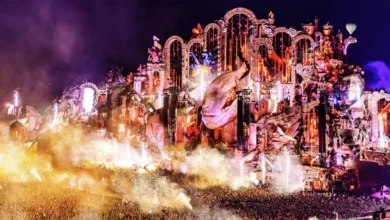
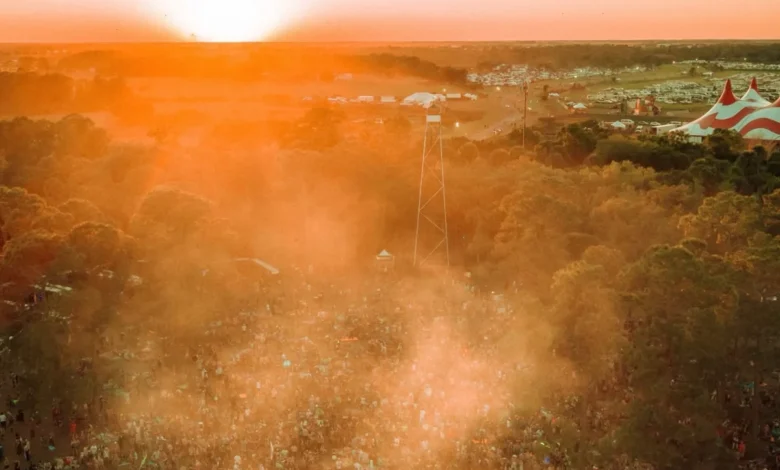
Launched in March 2016, the Okeechobee Music and Arts Festival quickly established itself as a premier destination for fans of diverse musical landscapes, seamlessly blending jam bands, hip-hop icons, electronic dance music producers, and indie-rock mainstays. Situated on a sprawling, 800-acre plot of land known as Sunshine Grove in Okeechobee, Florida, the festival utilized its lakeside campground, beach stages, and open-air environments to cultivate an immersive community atmosphere reminiscent of legacy camping festivals like Bonnaroo.
In its formative years, the festival was produced by Soundslinger, an independent promotion entity that curated massive lineups featuring artists such as Mumford & Sons, Kendrick Lamar, Bassnectar, and Robert Plant. However, the operational weight of producing a massive multi-day camping event quickly tested the financial limits of independent promoters. By late 2018, rumors circulated regarding the festival’s financial stability, leading to the cancellation of the 2019 edition.
The brand was subsequently acquired by Insomniac Events, the powerhouse promoter behind Electric Daisy Carnival (EDC) and a subsidiary of Live Nation Entertainment. Under Insomniac’s corporate umbrella, Okeechobee returned in triumphant fashion in 2020, drawing tens of thousands of attendees just weeks before the onset of the COVID-19 pandemic forced a global shutdown of the live events industry. Following the pandemic hiatus, the festival made a successful comeback in 2022 and 2023, reassuring ticket buyers that the destination event had regained its footing.
However, subsequent years saw the festival abruptly vanish from the annual calendar once again, with management skipping both the 2024 and 2025 event cycles. The recent revelation concerning 2027 indicates that even with the planned 2026 edition serving as a temporary focal point, the event’s operational roadmap remains fraught with instability.
The Economics of Independence and Rising Industry Pressures
A central theme of the recent communication from festival organizers is the structural shift in ownership. Okeechobee has officially transitioned away from the corporate backing of Insomniac Events, returning to independent status. While autonomy from major conglomerates is often lauded by purists who favor grassroots curation, the financial realities of the modern live music industry present steep barriers for independent operators.
According to industry analysts, the live entertainment ecosystem has undergone a severe financial contraction and cost-inflation cycle in the post-pandemic era. Independent festival producers are currently grappling with exponential increases across nearly every facet of event production. Key cost drivers include surging talent booking fees—spurred by intense competition among major promoters for top-tier headliners—alongside skyrocketing expenses related to private security, medical staffing, sanitation infrastructure, insurance premiums, and heavy-duty staging equipment.
Without the balance sheet and corporate synergies of a multinational conglomerate like Live Nation or Anschutz Entertainment Group (AEG), smaller independent festivals often lack the liquidity required to absorb unexpected market shocks or multi-million-dollar production deficits. The email from Okeechobee organizers explicitly addressed these hardships, noting that the financial math of mounting the festival in its historical scope is no longer tenable under their current independent framework. Consequently, management stated an intention to utilize the upcoming hiatus to "reimagine and rework" the festival’s foundational model. Yet, this strategic pivot remains vaguely defined, lacking specific timelines, target dates, or operational roadmaps.
A Crowded Florida Festival Market and Regulatory Challenges
Compounding these economic hurdles is the hyper-competitive landscape of the Florida event market. Over the past decade, the state has transformed into a saturated hub for large-scale music festivals, particularly during the late-winter and early-spring tourism window when Florida weather is optimal for outdoor gatherings.
Okeechobee now finds itself competing directly for consumer disposable income, corporate sponsorship dollars, and headlining talent against a dense calendar of regional rivals. Events such as Rolling Loud in Miami, Ultra Music Festival in downtown Miami, the Gasparilla Music Festival in Tampa, the Florida Groves Festival, and various electronic dance music cruises departing from Florida ports create a congested marketplace. Furthermore, destination camping festivals require massive tracts of undeveloped land that meet specific zoning, environmental, and infrastructure requirements—criteria that are increasingly difficult to secure and maintain in rapidly developing regions of Central and South Florida.
Local logistical hurdles have also played a role in the operational history of Sunshine Grove. Over the years, organizers have had to navigate rigorous county permitting processes, local noise ordinances, traffic management plans involving regional highway patrols, and environmental protection guidelines to safeguard the surrounding wetlands and agricultural zones. Satisfying these municipal requirements demands substantial capital investment well in advance of gates opening to the public.
Implications for the Festival Community and the Live Entertainment Sector
The indefinite pause of Okeechobee underscores a broader, concerning trend within the North American festival circuit. Over the last twenty-four months, numerous mid-to-large-scale independent music festivals have either downsized, indefinitely postponed operations, or shuttered permanently. Industry observers note that the era of rapid, speculative expansion in the festival market has decisively ended, replaced by a period of corporate consolidation and severe economic pruning.
For loyal attendees—often referred to in marketing materials as the "OkeeChobeeFam"—the news represents a bittersweet conclusion to a defining cultural touchstone. Communities built around recurring camping festivals often develop deep social bonds, generational traditions, and localized micro-economies that stretch far beyond the music itself. The reliance on digital photo albums, commemorative art prints, and nostalgic retrospectives in the announcement email has fueled speculation among fans that the 2026 edition may effectively function as a final farewell rather than a temporary intermission.
While the door has technically been left open for a potential future return under a restructured format, the absence of a target year or concrete planning milestones signals that any prospective revival is a distant and highly uncertain prospect. In the interim, ticket holders of the upcoming 2026 event and legacy patrons are left to process the shifting tides of an industry where the financial viability of independent, large-scale gathering spaces grows increasingly tenuous.
As the live entertainment market continues to adapt to inflationary pressures, shifting consumer spending habits, and corporate dominance, the fate of Okeechobee Music and Arts Festival serves as a stark case study in the vulnerabilities facing modern independent cultural institutions. Whether the brand can successfully reinvent itself for a new era or whether Sunshine Grove has hosted its final weekend of music, art, and camping remains one of the most pressing questions facing the contemporary festival landscape.