The Silent Dance Floor: Why John Summit, Max Styler, and Modern DJs Are Declaring War on Crowd Chatter

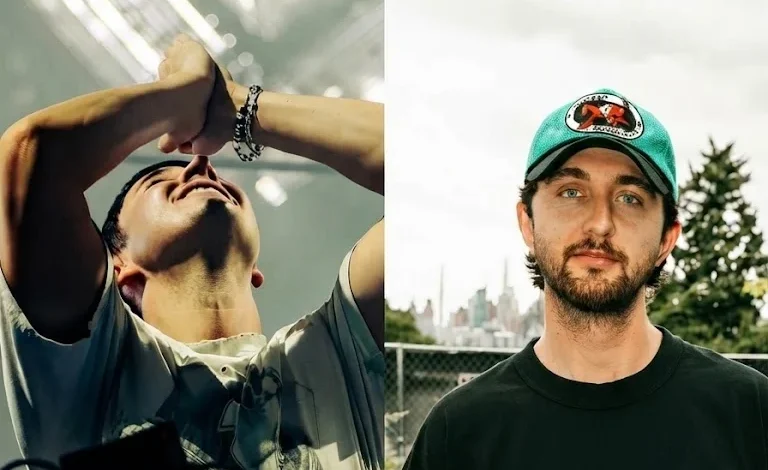
Electronic dance music has long prided itself on being a sanctuary of escapism—a communal space where individuals can transcend the monotony of everyday life through rhythm, bass, and synchronization. Yet, as the global electronic music industry continues its unprecedented commercial expansion, a friction point has emerged between performers and attendees. Recently, prominent electronic music producers and DJs John Summit and Max Styler took to social media to voice a growing grievance among touring artists: the prevalence of disruptive crowd conversation during live performances. Their public critiques have ignited a broader cultural conversation within the dance music community, forcing fans, promoters, and artists alike to re-examine what it means to truly participate in a live musical experience.
The debate touches on a fundamental tension in contemporary nightlife culture. On one side are attendees who view club nights and music festivals primarily as vital social hubs, spaces to catch up with friends, network, and document experiences in the age of hyper-connectivity. On the other side are artists and dedicated music enthusiasts who argue that the sanctity of the dance floor requires total immersion, demanding that physical presence be matched by mental and emotional engagement with the art form. As this debate unfolds, it highlights a paradoxical shift in modern entertainment: even as audiences have unprecedented access to live performances, the ability to remain fully present in the moment appears increasingly difficult to maintain.
The Root of the Frustration: Social Media Outcries and Festival Backdrops
The recent discourse was catalyzed by blunt online statements from two of house music’s most visible figures. John Summit, whose relentless global touring schedule throughout 2026 has kept him constantly in front of massive crowds, addressed the issue directly on social media. Writing to his hundreds of thousands of followers, Summit declared, "idc what genre u listen to the only thing that is killing the dance floor is the constant yapping." The sentiment was swiftly echoed by fellow producer Max Styler, who performed alongside Summit at the highly anticipated Experts Only Festival. Styler took a similarly uncompromising stance, posting, "do the drugs, do the alcohol, do the dancing, let your freak flag fly but don’t open your trap," followed by a plea for attendees to refrain from loud conversations while sets are underway.
These digital admonishments did not emerge in a vacuum. Just weeks prior, Summit’s self-curated Experts Only Festival returned to New York City’s Randall’s Island on September 19th and 20th, drawing tens of thousands of dedicated house and techno enthusiasts. While the two-day event was widely praised for its high-production value and curated lineups, mega-festivals of this scale often amplify the friction between dedicated music lovers and casual attendees who treat the dance floor merely as a backdrop for socializing.
The phenomenon is not entirely new, but its visibility has amplified alongside the commercial growth of the genre. As dance music festivals attract increasingly diverse demographics, the cultural norms of the dance floor—once strictly guarded by underground communities—are frequently diluted by attendees unfamiliar with, or indifferent to, the unwritten rules of club etiquette.
Shifting Dynamics Inside the DJ Booth: The Retreat from the Microphone

Interestingly, the push for a more focused, uninterrupted musical journey is mirrored by a parallel trend originating from the other side of the DJ booth. For decades, master of ceremonies (MC) culture and enthusiastic microphone use were staples of electronic music performances, particularly within commercial EDM and mainstream festival circuits. DJs frequently stopped the music or shouted hype phrases over the drop to manufacture excitement.
However, a noticeable shift has taken place across the industry. Industry analyses, such as a March report published by Relentless Beats, have documented a widespread retreat from microphone usage among top-tier selectors. Rather than spoon-feeding emotional cues to the crowd, contemporary headliners are increasingly relying on seamless mixing, long atmospheric transitions, and complex harmonic mixing to guide the emotional trajectory of the room.
This evolution reflects a maturation of the audience. Modern electronic music crowds, particularly those attending techno, tech-house, and deep house events, are increasingly sophisticated. They can anticipate builds, breakdowns, and drops without needing verbal cues from the stage. By reducing microphone interruptions, DJs allow the music to speak for itself, creating a continuous, hypnotic audio environment. When artists minimize talking from the stage, however, the ambient noise of a chatty crowd becomes glaringly apparent, creating a jarring juxtaposition that likely fuels the frustrations expressed by Summit, Styler, and their peers.
Implications for Modern Nightlife Culture and Event Production
The backlash against crowd chatter raises serious questions about the future of live music curation and attendee etiquette. From an economic perspective, festival promoters and venue owners rely on diverse audiences—ranging from hardcore purists to casual socialites—to maintain the financial viability of large-scale events. Alienating casual fans through strict behavioral policing is rarely a viable business strategy. Yet, ignoring the complaints of top-tier talent risks degrading the quality of the live experience, potentially leading artists to favor intimate, strictly curated venues over massive, unfocused festival stages.
From a psychological standpoint, the inability of some attendees to disconnect from conversation points to a broader societal reliance on distraction. In an era defined by digital notifications, constant multitasking, and the compulsion to document every waking moment, sustained focus has become a scarce commodity. The dance floor was historically designed as an antidote to this exact mental fatigue—a place where verbal language ceases and physical, rhythmic expression takes over. When conversation invades this space, it breaks the communal trance that makes live electronic music uniquely therapeutic.
As the industry moves forward, the dialogue initiated by artists like Summit and Styler may gently reshape cultural expectations at clubs and festivals. While nobody is suggesting the implementation of formal silent zones or draconian anti-talking policies, a collective cultural push toward greater dance floor mindfulness could benefit everyone involved. Ultimately, whether experiencing an underground warehouse party or a massive waterfront festival, the underlying ethos remains unchanged: when the music is playing, putting conversations on pause allows the art to take center stage, ensuring that the dance floor remains a place of connection through sound rather than idle chatter.