Madonna’s "Confessions II" Reignites the Dance Floor with a Critically Acclaimed Return to Her Roots

Madonna, the undisputed Queen of Pop, has once again redefined her legacy with the release of Confessions II, an album hailed as her most critically acclaimed work in over two decades and a triumphant return to the top of the charts, marking her 10th No. 1 album on the prestigious Billboard 200. More than just a sequel to her iconic 2005 disco-inspired masterpiece, Confessions on a Dance Floor, this latest offering stands as an impassioned, deeply personal love letter to the rich history and diverse sub-genres of dance music. It propels listeners through the exhilarating emotional arc of a quintessential night out—from the electrifying anticipation before the first beat drops, to the unbridled euphoria of the dance floor, and finally, to the quiet, introspective reflections that arrive with the sunrise. The album seamlessly blends the foundational sounds of Chicago house, the futuristic rhythms of Detroit techno, the syncopated grooves of two-step garage, the psychedelic swirls of acid house, and everything in between, creating a cohesive, nonstop mix designed for collective movement and individual catharsis.
A Groundbreaking Album Rollout and Chart Dominance
The release of Confessions II was accompanied by one of the most innovative and talked-about album rollouts in recent memory, a testament to Madonna’s enduring ability to push boundaries and engage with her audience in unexpected ways. Central to this campaign was a groundbreaking partnership with the gay dating app, Grindr, a move that resonated deeply with her long-standing LGBTQ+ fanbase and acknowledged the community’s pivotal role in the genesis and evolution of dance music culture. This strategic alliance underscored the album’s thematic dedication to inclusivity and the communal spirit of the dance floor.
Upon its release, Confessions II debuted at the top of the Billboard 200 chart, solidifying Madonna’s position as one of the few artists with No. 1 albums spanning five consecutive decades. This achievement places her in an elite tier, further cementing her historical significance in popular music. The album’s commercial success was matched by widespread critical adoration, with reviewers praising its authentic embrace of underground dance aesthetics, its sophisticated production, and Madonna’s candid, vulnerable songwriting. Publications across the globe lauded Confessions II as a bold, relevant statement from an artist who, even after four decades, refuses to rest on her laurels, proving that artistic reinvention and deep connection to musical roots can still yield immense success and critical acclaim.
"Club Confessions" Takes Over Brooklyn’s Knockdown Center
As a cornerstone of the album’s immersive promotional strategy, Madonna launched "Club Confessions," a series of exclusive rave-style events designed to bring the album’s sonic landscape to life in a tangible, communal setting. The latest and arguably most anticipated iteration of this unique concert experience took place on Saturday, July 11, at Brooklyn’s sprawling Knockdown Center. This event marked the fourth physical manifestation of Confessions II in rave form, following highly successful engagements at The Abbey in West Hollywood, the opulent Paradis Latin in Paris, and the industrial Magazine in London. A surprise pop-up performance in Times Square earlier in June had already given fans a taste of the album’s electrifying energy, setting the stage for the Brooklyn spectacle.

Knockdown Center, a sprawling former factory turned arts and performance space, was an apt choice for "Club Confessions." Known for its cavernous main room, industrial aesthetic, and reputation as a premier venue for cutting-edge electronic music events in New York City, it provided the perfect backdrop for Madonna’s return to her club roots. The venue’s history of hosting legendary DJ sets and immersive experiences made it an ideal partner for an artist who sought to recreate the raw, unfiltered energy of the dance floor.
An Immersive Journey into Madonna’s World
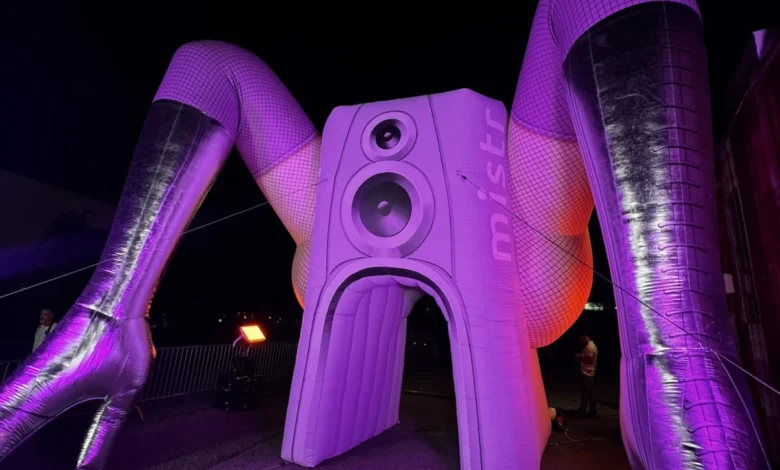
Attendees at Knockdown Center were treated to an unparalleled immersive experience from the moment they arrived. Fans entered the venue through a truly larger-than-life recreation of Madonna’s legs—a striking visual motif from the album’s first promotional image—and a colossal 2000s-style speaker. This audacious entrance immediately signaled that guests were stepping into a curated world where art, music, and performance converged. Inside, the industrial walls of the Knockdown Center were transformed by floor-to-ceiling patchworks of wheat paste posters, mirroring the guerrilla promotional artwork that had saturated streets across major cities in the United States and Europe, further blurring the lines between art installation and marketing campaign.
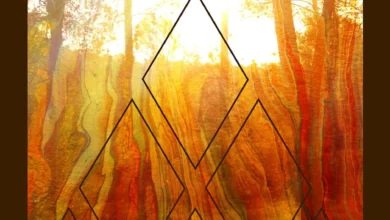
Continuing their journey, patrons navigated a laser-filled, forest-themed hallway, a direct and captivating recreation of the "Good for the Soul" sequence from Confessions II: The Film. This visual project, which debuted at the Tribeca Festival just a month prior, spans the first five songs of the album and provided a cinematic prelude to the live experience. At the bar, a partnership with Absolut, a brand long associated with Madonna and the LGBTQ+ community, offered specially crafted Madonna-themed cocktails. LED recreations of the album cover adorned the space, as the DJ Fcukers kicked off the night with a high-energy set, steadily building the anticipation.
A Star-Studded Lineup and an Unforgettable Performance
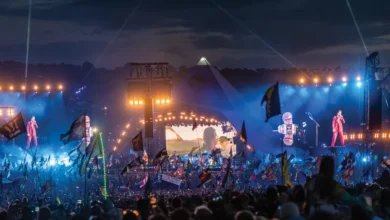
The energy inside Knockdown Center reached a fever pitch shortly after 1 a.m. as the house lights dimmed, signaling the arrival of the night’s main event. Stuart Price, the revered longtime collaborator and co-producer of both Confessions II and its predecessor, took to the decks. Moments later, Madonna herself emerged, eliciting what many described as perhaps the loudest roar the Knockdown Center had ever witnessed. The unmistakable intro, “It’s Motha!” rattled through the vast warehouse, announcing her presence with an undeniable force. Behind them, massive LED screens flashed the album’s tracklist, promotional visuals, and one dominant word in floor-to-ceiling lettering: “MADONNA.”
The performance that followed was a masterful blend of live vocal delivery, dynamic stage presence, and expert DJing. Madge and Price commenced their set with “One Step Away,” a hypnotic, house-inspired track whose opening manifesto encapsulates the album’s core philosophy: “The dance floor is not just a place. It’s a threshold, a ritualistic space.” This segued smoothly into “Love Without Words,” a dark and sensual house track that opened with another spoken-word intro from Madonna, met with enthusiastic cheers from the galvanized crowd.

What unfolded was neither a conventional Madonna concert nor a typical DJ set. Madonna showcased her legendary stage prowess, singing live intermittently while dancing atop the decks during the sensual and experimental track “School.” Even at 67 years old, her boundless energy and remarkable flexibility were on full display, defying ageist expectations and reaffirming her status as a physical and artistic powerhouse. Stuart Price, the sonic architect behind the Confessions sound, left his indelible mark on the venue, expertly weaving the new album’s tracks with seminal old-school house classics such such as Marshall Jefferson’s “Move Your Body” and Mixmasters’ “In the Mix.” This deliberate inclusion of foundational tracks underscored the album’s mission: to celebrate the roots of dance music and make people dance.
Despite the pervasive presence of phones recording every moment, the night ultimately became a living thesis statement for Confessions II. As Stuart Price had previously revealed in an interview with Attitude magazine, the album was intentionally crafted as a nonstop mix, designed to “go against the grain” of a singles-driven market. At Knockdown Center, this vision materialized: Confessions II was undeniably built for packed warehouses, for sweat-soaked clubs, and, most importantly, for strangers to lose themselves together on the dance floor, connected by rhythm and collective euphoria.
A Gathering of Icons and a Shared Experience
The event drew a constellation of celebrity guests, many of whom danced enthusiastically behind Madonna and the decks. The notable attendees included electronic music sensation Kaytranada, Brazilian drag queen and singer Pabllo Vittar, actress Debi Mazar, television personality Frankie Grande, musician Sky Ferreira, and pop star Kim Petras, among others. Their presence highlighted the widespread impact and cultural significance of Madonna’s return to the dance scene.
However, the true magic of the night resided not just in the celebrity attendance, but in the diverse and energetic crowd. When Madonna took the microphone, declaring, “Everyone here is a work of art,” it was clear that the profound vision behind Confessions II had fully materialized. The subsequent tease of the “Danceteria” lyric from her ‘90s house-inspired track prompted an astonishing response: seemingly every person in attendance scream-sang each word, a moment of raw, collective passion that visibly surprised and delighted Madonna, eliciting her genuine laughter.
Price and Madonna’s electrifying set spanned just under an hour, covering a selection of dance heavy-hitters from the new album, expertly mixed alongside beloved classics from Madonna’s extensive back catalog. The duo concluded their performance with timeless hits from the original Confessions on a Dance Floor, sending the crowd into a frenzy with “Hung Up” and “Get Together.” The night was then seamlessly handed over to Honey Dijon, who closed the event with her signature rhythmic grooves, beginning with her unreleased remix of Madonna’s 1983 classic “Physical Attraction.” Fresh off the first day of her own “Love Sensation” daytime event at Knockdown Center’s outdoor venue, The Ruins, Honey Dijon kept the warehouse pulsing well into the early morning hours, ensuring the dance floor remained a vibrant, living entity.
"Confessions II": A Masterpiece Built for the Dance Floor

Over four decades since her debut, Madonna has once again changed the game, not just through the album itself, but through its legendary promotional campaign, meticulously designed for the clubs and the dedicated fans who fill them. What truly distinguishes Confessions II is the depth of Madonna’s immersion in dance music history, seamlessly weaving its myriad forms with some of the most vulnerable, biographical, and truly “confessional” songwriting of her illustrious career.
Her profound reverence for dance music is palpable, reflected in the album’s kaleidoscopic array of sub-genres, its judicious use of creative samples—including Lil Louis’s “French Kiss” on “I Feel So Free,” Inner City’s “Good Life” on “Bring Your Love,” and Lou Reed’s “Walk on the Wild Side” on “Danceteria”—and its impressive roster of production credits. Confessions II was primarily produced by Stuart Price and Madonna herself, with additional contributions from some of electronic dance music’s most respected names. Martin Garrix, the Dutch superstar and mainstream EDM heavyweight, co-produced “Bizarre,” a synth-pop club track that he had been performing to rapturous crowds since its debut at the Barclays Center in June. Italian electronic music duo PARISI provided additional production on four key tracks: the ethereal “Love Without Words,” the vibrant Sabrina Carpenter duet “Bring Your Love,” the hard-hitting “Everything,” and the downtempo, introspective “Betrayal.” Furthermore, the accompanying remix package, Confessions II: Afterhours Edition, features Honey Dijon’s electrifying remixes of “Bring Your Love,” alongside “Love Sensation” remixes by the acclaimed Floorplan and Saltue, underscoring the album’s deep connection to the global electronic music community.
Lyrically, Confessions II offers some of Madonna’s most introspective and raw songwriting to date. The album features a tender heart-to-heart with her daughter (“The Test”), a scathing rebuke of her stepmother (“Betrayal”), a poignant exploration of the grief of losing her brother (“Fragile”), reflections on her early life as a struggling artist in New York City (“L.E.S. Girl”), candid memories of the tumultuous chaos that characterized her marriage to Sean Penn (“Bizarre”), and an autobiographical retelling of the diverse friends and artists who shaped her creative life in the nascent New York club scene (“Danceteria”).
However, it is the album’s innovative structure that truly makes it shine as a cohesive artistic statement. Sequenced as a continuous DJ set, Confessions II masterfully unfolds as both a metaphorical night out and a profound reflection on Madonna’s own life journey, with each chapter of the evening mirroring a distinct emotional moment in her story. Tracks like “I Feel So Free” through “One Step Away” perfectly capture the exhilarating anticipation of a legendary night and the rush of excitement as one heads to the club. The sequence from “Bring Your Love” to “Read My Lips” throws the club doors wide open, immersing listeners in the joyful bliss of dance floor happiness and the profound sense of community that accompanies it.
The run from “Everything” to “Bizarre” is arguably one of Madonna’s strongest musical sequences, raising the energy to a peak euphoria where the vibes are just right and the collective energy reaches its absolute pinnacle. “School” then shifts into the more experimental, grimy sounds often associated with the afterparty, while “Fragile” becomes the night’s poignant “crying on the dance floor” moment, allowing for emotional release amidst the rhythmic pulse. The album’s four final tracks, “My Sins Are My Savior” to “L.E.S. Girl,” artfully represent the quiet, reflective moments that follow a truly great night—the contemplative Uber ride home, the serene sight of the sun rising over the city, the gentle chirping of birds signaling a new day, and the inevitable thoughts and introspections that accompany such transitions.
It is a rare feat in contemporary music for an album to truly take its listeners on such a profound journey, both musically and metaphorically. But Madonna accomplishes precisely that with Confessions II. Instead of merely chasing fleeting contemporary pop trends or attempting a superficial stab at radio-friendly pop EDM (a direction she explored with mixed results on 2012’s MDNA), Madonna not only invites us deep into her world but also powerfully reconnects with the underground scenes that profoundly shaped her own artistic identity. House, techno, garage, acid, disco—Confessions II stands as a vibrant, unapologetic celebration of dance music in its purest, most authentic forms. Forty-three years into one of pop music’s most decorated and influential careers, she unequivocally demonstrates that she remains as much a dedicated student of the dance floor as she is its reigning queen.
While Madonna may not be the first artist that immediately comes to mind for many when they envision rave culture, Confessions II compellingly argues that perhaps she should be. Even for one electrifying night in Brooklyn, Madonna served as a potent reminder that she never truly abandoned the dance floor. Confessions II is a powerful testament that long before dance music conquered the mainstream, Madonna was instrumental in helping to bring it there, championing its sounds and culture on a global scale. If this album proves anything, it is that her relationship with dance music has consistently been one of genuine participation, deep admiration, and profound respect, rather than mere imitation or cynical capitalization. She has always spoken the language of dance music; Confessions II is simply her most fluent, articulate, and heartfelt conversation with it in decades—if not her entire unparalleled career. Therefore, it is with utmost conviction that one should meet Madonna on the dance floor and give Confessions II the comprehensive, immersive listen it so richly deserves.