Electronic Music Release Roundup: Barnt, Cosmin TRG, FJAAK, Ricardo Villalobos, and Sciahri


The landscape of contemporary electronic music remains defined by a perpetual tension between the preservation of foundational club aesthetics and the impulse toward sonic evolution. This week’s release cycle highlights a significant cross-section of the industry, ranging from the long-overdue archival reissue of a seminal German house track to the latest explorations in high-BPM techno and minimalist experimentation. As record labels and producers navigate the shift between digital-first consumption and the enduring cultural capital of physical media, these new releases offer a comprehensive snapshot of current production trends across Europe’s most influential dance music hubs.

The Resurrection of Barnt’s Geffen via Magazine
Fifteen years after its initial debut, the track Geffen by Kiel-based producer Daniel Ansorge, known professionally as Barnt, has been treated to a comprehensive reissue by the Cologne-based imprint Magazine. The release serves as a bridge between the genre-blurring experimentalism of the mid-2000s and the refined, pop-leaning sensibilities that define the label’s current curatorial direction.
The original release of Geffen arrived at a time when the boundaries between indie-electronic and floor-focused house were increasingly porous. While the title references the historic major label Geffen Records—most famous for overseeing the transition of Nirvana from Sub Pop to the mainstream—the track itself eschews the raw aesthetics of grunge in favor of a calculated, tension-filled dancefloor narrative. The reissue features a meticulous new master by Jörg Burger, alongside a "Kraut-Electro" interpretation from Jens-Uwe Beyer and a haunting "Mutation" rework created by Beyer and Crato. This archival effort highlights the longevity of the track’s core composition, which utilizes a repetitive, percussive snare-heavy structure to delay gratification, ultimately climaxing with 1970s-inspired synthesizer lines. The implications of this reissue are significant for the label, reinforcing Magazine’s commitment to elevating tracks that prioritize long-form tension over immediate, disposable impact.

Cosmin TRG and the Evolution of Club Hits
The concept of the "club hit" is rarely static, a fact evidenced by the latest output from Romanian producer Cosmin TRG. His 2016 staple, In Your Body, has undergone a rigorous transformation. By accelerating the tempo from 128 to 135 BPM and refining the frequency distribution, the producer has effectively updated the track for a faster, more aggressive contemporary club environment.
The Twentysix Mix of In Your Body is accompanied by a broader four-track EP that demonstrates a shift toward more complex, textural sound design. Of particular note is the introduction of an acid-inspired sequence five minutes into the lead track—a departure from the original’s composition. Beyond the primary remix, the EP includes Erodat and Iradiat, two pieces that explore the interplay between ambient synth chords and sub-bass frequencies. The inclusion of a deconstructed dubstep interpretation of Erodat by the duo TRYL suggests a broader industry trend: the reclamation of older, high-energy club tropes through the lens of modern sound engineering. This release signals a strategic pivot for Cosmin TRG, focusing on spatial depth and rhythm-focused minimalism that remains both technically precise and physically demanding for the listener.

FJAAK 015: The Persistence of Industrial Minimalism
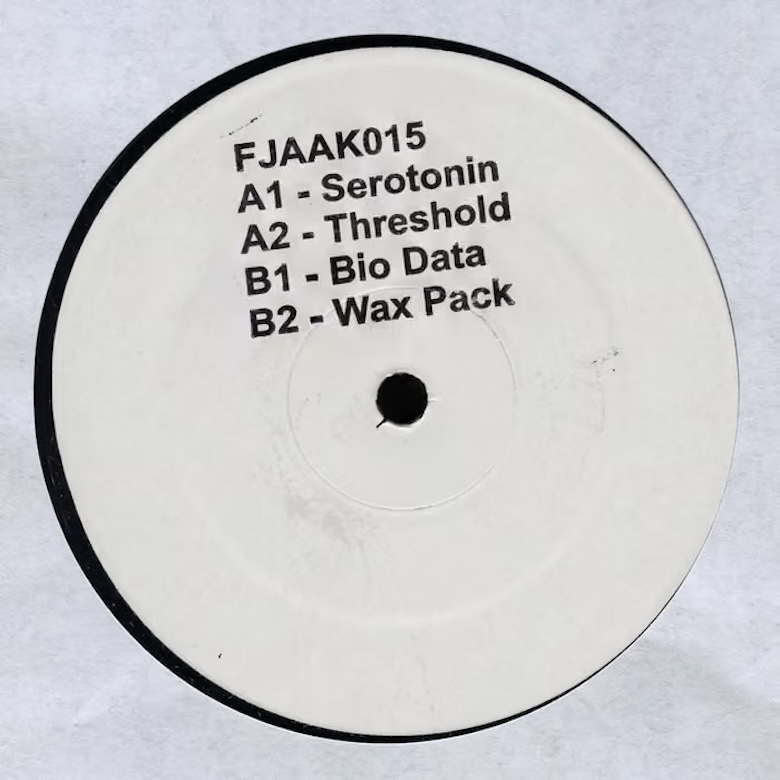
The Berlin-based trio FJAAK has long occupied a central position in the global techno conversation, known for a sound that balances analog hardware authenticity with high-energy dancefloor utility. With the release of FJAAK 015, the group opts for a refinement of their established aesthetic rather than a radical departure. The EP comprises four tracks that prioritize rhythmic clarity and industrial textures.
The lead track, Serotonin, establishes the project’s intent with driving, hammer-like percussion and a heavy low-end presence. However, the subsequent tracks, such as Threshold and Bio Data, demonstrate a more nuanced approach to space. Threshold utilizes hall-reverb to create a hypnotic, expansive environment, while Bio Data moves into the realm of raw, mechanical industrialism. This juxtaposition—moving between the machine-like rigidity of industrial techno and the euphoric, weightless moments of modern electronica—characterizes the current state of Berlin’s underground scene. By refusing to over-complicate their production, FJAAK serves as a case study in how minor deviations in rhythm and sound-layering can maintain relevance in a saturated market. The release is less an attempt at reinvention and more a demonstration of consistency, providing high-quality tools for DJs that remain effective across varying set lengths and intensities.

Ricardo Villalobos: A Minimalist Return
Ricardo Villalobos remains one of the most enigmatic figures in electronic music, and his latest release, Wings, marks a significant return to form following a three-year period of relative silence in terms of original compositions. Released via Raw Wax, the two-part EP titled Wings provides a masterclass in his signature minimalist house style.
Each track on the EP exceeds the 12-minute mark, a duration that has become a hallmark of the producer’s work. Villalobos continues to utilize his characteristic kick-drum patterns, coupled with unconventional chord progressions and subtle, chirping synthesizer melodies. From a technical perspective, the tracks are marked by their EQ-focused shifts, where the removal and reintroduction of specific frequencies create a sense of movement and "transcendence." This release highlights the continued viability of minimal techno in an era that often favors high-density production. The reaction from industry analysts has been one of anticipation, as the return of a producer of Villalobos’ stature often sets a benchmark for production standards within the minimal sub-genre. The focus here is on the listener’s engagement, with the tracks designed to reward those utilizing high-fidelity equipment to parse the intricate, shifting layers of percussion.
Sciahri’s Moonwake: A Shift Toward Big-Room Precision
The EP Moonwake by Sciahri marks a notable stylistic shift for the Iranian-Italian producer. Previously associated with the broken-beat experiments of the Ilian Tape label, Sciahri’s move to the Mutual Rytm imprint signals a commitment to more direct, big-room techno aesthetics.
The seven-track EP is characterized by a dark, metallic soundscape that eschews obvious melodic hooks in favor of atmospheric density. The title track, Moonwake, relies on a rolling, propulsive rhythm that serves as a foundation for the entire project. Subsequent tracks, including Liminal and Night Sentinel, delve into increasingly paranoid, high-tension territories. The release also includes digital bonus tracks, Silent Frontier and Louisiana, which maintain the technical quality of the core EP. This release is indicative of a broader trend among producers who are increasingly adopting a "precision-techno" approach—clean, cold, and futurist—to satisfy the demands of large-scale festival and club environments. While Moonwake does not necessarily break new ground in terms of genre definition, it serves as a highly competent execution of contemporary big-room techno, demonstrating a clear understanding of the sonic requirements for high-pressure dancefloor environments.

Broader Industry Implications and Conclusion
The convergence of these releases illustrates a healthy, if cautious, state of the electronic music industry. The archival work by labels like Magazine suggests that there is significant cultural value in re-evaluating the history of dance music, even as modern producers like FJAAK and Cosmin TRG push for updated, high-performance sound design.
A recurring theme across these releases is the importance of technical mastery—whether it is the granular control of percussion in a Ricardo Villalobos track or the industrial texture-mapping found in Sciahri’s work. As the digital music landscape continues to fragment, the reliance on high-quality production and curated physical releases remains a primary method for artists to distinguish themselves. These records represent not just a collection of tracks, but a snapshot of a scene that continues to find equilibrium between its experimental roots and its commercial, high-energy future. The persistence of these artists in delivering complex, long-form music suggests that the dancefloor remains a space where nuance and depth continue to hold as much weight as raw power.