Alessandro Fadini Introduces a Harmonious Intersection of Mathematical Theory and Contemporary Jazz in Debut Album Release


The emergence of Alessandro Fadini into the international jazz scene marks a significant moment for contemporary improvisation, as the Italian pianist and composer bridges the gap between rigorous academic mathematics and the fluid, emotive world of post-bop jazz. His debut album serves as a testament to the intellectual depth and technical proficiency that can be achieved when scientific discipline is applied to artistic expression. Fadini, a well-educated mathematician who is remarkably self-taught as a pianist, brings a unique analytical lens to his compositions, treating the piano not merely as an instrument of melody, but as a medium for exploring complex structural equations through sound.
As a protégé of the renowned pianist Marc Copland, Fadini has inherited a sophisticated harmonic palette and a penchant for atmospheric, impressionistic textures. Copland’s influence is evident in Fadini’s precipitate approach to improvisation, where he employs unique colorizations and what critics have described as "higher math equations" within his phrasing. This debut release does not merely showcase Fadini’s technical facility; it establishes a new dialogue between the precision of numerical logic and the spontaneity of the jazz tradition.
The Mathematical Foundation of Fadini’s Compositional Style
The relationship between music and mathematics is one of the oldest interdisciplinary connections in human history, dating back to the Pythagorean discovery of harmonic ratios. For Fadini, this connection is not theoretical but foundational. His background in mathematics informs the rhythmic subdivisions and harmonic structures of his work, creating a listening experience that feels both intellectually stimulating and intuitively resonant.
In tracks such as "Starting Something," Fadini’s phrasing reflects a meticulous attention to intervalic relationships and rhythmic permutations. The "higher math" mentioned by observers refers to the way he layers polyrhythms and unconventional time signatures, often creating a sense of "controlled chaos" that resolves into crystalline clarity. By approaching the keyboard with a mathematician’s mind, Fadini is able to deconstruct standard jazz tropes and rebuild them into more complex, non-linear narratives.
This analytical approach does not, however, come at the expense of emotion. On the contrary, Fadini uses his understanding of structure to better highlight the tension and release inherent in jazz. His ability to calculate the precise moment to introduce a dissonant chord or a rhythmic shift allows him to manipulate the listener’s expectations, leading to a more profound emotional payoff when the resolution finally arrives.
A Track-by-Track Analysis of Innovation and Emotion
The album opens with "Introduction to a Dark and Stormy Day" and "It Was a Dark and Stormy Day," a two-part exploration that sets the tone for the release. These tracks introduce the listener to the quartet’s dynamic range, moving from subtle, atmospheric whispers to driving, high-intensity passages. The opener showcases the deftness of the ensemble, particularly the interaction between the piano and the saxophone, establishing a narrative arc that feels cinematic in scope.
"All the Rest Is Boredom" serves as a masterclass in contrast. The composition utilizes staccato phrases and dissonant intervals to create a sense of urgency and intellectual friction. These "spiky" moments are frequently interrupted by melodically pleasing passages that provide a sense of relief and momentum. The up-tempo feel of the track provides ample space for individual improvisation, allowing each member of the quartet to demonstrate their virtuosity within a tightly defined structural framework.
In contrast to the frenetic energy of "Boredom," the track "Elegy for the Living Dead" offers a moment of solemn self-examination. The piece is beautifully crafted, conveying a deep sense of melancholy and introspection. Here, Fadini’s touch is lighter, more deliberate, focusing on the decay of the notes and the space between them. This track highlights his ability to convey complex human emotions through minimalist means, proving that his mathematical background does not preclude a deep capacity for empathy and sentiment.
"No Thrills," divided into two parts on the album, further exhibits Fadini’s "less is more" maturity. The solo piano introduction is gentle and flowing, avoiding unnecessary ornamentation in favor of harmonic purity. However, as the piece progresses, it undergoes a transformation. What begins as a quiet meditation evolves into a frenetic build, characterized by dramatic stops and punctuated rhythms. This creates a tightly woven experience of exploration, where the silence is as important as the sound.
The Synergy of the Alessandro Fadini Quartet
While Fadini’s vision guides the album, the execution is a collaborative effort involving an aptly qualified group of musicians who bring their own unique voices to the project. The rapport between the four members is a defining characteristic of the release, resulting in a cohesive sound that belies the complexity of the material.
Josiah Boornazian, performing on both alto and soprano saxophones, is a standout contributor. Fadini provides Boornazian with significant latitude, allowing his "slicing tone" and dynamic playing to lead many of the album’s most pivotal moments. Boornazian’s ability to mutate his tone across different tracks—serving the specific needs of each composition—is particularly striking. Whether he is providing a sharp, aggressive edge to a fast-paced improvisation or a breathy, lyrical quality to a ballad, his versatility is essential to the album’s success.
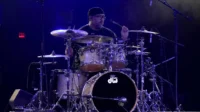
The rhythm section, consisting of Jakob Dreyer on bass and Luke Markham on drums, provides the essential foundation upon which Fadini and Boornazian build their improvisations. (Note: While some early reports may have transposed their roles, the official personnel listing confirms Dreyer on bass and Markham on drums). The interaction between Fadini and Dreyer is exceptionally "locked," with the bassist providing a nuanced underpinning that allows the piano to soar. Dreyer’s note choices are well-considered, creating a canvas that supports the melody players without ever overpowering them.
Luke Markham’s drumming is characterized by its creative textures and its ability to "push and pull" the tempo in a way that adds organic energy to the music. His contributions are best exemplified on his own composition, "Mayall’s Object," and on Boornazian’s "Window Ledge." Markham does not simply keep time; he interacts with the other musicians, contributing to the "sum of the release" through rhythmic counterpoint and dynamic shading.
Chronology of Development and Production
The journey to this debut album began years ago in Italy, where Fadini first balanced his university studies in mathematics with a rigorous, self-directed study of the piano. His move to the United States and his subsequent mentorship under Marc Copland represented a turning point in his career, transitioning from a private student of the instrument to a professional composer and performer.
The recording sessions for the album were conducted with an emphasis on live interaction, a hallmark of the jazz tradition. By capturing the quartet in a studio environment that encouraged spontaneous dialogue, Fadini ensured that the mathematical structures of his compositions remained vibrant and breathing. The production process involved careful attention to the "colorizations" Fadini sought to achieve, ensuring that the harmonic richness of the piano and the varied textures of the saxophones were preserved with high fidelity.
Following the recording, the album underwent a period of refinement, where tracks like "Love in the Age of Mechanical Reproduction" were polished to highlight the intersection of human performance and structural rigidity—a theme that resonates with Fadini’s broader intellectual interests.
Broader Impact on the Jazz Marketplace
The release of Fadini’s debut comes at a time of transition for the jazz world. As many of the genre’s original trailblazers pass away, the responsibility for expanding the boundaries of the art form falls to a new generation of "young groups" who are willing to experiment with new influences. Fadini and his quartet represent this new wave, taking the seeds planted by masters like Marc Copland and growing them into something contemporary and distinct.
Industry analysts suggest that Fadini’s success lies in his ability to appeal to both the traditional jazz listener and a more modern, intellectually curious audience. His "mathematician-pianist" persona provides a compelling narrative that distinguishes him in a crowded marketplace. Furthermore, the high level of musicianship displayed by Boornazian, Dreyer, and Markham suggests that this quartet is a group to watch as they continue to evolve.
The album’s reception indicates a growing appetite for jazz that is both technically challenging and emotionally accessible. By successfully navigating the complexities of "higher math" phrasing while maintaining a "winning result" in terms of listenability, Fadini has established himself as a significant new voice.
Conclusion: The Future of the Fadini Vision
Alessandro Fadini’s debut is more than just a collection of songs; it is a statement of intent. It asserts that the intellectual and the emotional are not mutually exclusive, but are instead two sides of the same coin. Through his precipitate approach to improvisation and his masterful command of the quartet format, Fadini has created a work that is as rigorous as a theorem and as expressive as a poem.
As the group looks toward future projects, the jazz community remains attentive to their direction and growth. The "plusses" attributed to this release—the rapport of the ensemble, the unique compositional voice, and the high technical standards—set a high bar for future endeavors. In the evolving landscape of 21st-century jazz, Fadini’s synthesis of math and music offers a promising path forward, ensuring that the trail blazed by his predecessors continues to expand into new and uncharted territories.