Troy Roberts Enchants the Jazz World with Virtuosic Quartet Masterpiece Tales and Tones

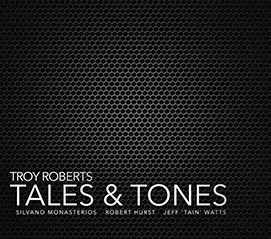
The contemporary jazz landscape is constantly evolving, yet it occasionally receives a masterclass in modern acoustic artistry that demands the immediate attention of critics and aficionados alike. Saxophonist Troy Roberts, an Australian-born virtuoso increasingly celebrated as a premier global ambassador of the jazz woodwind tradition, has delivered a definitive artistic statement with his critically acclaimed recording, Tales & Tones. Released to widespread acclaim, the nine-track album serves as a masterclass in ensemble interaction, structural sophistication, and narrative-driven performance. Featuring an elite lineup of modern jazz heavyweights—including pianist Silvano Monasterios, drummer Jeff "Tain" Watts, and bassist Robert Hurst—the project reimagines the possibilities of the classic jazz power-quartet through a seamless synthesis of unbridled physical energy and fastidious intellectual control.
Main Facts and Album Overview
At its core, Tales & Tones is a masterclass in dynamic contrast and storytelling. The album spans nine distinct compositions, moving fluidly between explosive, high-octane workouts and deeply introspective, elegiac reflections. The proceedings kick off with an undeniable sense of urgency on tracks like Decoration, where the rhythm section establishes an authoritative and commanding pulse. Throughout the album, Roberts commands both tenor and soprano saxophones with an encyclopedic command of tone, shifting from soaring, piercing upper registers to rich, woody depths.
The rhythm section assembled for this project is nothing short of legendary. Jeff "Tain" Watts, a veteran of groups led by Wynton Marsalis and Branford Marsalis, brings a kinetic polyrhythmic intelligence to the drum kit. Paired with bassist Robert Hurst—a powerhouse whose CV includes extensive work with the late, great Wynton Marsalis and Jay Leno’s Tonight Show band—the rhythm section functions as a single, telepathic organism. Pianist Silvano Monasterios anchors the harmonic framework with a dual capacity for breakneck virtuosity and sublime, impressionistic delicacy. Together, this quartet elevates the standard modern jazz recording into an intricate tapestry of sound.
Chronology and Evolution of the Project
The journey of Tales & Tones reflects years of rigorous artistic refinement by Roberts, an Australia native who relocated to the United States to immerse himself in the epicenter of the global jazz scene. Having established a reputation as a formidable instrumentalist through numerous international collaborations and pedagogical engagements, Roberts sought to capture a lightning-in-a-bottle studio chemistry by convening musicians who share an instinctual understanding of the jazz continuum.
Chronologically, the recording sessions were designed to capture the raw, visceral energy of a live performance while retaining the acoustic clarity of a high-end studio production. The sequencing of the album is meticulously plotted. It opens with the explosive, percussion-driven assault of Decoration, setting a high physical bar for the ensemble. As the tracklist progresses through pieces like Trams and Rivera Mountain, the tempo shifts into calculated ebbs and flows. The middle and latter segments of the album balance historical reverence with modern innovation, offering fresh takes on classic frameworks such as Billy Strayhorn’s timeless Take The A Train, alongside complex modern originals and introspective jazz standards like Bernie’s Tune and Pickapoppy.
Supporting Data and Track Breakdown
The structural integrity of Tales & Tones relies heavily on the nuanced interplay between individual virtuosity and collective restraint. The album’s tracklist comprises:
- Decoration
- Trams
- Rivera Mountain
- Bernie’s Tune
- Cotu Chi Chi Chi
- Take The A Train
- Pickapoppy
- Mr. Pinononnk
- Boozy Bluesy
On tracks characterized by introspection, such as Rivera Mountain, the dynamic approach of the ensemble undergoes a complete transformation. Here, Jeff "Tain" Watts replaces his heavy, driving hammer-throws with delicate, muted brushwork that acts as a soft undercoat of glowing colors. Robert Hurst exhibits equal sensitivity, anchoring the music with a deep, resonant gravitas that never overpowers the melody. Silvano Monasterios complements this atmospheric shift by contributing pastel-hued piano voicings delivered at a measured, unhurried pace.
Conversely, the project embraces unbridled kinetic force on numbers like the opening track and the rhythmically intricate Boozy Bluesy. Yet, even during moments of maximum sonic impact, the musicians maintain an acute awareness of space and balance, avoiding the trap of instrumental overkill. This sophisticated handling of volume and texture is particularly evident on their reimagining of Billy Strayhorn’s Take The A Train, where the ensemble navigates swinging tempo changes with a buoyant, elastic agility.
Artist Background and Personnel Analysis
To fully understand the weight of Tales & Tones, one must examine the pedigree of the artists involved. Troy Roberts has steadily ascended the international jazz hierarchy. Hailing from Perth, Australia, Roberts earned accolades early in his career before making the pivotal move to the United States, where he earned a master’s degree from the prestigious Thelonious Monk Institute of Jazz. His technical facility on both soprano and tenor saxophones has drawn comparisons to the genre’s luminaries, yet his voice remains distinctly his own—characterized by an ability to construct lengthy, logical improvisational arcs that tell a coherent musical story.
Silvano Monasterios brings a rich cross-cultural harmonic palette to the piano bench. Blending traditional jazz voicings with subtle Latin American influences, Monasterios provides a bridge between the avant-garde rhythmic concepts of the rhythm section and Roberts’ soaring melodic lines.
Meanwhile, the rhythm section of Robert Hurst and Jeff "Tain" Watts represents a masterclass in modern jazz accompaniment. Watts, whose drumming style defined the sound of modern acoustic jazz in the late 1980s and 1990s, possesses an uncanny knack for pushing soloists to their absolute limits while simultaneously providing a secure safety net. Hurst’s acoustic bass playing is the vital glue of the ensemble, offering a low-end growl that grounds the soaring flights of the saxophone and piano. Their synergy on this recording is the result of decades of shared musical history on the world’s most demanding bandstands.
Official Responses and Critical Reception
Industry response to Tales & Tones has been overwhelmingly positive, cementing Roberts’ status as a formidable force in contemporary jazz composition and performance. Contemporary jazz critics have lauded the album for its rare combination of cerebral composition and visceral emotional impact.
Industry analysts and jazz educators have pointed to the recording as a prime example of how the traditional acoustic quartet format remains vital and fertile ground for innovation. While many modern jazz releases lean heavily into electronic fusion or over-produced studio trickery, Tales & Tones relies on the raw acoustic interplay of four master musicians performing in real-time. This organic approach has resonated deeply with purists and younger audiences alike, who find authenticity in the unedited emotional truth of the performances.
Broader Impact and Implications for the Jazz Genre
The release of Tales & Tones arrives at a crucial juncture for the jazz genre. As streaming algorithms and commercial pressures often incentivize shorter, genre-diluted tracks, Roberts and his quartet have deliberately chosen a path of uncompromising artistic integrity. The album challenges listeners to engage with long-form improvisation, complex polyrhythms, and deep harmonic exploration.
Furthermore, the project highlights the increasing globalization of jazz. As an Australian artist leading a premier American rhythm section in a globally resonant artistic statement, Troy Roberts exemplifies the borderless nature of modern creative music. The album demonstrates that jazz continues to thrive as an international language capable of absorbing diverse cultural backgrounds and translating them into a unified, universal expression.
As Tales & Tones continues to circulate among global jazz radio programmers, streaming platforms, and live performance venues, its long-term implications for Roberts’ career are profound. It positions him not merely as a gifted instrumentalist, but as a mature bandleader and conceptualist capable of drawing extraordinary performances from some of the most demanding and respected musicians in the industry. For jazz enthusiasts seeking proof that the acoustic quartet remains one of the most powerful vehicles for human expression, Tales & Tones stands as an essential addition to the modern canon.