Diplo and Andrew Bergman Launch Bison Music to Champion Emerging Songwriting Talent

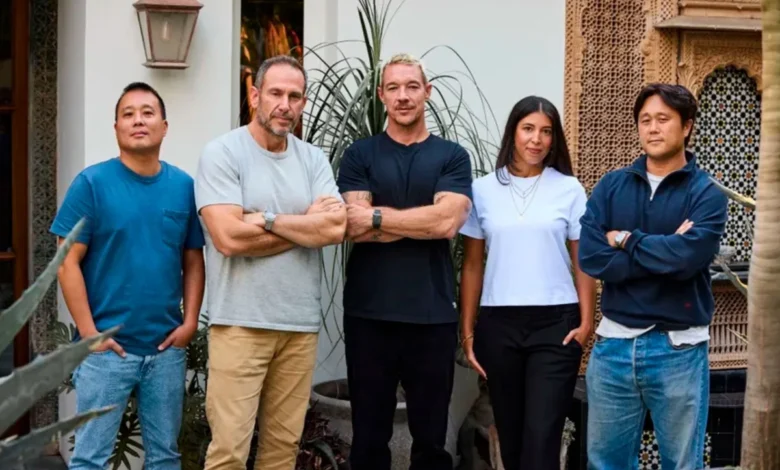
The landscape of music publishing is undergoing a significant transformation as global industry titans move away from the aggressive acquisition of legacy catalogs and toward the cultivation of foundational creative talent. Bison Music, a newly formed independent publishing entity, has officially launched under the leadership of multi-platinum producer and DJ Diplo and former Downtown Music Holdings CEO Andrew Bergman. Headquartered across the dual hubs of New York and Los Angeles, the firm aims to redefine the traditional publisher-songwriter relationship by prioritizing long-term development, A&R investment, and global administrative support for emerging artists.
This venture arrives at a pivotal juncture in the music business. While the past decade was defined by a “gold rush” mentality—characterized by private equity firms and major publishing houses spending billions to acquire the back catalogs of heritage artists like Bob Dylan, Bruce Springsteen, and Stevie Nicks—Bison Music represents a contrarian strategy. Instead of looking backward at established intellectual property, Bergman and Diplo are positioning their firm to serve as an incubator for the next generation of creators who will define the sound of the coming decade.
Leadership and Organizational Structure
Bison Music enters the market with a seasoned executive team designed to balance creative intuition with operational precision. Andrew Bergman, whose tenure as CEO of Downtown Music Holdings saw the company navigate massive growth and technological shifts in rights management, serves as the Chief Executive Officer. His experience in navigating the complex web of global royalty collection and digital distribution provides the structural backbone for the new company.
Alongside Bergman, the leadership team includes Chief Operating Officer Tom Lee, Chief Creative Officer Juba Lee, and General Manager Jenny Ilibassi. This quartet is tasked with managing a roster that already boasts a diverse array of talent, including Picard Bros., Leclair, MAESIC, Nitti, Kaien Cruz, BomboCat, Akira Evans, and Groupthink. The credibility of this roster is underscored by their existing contributions to global hits; collective credits among these writers include work for international superstars such as BTS, Dua Lipa, Bad Bunny, and BLACKPINK’s JENNIE.
The Shift from Acquisition to Development
The industry-wide trend of catalog acquisition has fundamentally altered the valuation of music rights. According to data from the National Music Publishers’ Association (NMPA) and various financial monitors, music publishing has become a preferred asset class for institutional investors due to its historically stable revenue streams. However, this focus on "passive" income assets—songs that have already peaked in popularity—has arguably created a vacuum in the development of "active" talent.
Bison Music is explicitly designed to fill this void. The company’s business model is predicated on the idea that the highest return on investment in the music industry comes from "original songwriting." By investing in the human element—the songwriter—Bison aims to provide the resources necessary for creatives to navigate the high-pressure, fast-paced environment of modern pop production. This includes providing the financial security that allows writers to focus on craft rather than commercial viability alone, as well as providing administrative infrastructure to ensure global royalty compliance.
In the current streaming-dominated market, where a song can go viral in a matter of hours, the demand for high-quality, genre-fluid songwriting is at an all-time high. By securing a roster of versatile writers, Bison Music is positioning itself as a "factory of ideas" that can feed the voracious appetite of labels and streaming platforms for new, trend-setting content.
A Strategic Response to Industry Trends
The formation of Bison Music can be viewed as a reaction to the consolidation that has plagued the independent music sector. In recent years, major publishers like Sony Music Publishing, Universal Music Publishing Group, and Warner Chappell have tightened their grip on the market, making it increasingly difficult for independent songwriters to find representation that doesn’t sacrifice creative autonomy for administrative reach.
Industry analysts suggest that the "boutique" publishing model, which emphasizes close-knit relationships between executives and writers, is making a comeback. By remaining independent, Bison Music can theoretically offer more flexible deal structures and personalized attention compared to the rigid, high-volume models of major conglomerates. This is particularly crucial for emerging songwriters who are often required to balance songwriting with touring and social media presence.
"At a moment when it feels like music needs an injection of originality, our writers are in a position to shape where music goes next," Diplo noted in a statement following the launch. "Andrew and I are creating a home for those writers, with a team that knows how to develop them and a company built to back them for the long term."
The Roadmap Ahead
While the company is currently focused on the initial onboarding of its core roster, the roadmap for the next 18 to 24 months is centered on expansion. The company has confirmed plans to announce additional signings in the coming months, signaling an aggressive push to increase its market share.
From a financial perspective, the success of Bison Music will likely be measured by its ability to secure "syncs"—placements in film, television, and advertising—as well as its performance in the digital streaming market. Given Diplo’s extensive history in electronic and pop music, the firm is uniquely positioned to leverage his network to secure high-profile collaborations for its writers.
Furthermore, the integration of global administration services is a key differentiator. As royalty structures for digital platforms continue to evolve—with debates ongoing regarding AI-generated music, streaming royalty models, and international copyright harmonization—having an executive like Bergman, who understands the intricacies of rights management, provides Bison’s writers with a distinct competitive advantage.
Implications for the Music Publishing Sector
The launch of Bison Music serves as a bellwether for the future of creative talent management. If the company succeeds in its mission, it may trigger a shift in how independent publishers approach the market, potentially encouraging a move away from the "catalog-first" mentality toward a "talent-first" approach.
For songwriters, this signals a return to a more traditional, mentorship-based model of publishing. In an era dominated by algorithmic recommendations and short-lived viral hits, the need for deep, sustainable creative development has never been greater. By providing a structure that prioritizes long-term growth, Bison Music is betting on the idea that in a world of infinite, disposable content, the songwriter remains the most valuable asset.
As the company begins its operations, the eyes of the industry will be on its roster. The ability of the Picard Bros. and their peers to continue producing chart-topping hits while under the Bison umbrella will be the true test of the company’s infrastructure. If they can replicate the success of their early credits while maintaining the creative freedom that defines their work, Bison Music could well become the blueprint for the next generation of independent publishing houses.
The venture is more than just a business entity; it is a statement of intent. By combining the star power and creative vision of one of the world’s most successful producers with the administrative and operational expertise of a seasoned industry executive, Bison Music is positioning itself to be a formidable player in a rapidly evolving market. Whether this signals a wider trend of "talent-first" publishing remains to be seen, but the emergence of such a high-profile, independent firm is undeniably a welcome development for the creative community.