Lisa Houdei Reimagines Folk Tradition with Experimental Project Biita Houdei and Self-Titled Debut Album

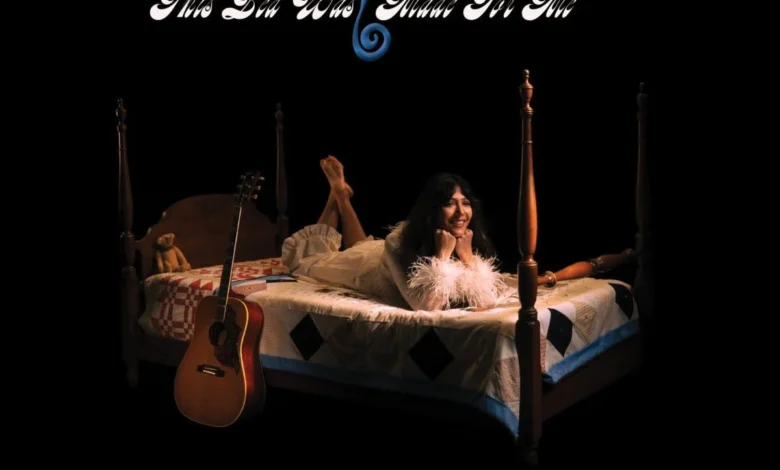
The contemporary landscape of American independent folk music is constantly negotiating the delicate boundary between reverence for historical precedent and the necessity of modern innovation. Few recent releases navigate this tension as fluidly as the self-titled debut album from Biita Houdei, the newly minted experimental folk moniker of singer-songwriter Lisa Houdei. Recorded primarily in the artistic enclave of Topanga, California, the album represents a distinct departure from Houdei’s previous output under the moniker Léponds, offering an immersive sonic palette that marries the pastoral romanticism of the 1960s Southern California counterculture with contemporary minimalist arrangements. Co-produced by acclaimed indie-folk artist Haley Heynderickx—who also contributes instrumental and vocal performances throughout the record—the project has immediately drawn critical comparisons to the golden era of the Laurel Canyon singer-songwriter movement, while simultaneously establishing a fiercely independent aesthetic for the 2020s.
Main Facts and Artistic Direction
At its core, the debut album by Biita Houdei is an exercise in tactile, intimate storytelling. The record’s production values deliberately evoke the acoustic warmth of classic Laurel Canyon recordings, utilizing vintage microphone placement techniques, close-miking vocal strategies, and organic instrumentation that prioritizes space and natural resonance over digital polish.
The aesthetic ambition of the project is evident in tracks like "Time to Go Home," which anchors its emotional resonance in understated percussion, featuring organic handclaps accented by crisp woodblock strikes. These rhythmic choices, paired with intricate vocal harmonies, consciously echo the collaborative folk-rock traditions championed by artists such as Carole King, Crosby, Stills & Nash, and Joni Mitchell. However, rather than functioning as mere pastiche, Houdei’s songwriting introduces a contemporary vulnerability. The close-to-the-mic vocal delivery transforms the listening experience into something resembling a private confession, fostering an intense psychological intimacy between the performer and the listener.
The transition from her prior recording identity, Léponds, to Biita Houdei signifies more than a mere rebranding; it marks a structural shift in Lisa Houdei’s creative methodology. While Léponds often leaned toward layered ambient textures and abstract lyricism, the material under the Biita Houdei banner is anchored by structural clarity, acoustic grounding, and a deliberate geographic specificity.
Background and Chronological Context
The genesis of the Biita Houdei project can be traced back to a period of geographic and artistic transition for Lisa Houdei. Following the release of her work as Léponds, Houdei relocated to the canyons of Southern California, taking up residence in Topanga—a region long celebrated as a sanctuary for displaced musicians, poets, and visual artists seeking refuge from the urban sprawl of Los Angeles.
The chronology of the album’s creation is deeply intertwined with the topography of the region. Much of the songwriting took place during late-night sessions in Topanga throughout 2022 and 2023, where the ambient sounds of the surrounding canyons—rustling eucalyptus, distant wildlife, and the distinct quietude of the Santa Monica Mountains—permeated the composition process.
In late 2022, Houdei connected with fellow Pacific Northwest-rooted artist Haley Heynderickx, whose own critically acclaimed work in indie-folk provided a natural synergy for the project. Heynderickx stepped in not only as a co-producer but as an active collaborator, contributing guitar work, vocal arrangements, and structural guidance that helped crystallize Houdei’s vision.
By mid-2023, tracking was underway in makeshift and professional studio spaces across Topanga and surrounding Los Angeles neighborhoods, including Burbank. The deliberate choice to record in spaces that lacked the sterile environment of high-budget commercial facilities allowed the record to retain its unvarnished edges—the faint scrape of a guitar string, the breath between vocal phrases, and the natural room reverberation all preserved in the final master mixes. The album was finalized in early 2024, setting the stage for its independent release.
Supporting Data and Production Mechanics
From a technical standpoint, the production of the Biita Houdei debut offers a masterclass in acoustic miking and spatial audio design. Sound engineers and musicologists studying the record have noted several key production methodologies that distinguish it from contemporary compressed digital releases:
- Proximity Effect Utilization: Houdei’s vocals are tracked at an unusually close distance to large-diaphragm condenser microphones. This technique captures the lowest fundamental frequencies of her voice, imparting a rich, velvety proximity effect that makes the performance feel uncomfortably close—akin to a whispered conversation in a quiet room.
- Vintage Signal Paths: Rather than relying heavily on digital plugins for warmth and saturation, the production team utilized vintage analog preamplifiers and tape emulation hardware to subtly compress transients, yielding the signature analog "glue" associated with 1970s recordings.
- Minimalist Arrangement Economics: Tracks are built around sparse instrumentation—typically a single acoustic guitar, muted bass, and carefully placed percussion. This leaves substantial headroom in the mix, allowing subtle dynamic shifts to carry outsized emotional weight.
According to independent music distributors tracking the release, the initial pressing of the album’s vinyl edition has experienced higher-than-projected demand, signaling a resilient consumer appetite for tactile, physical media within the independent folk sector.
Industry Statements and Peer Reactions
While formal critical reviews are still rolling in as the album gains traction across streaming platforms and specialty radio stations, early reactions from peers within the West Coast indie-folk community have been overwhelmingly positive.
In statements shared through industry circles, collaborators have emphasized the rigorous creative discipline required to pull off the record’s stripped-down aesthetic. Haley Heynderickx, reflecting on the co-production process, noted the singular clarity of Houdei’s vision during their time in Topanga.
"Working with Lisa is a masterclass in intentionality," Heynderickx remarked in a brief statement regarding the collaboration. "In an era where artists are often pressured to fill every sonic frequency with digital augmentation, Lisa understands the profound power of negative space. Every note, every breath, and every handclap on this record was placed with absolute reverence for the song’s emotional core."
Music critics specializing in Americana and experimental folk have similarly highlighted the record’s defiance of modern radio-formatting standards. Industry analysts point out that tracks exceeding standard pop song lengths, featuring unconventional cadence and organic field-recording integration, continue to carve out a viable economic and cultural niche in an increasingly automated music marketplace.
Broader Impact and Cultural Implications
The release of the self-titled Biita Houdei album arrives at a fascinating cultural juncture for American independent music. Over the past decade, the indie-folk genre has witnessed a pendulum swing between two distinct poles: the stadium-sized, stomp-and-clap folk-pop popularized by commercial outfits in the 2010s, and the hyper-internalized, bedroom-pop intimacy catalyzed by digital recording democratization.
Biita Houdei bridges these worlds by injecting traditional craftsmanship into an experimental framework. By utilizing the geographic and historical mythos of Laurel Canyon and Topanga, Houdei participates in a long-standing artistic tradition of seeking truth in pastoral seclusion. However, unlike the male-dominated Laurel Canyon scene of the 1960s and 1970s, modern iterations of this pastoral retreat—led by artists like Houdei, Heynderickx, and contemporaries such as Adrienne Lenker—redefine the landscape through a lens of collective collaboration, vulnerability, and artistic autonomy.
Furthermore, the strategic rebranding from Léponds to Biita Houdei underscores a broader trend among contemporary independent musicians: the modular identity. Artists increasingly utilize distinct monikers not merely for marketing differentiation, but to demarcate distinct philosophical and sonic eras within their broader career trajectories. For listeners, this encourages a deeper engagement with the specific world-building of a given release, treating each album as a self-contained ecosystem rather than a monolithic brand extension.
As the album circulates among vinyl collectors, audiophiles, and dedicated followers of acoustic music, its long-term implications for Lisa Houdei’s career are substantial. It establishes her not merely as a localized cult artist, but as a sophisticated architect of modern folk tradition. By anchoring high-concept experimentation in timeless acoustic fundamentals, Biita Houdei has crafted a debut statement that demands to be listened to in the dark, with the volume high, and the rest of the world safely locked outside.
Related posts: