Inner Sin: An Immersive Electronic Music Experience at House of Yes Prioritizes Dancefloor Presence With Strict No-Phone Policy

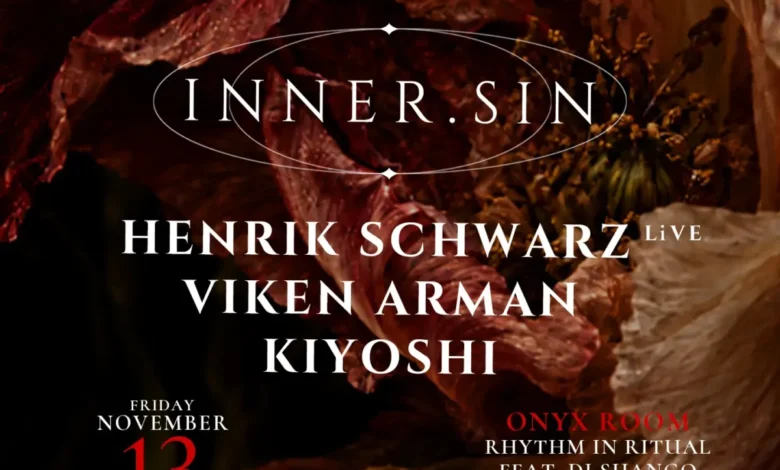
On November 13, 2026, the Brooklyn electronic music landscape will undergo a shift toward sensory immersion as House of Yes, in collaboration with the Juju Collective and Hqueue, hosts a specialized event titled Inner Sin. The gathering represents a convergence of high-fidelity electronic composition and performance art, anchored by a lineup that includes German producer Henrik Schwarz, French-Armenian composer Viken Arman, and selector Kiyoshi. Beyond the musical curation, the event has drawn industry attention for its mandate to enforce a strict no-phone and no-photo policy on the dancefloor, an increasingly popular operational model in global nightlife aimed at fostering authentic social engagement.
The Curated Lineup and Musical Direction
The sonic identity of Inner Sin is built upon a foundation of deep, melodic, and atmospheric electronic music. Henrik Schwarz, a veteran of the German electronic circuit, is widely credited with bridging the gap between classical composition and contemporary house and techno. His work, characterized by intricate layering and symphonic sensibilities, provides a sophisticated backdrop for the evening. By integrating live instrumentation and complex MIDI arrangements, Schwarz has historically shifted the perception of dance music from functional club rhythm to concert-grade artistry.
Viken Arman serves as a critical counterpoint to this approach. As a composer known for weaving traditional Armenian folk motifs into modular electronic structures, his presence promises a cross-cultural synthesis. Arman’s performance style—which often involves live sampling of organic sounds—aligns with the event’s "spiritual soundscape" theme, emphasizing a meditative approach to rhythm. Completing the trio is Kiyoshi, whose selections are anticipated to provide the atmospheric connective tissue between the headliners. Kiyoshi’s reputation as a curator of deep, hypnotic cuts ensures that the event maintains a consistent sonic narrative throughout the night, prioritizing flow and emotional resonance over high-energy, commercial club tropes.
Performance Art and Sensory Integration
The event organizers have sought to elevate the experience beyond a standard DJ set by incorporating a multi-disciplinary performance schedule. The night will feature aerialist Jon Joni, whose work frequently utilizes the vertical dimensions of the House of Yes architecture. Additionally, movement artist Megan Sipe is slated to provide choreographed dance experiences, alongside traditional GoGo performances designed to punctuate the evening’s musical peaks.
The event also functions as a milestone for the local scene, serving as a birthday celebration for event host Yami. This personal touch highlights the collaborative nature of the Brooklyn underground, where promoters, artists, and venues often operate within a tight-knit community structure. Supporting this immersive environment, vendors such as Mess Queen and Agent Peach will curate physical art installations, effectively transforming the venue into an interactive gallery. Furthermore, a beauty bar hosted by Luckii will provide attendees with aesthetic services, underscoring the organizers’ commitment to a holistic, sensory-driven event design.
The No-Phone Policy: A Shift in Nightlife Culture
The decision to implement a strict no-phone and no-photo policy on the dancefloor is the most significant operational feature of Inner Sin. This policy, while stringent, is reflective of a broader trend in global nightlife. As digital connectivity has become pervasive, the "screen-free" dancefloor is being championed by institutions like Berghain in Berlin and various boutique festivals, which argue that the presence of smartphones creates a voyeuristic atmosphere that disrupts the communal "flow state" of the crowd.

From a sociological perspective, the ban is intended to remove the pressure of documentation. When attendees are not focused on capturing content for social media, the focus shifts entirely to the music and the interaction between the individual and the collective. For a venue like House of Yes, which relies on the unique character of its space and the intimacy of its crowd, this policy serves to preserve the integrity of the performance. It creates a "safe space" for expression, where dancers are liberated from the gaze of digital onlookers. However, this policy also presents a logistical challenge, requiring diligent staff management to ensure that patrons adhere to the rules without compromising the welcoming, non-adversarial spirit of the venue.
Venue Logistics and Historical Context
House of Yes, located at 2 Wyckoff Ave in the Bushwick neighborhood of Brooklyn, has established itself as a cornerstone of New York’s creative nightlife. The venue is known for its high production values, including elaborate stage design and a commitment to diverse, inclusive programming. Hosting Inner Sin at this location is strategically significant; the venue’s architecture is specifically designed to facilitate immersive experiences, featuring high ceilings for aerialists and a layout that encourages movement rather than static spectating.
The event is scheduled to run from 10 PM until late, a timeline that mirrors the typical progression of high-concept electronic events in New York. The late-night format allows the artists to move through extended sets, which is essential for the type of deep, progressive house music that Schwarz and Arman are known for. By providing a longer duration, the organizers offer the performers the necessary time to build a narrative arc, moving the audience through various emotional and sonic states throughout the early morning hours.
Analysis: The Implications of Curated Immersive Events
The rise of events like Inner Sin suggests a maturing audience within the electronic music sphere. As the market for mass-market festivals becomes increasingly saturated, there is a clear demand for "boutique" experiences that offer high-fidelity sound, intimate settings, and a curated atmosphere. This trend carries several implications for the industry:
- Emphasis on "Sound-First" Environments: The success of artists like Henrik Schwarz and Viken Arman highlights a shift toward listeners who value technical musicality. This necessitates investment in high-quality sound reinforcement systems, which are increasingly becoming a competitive advantage for venues.
- Community Over Consumption: The integration of vendors like Mess Queen and Agent Peach demonstrates that modern nightlife is increasingly becoming an lifestyle experience rather than just a music event. By creating a curated, aesthetic environment, organizers are increasing the perceived value of the ticket price, which is essential as operational costs for venues continue to climb.
- The Digital Detox Mandate: As mental health and mindfulness become more prominent in public discourse, the "no-phone" policy is likely to be adopted by more event organizers. It positions the dancefloor as a sanctuary for mental presence, effectively marketing the event as a form of social self-care.
Conclusion and Practical Information
Inner Sin is positioned as a testament to the enduring appeal of the Brooklyn underground, where technical precision meets theatrical performance. By balancing the intellectual rigor of its musical lineup with the aesthetic vibrancy of its performance artists, the event offers a comprehensive look at the current state of immersive electronic music.
For those planning to attend, the event will take place on November 13, 2026, at 2 Wyckoff Ave, Brooklyn. Attendees are encouraged to familiarize themselves with the venue’s policy regarding personal devices to ensure a seamless entry and an undisturbed experience on the dancefloor. Tickets and additional information regarding the event’s specific time-slots and technical requirements are available through the official ticketing portal on the DICE platform. As the date approaches, the synergy between the Juju Collective and the production team at House of Yes serves as a benchmark for how local organizations can curate high-level, intentional nightlife experiences in an increasingly fragmented digital world.
Related posts: