Richie Hawtin parts ways with WME to join Berlin-based TS Agency in a significant move for independent electronic music representation

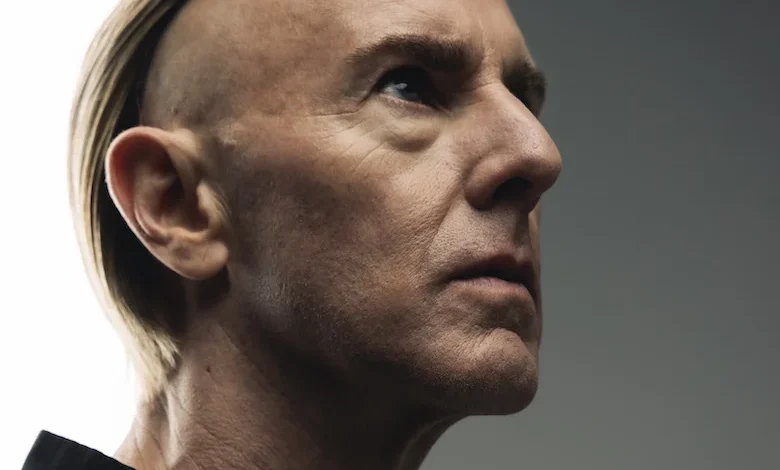
After nearly 15 years under the umbrella of the global entertainment conglomerate WME, legendary techno innovator Richie Hawtin has announced a strategic shift in his management and booking representation. The artist is transitioning to the Berlin-based TS Agency, a move that signals a marked departure from the industry-wide trend toward corporate consolidation. While TS Agency will now spearhead Hawtin’s global booking coordination, the artist’s representation will be localized: Liaison Artists will handle his affairs in North America, and 3D Agency will continue to oversee his bookings in Italy.
This development arrives at a critical juncture for the music industry, where the landscape of artist representation has become increasingly dominated by large-scale agencies and private equity-backed festival conglomerates. Hawtin’s decision to align with a boutique, artist-led agency is being framed not merely as a change in service providers, but as a philosophical statement regarding the future of independent artistry within electronic music.
A Career Defined by Autonomy
Richie Hawtin’s move back toward a more independent structure aligns with a career long characterized by technological and structural self-reliance. Throughout his tenure as a foundational figure in techno, Hawtin has consistently prioritized control over his creative output and professional infrastructure. His legacy includes the development of seven albums under his Plastikman alias, the stewardship of two highly influential independent record labels—Plus 8 and M_nus—and the engineering of his own bespoke DJ technology, most notably the PLAYdifferently MODEL 1 mixer.
The transition from a global behemoth like WME to a niche entity like TS Agency reflects a desire to return to the foundational ethos of the electronic music scene. Hawtin stated that the electronic community was built by independent artists supporting one another, and he maintains that the future of the scene depends on fostering that same spirit of collaboration. He expressed gratitude for his 15-year tenure at WME but highlighted the necessity of aligning with a team that shares his specific ideological focus on maintaining an independent structure that serves the broader electronic music community.
The Rise of the Boutique Model: TS Agency
TS Agency, originally established in 2016 under the moniker Temporary Secretary, has carved out a unique position within the global club circuit. Co-founded by the renowned DJ and producer Dixon, the agency represents a curated roster of high-profile electronic acts, including Âme, Gerd Janson, Sama’ Abdulhadi, Hunee, and CC:DISCO!.
Dixon’s vision for the agency was explicitly reactive to the corporate pressures facing contemporary artists. The agency’s structure is designed to be owned and operated by artists themselves, ensuring that high-level management decisions are made by individuals who understand the nuances of building a career that spans decades. For Dixon, the addition of Hawtin is a validation of the agency’s model. He argues that independence is not dictated by the size of an organization, but rather by who exerts control over its structure, whose interests it serves, and what core values dictate its strategic decision-making.
The Context of Industry Consolidation
To understand the weight of Hawtin’s decision, one must examine the broader trends within the music industry over the last decade. The rise of WME and similar agencies—which operate as sprawling conglomerates covering everything from film, television, and sports to literary and digital media—has transformed the artist representation model.
WME, as a division of the TKO Group Holdings, is deeply integrated into a massive corporate ecosystem. The TKO umbrella includes the UFC, WWE, and Professional Bull Riders, alongside marketing powerhouses like IMG and production entities such as Fifth Season. For many artists, the appeal of such agencies has historically been access: the ability to secure placements at major festivals, high-profile corporate brand deals, and multi-disciplinary opportunities that smaller agencies simply cannot facilitate.
However, the rapid consolidation of festivals and booking agencies—often fueled by investment funds looking for predictable returns—has created friction within the underground electronic scene. Many artists have voiced concerns that the corporate focus on scalability and market share can dilute the individualistic and experimental nature of techno and house music. By opting out of this ecosystem, Hawtin is challenging the assumption that "bigger is better" for a world-renowned artist.
Chronology of Representation and Market Shifts
The relationship between Hawtin and WME spanned a significant era of professionalization in electronic music. During this time, the EDM boom brought electronic music to the forefront of the global mainstream, pushing agencies to expand their rosters and consolidate their influence.
- 2009–2010: Richie Hawtin’s career enters a period of intense global expansion, coinciding with the rise of the digital DJ revolution and the commercial explosion of electronic music.
- 2010s: WME solidifies its status as a premier agency for electronic music talent, acquiring smaller boutique agencies and bringing world-class techno and house DJs into their fold.
- 2016: TS Agency is founded in Berlin by Dixon and his team, positioning itself as an artist-centric alternative to the growing corporate dominance of the booking landscape.
- 2020–2022: The COVID-19 pandemic forces a global pause in touring, prompting many artists to re-evaluate their professional relationships and the stability of the models they rely upon.
- 2024: Richie Hawtin announces his departure from WME to join the TS Agency roster, marking a high-profile "defection" from a major agency to a boutique firm.
Implications for the Electronic Music Ecosystem
The movement of a tier-one artist like Hawtin to a boutique firm may have a ripple effect across the industry. For emerging artists, the choice between signing with a corporate agency and a boutique firm is often a trade-off between reach and creative autonomy. Hawtin’s endorsement of the independent model could embolden other established artists to seek more direct control over their careers, potentially slowing the exodus of talent toward massive conglomerate agencies.
Furthermore, this shift highlights the enduring strength of Berlin as the primary nerve center for the global electronic music industry. Despite the digitalization of bookings and the globalization of the club circuit, the preference for local, specialized representation suggests that the "personal touch" remains a premium commodity for artists who value the integrity of their brand over the sheer volume of their bookings.
Analyzing the "Independent" Definition
The discussion surrounding Hawtin’s move necessitates a clearer definition of independence in the current era. In a strictly financial sense, Hawtin has always maintained a degree of independence through his labels and private ventures. However, shifting his booking representation marks a change in the governance of his career.
When an artist is represented by a firm like WME, they are one of thousands of clients across multiple sectors. When represented by a firm like TS Agency, they are a primary stakeholder in a system designed for a specific subculture. The implications are clear: Hawtin is signaling that he is no longer looking for the broad-spectrum leverage provided by a multinational corporation, but is instead seeking the focused, peer-to-peer alignment that a boutique agency provides.
This move does not come without risks. By moving away from the infrastructure of a TKO-backed agency, Hawtin may encounter different logistical challenges regarding international logistics, cross-disciplinary opportunities, and access to certain high-tier mainstream festival stages. Yet, for an artist who has built his career on the technical and artistic edge of electronic music, the trade-off appears to be a calculated step toward preserving his creative legacy.
Conclusion
Richie Hawtin’s departure from WME is more than a change in business partners; it is a profound commentary on the state of the electronic music industry. As the sector faces increasing pressure to standardize and consolidate, the choice of a legacy act to return to an artist-led, boutique structure serves as a benchmark for the industry’s values. Whether this triggers a wider industry shift remains to be seen, but the move reaffirms the importance of agency as a core component of artistic expression. As both Hawtin and Dixon have suggested, the future of the scene may ultimately depend not on how large a network an artist can plug into, but on how effectively they can maintain control over the structures that define their professional life.