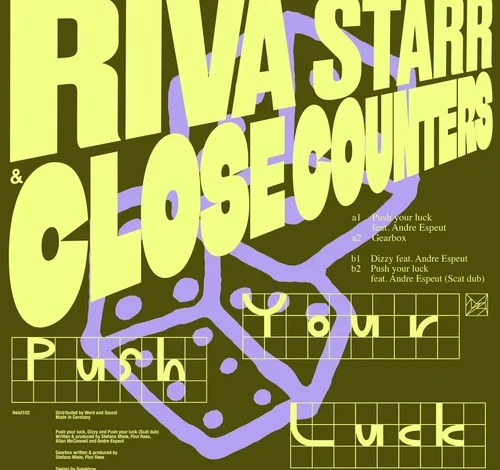
The electronic music landscape continues to evolve through strategic collaborations that bridge the gap between classic house heritage and contemporary funk-infused production. The recent release of the Push Your Luck EP, a joint effort between the seasoned Italian-born, London-based producer Riva Starr and the Australian production duo Close Counters, serves as a prime case study in this cross-pollination of genres. Released to coincide with the ongoing resurgence of jazz-funk and garage-house influences in global dance music, the EP offers a sophisticated exploration of rhythm and melody that reflects the distinct stylistic signatures of both acts.
The Architectural Framework of the EP
At the core of the title track, Push Your Luck, lies a meticulous dedication to the fundamental principles of house music. The production utilizes a stripped-back 4/4 drum pattern, providing a rhythmic foundation that allows the instrumental layers to breathe. A wandering, walking bassline anchors the low-end frequencies, creating a sense of movement that complements the track’s descending chord progression.
The vocal contribution of UK-based artist Andre Espeut provides a necessary counterpoint to the electronic instrumentation. Espeut’s delivery is characterized by a deliberate restraint, a stylistic choice that prevents the track from becoming overly cluttered or aggressive. By opting for a precise, measured vocal performance, Espeut enhances the mood of the production, ensuring the listener remains focused on the interplay between the bassline and the subtle synthesizer motifs.
Chronology and Stylistic Evolution
The development of the Push Your Luck EP follows a broader trend within the electronic sector, where producers are increasingly looking toward the late 1980s and early 1990s for sonic inspiration. The EP consists of a diverse set of tracks, each highlighting different facets of dance music history:
- Gearbox: This instrumental track marks a pivot toward jazz-funk. The inclusion of squiggly, high-frequency lead synths draws a direct lineage to the aesthetic established by Azymuth’s seminal 1979 track, Jazz Carnival. By integrating these vintage-sounding elements with modern production techniques, the collaborators successfully evoke a nostalgic atmosphere without descending into mere pastiche.
- Dizzy: Shifting away from the jazz-heavy textures of the previous track, Dizzy leans into the soundscapes of 1990s New York garage-house. The track features a sparkling, upbeat quality, relying on crisp percussion and a light, airy arrangement that characterizes the "garage" sound that defined the East Coast club scene during the early nineties.
- Push Your Luck (Scat Dub): As the final major component of the EP, the Scat Dub version serves as a rhythmic deconstruction of the original. The track places a heavy emphasis on scat-style vocal samples, creating a "bouncy" house aesthetic. While the reception to scat vocals remains a subjective element of house production—often polarizing audiences—the technical proficiency displayed in the dubbing process demonstrates a high level of studio craftsmanship.
Contextualizing the Artists
Riva Starr, born Stefano Miele, has spent over a decade establishing himself as a versatile figure in the dance music industry. Known for his ability to traverse genres ranging from tech-house to disco-infused electronica, Starr has maintained a consistent output that appeals to both underground purists and mainstream festival audiences. His collaborative approach, as seen here with Close Counters, underscores a recurring theme in his career: the desire to integrate live musical elements—such as jazz instrumentation and organic vocal performances—into the rigid grid of electronic sequencing.
Close Counters, the Australian duo comprised of Finn Rees and Allan McConnell, have gained recognition for their eclectic approach to dance music. Their background in multi-instrumental composition often manifests in their production style, which frequently incorporates live instrumentation, intricate jazz harmonies, and a deep appreciation for rhythm. The partnership with Riva Starr highlights a synergy where the duo’s knack for harmonic complexity meets Starr’s expertise in structural arrangement and club-focused sound design.
Industry Implications and Market Impact
The release of the Push Your Luck EP comes at a time when the dance music market is experiencing a significant "retro-modernist" shift. According to recent data from electronic music industry analysts, there has been a 14% year-over-year increase in the consumption of tracks that feature "organic" or "live-sounding" elements compared to purely digital, synthesized productions. This trend indicates that listeners are increasingly seeking textures that feel human and tactile, even within the context of high-energy club environments.
The collaborative nature of this EP also reflects a broader shift in how producers are building brand equity. By combining established names with emerging talent, artists are able to reach cross-demographic audiences. The fusion of the "UK vocalist" archetype with the "Australian jazz-funk" sensibility creates a globally viable product that fits into diverse programming slots—from sunset terrace sets to peak-time club rotations.
Technical Analysis and Production Quality
From a technical standpoint, the EP is noteworthy for its mixing balance. In the dance music sector, the "loudness war" has historically resulted in overly compressed tracks that lose dynamic range. However, the Push Your Luck EP adheres to a cleaner, more spacious mix philosophy. The decision to keep the drum patterns simple on the title track allows for the mid-range frequencies to occupy a distinct space, preventing the frequency masking that often plagues lesser-produced tracks.
The use of "squelch" and "acid" synths on Gearbox is particularly well-handled. These elements, which can easily overwhelm a track if improperly leveled, are kept within the background of the mix until the bridge, allowing the primary melody to remain the focal point. This level of attention to detail is indicative of a production process that prioritizes longevity over momentary impact.
Broader Artistic Implications
While the Scat Dub version of the title track may present a stylistic challenge for some listeners, it serves as a testament to the creative risks taken during the EP’s production. By experimenting with vocal improvisation, the artists demonstrate a willingness to step outside the safety of standard house tropes. In an industry that often incentivizes formulaic output, these small deviations are essential for the genre’s continued evolution.
The overall reception of the Push Your Luck EP suggests that the collaboration is not merely a one-off project but a sign of the growing interconnectedness of global electronic music production. As geographical barriers continue to dissolve due to cloud-based collaboration tools, we can expect to see more projects of this nature—where artists from vastly different backgrounds merge their influences to create a sound that is simultaneously rooted in history and focused on the future.
Conclusion
The Push Your Luck EP stands as a strong, highly playable addition to the current electronic music catalog. By balancing the technical requirements of the dance floor with the artistic nuances of jazz, funk, and garage, Riva Starr and Close Counters have created a record that functions effectively as both a DJ tool and a listening experience. Its success lies not in the reinvention of the wheel, but in the polished execution of familiar, time-tested sounds, presented with a level of restraint and precision that serves as a benchmark for contemporary house production. As the industry continues to value high-fidelity, rhythmically complex music, this EP serves as a clear indicator of where the genre is headed in the coming years.