From Hip-Hop Roots to Techno Royalty: Loco Dice on Culture, Curiosity, and Three Decades Behind the Decks


The global electronic music landscape is defined by constant flux, rapid trend cycles, and the relentless pursuit of the next big sound. Yet, very few artists have navigated this shifting terrain with the enduring relevance and distinct artistic identity of Yassine Benhedli, universally known as Loco Dice. Born in Düsseldorf, Germany, to Tunisian parents, the veteran DJ, producer, and label head has spent more than two decades carving out a singular niche in house and techno. His career is a testament to the power of cultural hybridity, an uncompromising refusal to follow industry formulas, and an insatiable curiosity that spans from underground club culture to high fashion and martial arts.
In a comprehensive interview with Dancing Astronaut interviewer Liana Stern, Loco Dice reflected on the foundational experiences that shaped his trajectory, the enduring energy of the global dance floor, and his ongoing mission to champion the next generation of electronic music producers. Far from resting on the laurels of a storied international career, the producer remains deeply engaged in the pulse of contemporary nightlife, balancing his rigorous touring schedule with a multifaceted creative output that includes his latest single, "Eyes On Me."
The Evolution from Hip-Hop Origins to Electronic Purity
To understand Loco Dice’s idiosyncratic approach to house and techno, one must first look to his formative years in the 1990s hip-hop scene. Long before he became a fixture at Ibiza mega-clubs and Berlin institutions, Benhedli was deeply immersed in hip-hop culture, working alongside and opening for legendary American acts such as Ice Cube, Usher, and Snoop Dogg. During this era, hip-hop provided a vital outlet for cultural expression and global storytelling.
However, the genre eventually reached a creative crossroads for the young artist. Following the tragic and untimely deaths of iconic figures like The Notorious B.I.G. and Tupac Shakur in the late 1990s, Loco Dice felt the genre’s momentum stall as it increasingly leaned toward recycling older records rather than pioneering new sonic territory.
"There came a point where hip-hop wasn’t giving me the feeling of exploring new sounds and going in new directions anymore," Loco Dice explained during the interview. "After Biggie and Pac passed away, the music started becoming more about recycling older records, and that wasn’t really my vibe."
This artistic plateau coincided with his introduction to electronic music through a network of friends and late-night parties. Drawn to the boundless possibilities of production and DJing, he discovered a medium where creators were not limited by conventional song structures, fixed radio formats, or rigid formulas. Electronic music offered a canvas capable of touching deep human emotions and conveying complex narratives entirely through rhythm and atmosphere.
The transition from hip-hop to house and techno was gradual, characterized by experimentation rather than a sudden pivot. Crucially, Loco Dice emphasizes that his departure from the genre was strictly professional rather than cultural. "Don’t get me wrong, I’m still hip-hop," he noted. "You don’t grow up with a culture and then just leave it."
A Multicultural Tapestry: The Rhythms of Düsseldorf and Tunisia
The distinct sonic signature that defines Loco Dice’s DJ sets and studio productions is deeply rooted in his diverse upbringing. Growing up in a multicultural household in Germany while maintaining a strong connection to his Tunisian heritage exposed him to a vast spectrum of musical traditions from an early age.
Tunisian folk music, characterized by its complex, driving percussion and hypnotic drum patterns, left an indelible mark on his musical consciousness. Listeners can easily trace this lineage directly to the hypnotic, groove-heavy basslines and intricate percussion arrangements that dominate his modern house and techno releases.
Beyond North African folk traditions, his musical education was remarkably eclectic. His mother introduced him to the romantic ballads of Spanish crooner Julio Iglesias, while family gatherings exposed him to the timeless soul of Stevie Wonder, the revolutionary reggae of Bob Marley, and the pop genius of Michael Jackson. This cross-cultural foundation instilled in him a permanent musical open-mindedness, ensuring that his artistic vision would never be confined by the rigid genre boundaries that often plague the electronic music industry.
Sustaining the Flame: The Energy of the Dance Floor
Amid the grueling physical demands of a global touring career, maintaining a genuine connection to the nightlife ecosystem can prove challenging for veteran artists. Yet, for Loco Dice, the primary catalyst for his continued longevity is neither commercial success nor chart metrics, but the raw, unfiltered energy of the physical dance floor.
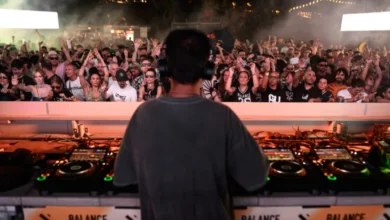
Unlike many contemporary DJs who prioritize curated radio shows, livestream performances, or isolated studio sessions, Loco Dice positions himself firmly as a traditional club DJ whose inspiration is derived entirely from real-time crowd interaction.
"Before the music, I think it’s the energy. I’m a DJ. That’s why you don’t find radio sets or things like that from me," he stated. "I’m not someone who can just sit in a room and play music for myself. I moved into electronic music because of the energy and because of the dance floor. Playing something and receiving a reaction gives me inspiration for what could come next. Then I go home with that energy and bring it back into my music. That’s what still keeps me going."
This symbiotic relationship between performer and audience has allowed him to weather decades of shifting club trends without losing his creative spark. By using the dance floor as a testing ground for unreleased material and experimental sounds, he ensures that his DJ sets remain dynamic, unpredictable, and deeply relevant.
Navigating the Digital Generation and Cultivating New Talent
As the clubbing landscape has transitioned from physical record stores and print music magazines to decentralized digital networks and instantaneous global communication, the mechanisms for music discovery and audience engagement have radically transformed. When asked about generational shifts in nightlife, Loco Dice approaches the modern era with enthusiasm rather than nostalgia.
While acknowledging that today’s youth operate in a vastly different media ecosystem, he highlights the unprecedented access to culture afforded by the internet. "Now you don’t have record stores or magazines in the same way, but with the internet, you can get information faster and go incredibly deep," he observed. "You could do a 24-hour Detroit crash course and understand the culture and the vibe seamlessly."
This appreciation for youth culture directly informs his A&R philosophy and label curation. Rather than viewing younger generations as cultural interlopers, Loco Dice embraces emerging talent as vital creative competition. His record labels and festival lineups consistently feature up-and-coming, unknown producers, reflecting an active commitment to pushing the culture forward.
Discovering these hidden gems, however, is rarely a linear process in the modern digital age. Describing the process as a digital lottery, he notes that demo submissions arrive across a chaotic multitude of channels, ranging from formal email portals to forgotten WhatsApp messages sent months prior. Despite the logistical hurdles of filtering through thousands of tracks, his curatorial philosophy remains anchored in timelessness. "Music is timeless," he notes, emphasizing that a great track can sit unreleased for months until the precise moment arrives to unleash it upon the dance floor.
Finding Balance: The Sanctuary of Muay Thai and Martial Arts
The physical and psychological toll of international touring—marked by chronic sleep deprivation, jet lag, and the perpetual hum of nightlife culture—requires disciplined coping mechanisms to ensure long-term sustainability. For Loco Dice, physical health and structured daily routines serve as the bedrock of his stability.
Beyond standard fitness regimens, he has cultivated a rigorous discipline in Muay Thai and martial arts. Far from being merely a physical workout, the martial arts gym provides an essential psychological sanctuary that sharply contrasts with his high-profile public persona.
"Staying healthy is a big part of it. I do a lot of sports, and I have my routine. Without that routine, I think I would crumble," Loco Dice explained. "I do martial arts like Muay Thai. Mainly, it gives me peace and quiet. Even though training can be stressful and intense, it’s a completely different world. When I’m there, I’m another person. I’m not Loco Dice. I’m not Dice. Nobody cares who I am or what I do."
By stepping into an environment where social status, musical legacy, and nightlife expectations evaporate, he maintains a psychological equilibrium crucial for navigating the pressures of the entertainment industry. The peaceful camaraderie and distinct subculture of the martial arts community offer a vital counterweight to the relentless demands of the global club circuit.
Expanding Creative Horizons: Fashion and Uncompromising Artistry
True to his moniker, which was born out of a restless inability to stand still, Loco Dice’s creative ambitions extend far beyond the boundaries of traditional music production and DJing. Throughout his career, he has successfully ventured into high fashion, creative direction, and cross-disciplinary collaborations, driven by an organic desire to explore new forms of artistic expression.
Crucially, his foray into these auxiliary industries is defined by an avoidance of trend-chasing. Whether designing apparel collections or curating multi-sensory art installations, his involvement is rooted in genuine curiosity and a desire to engage with kindred creative spirits. "Everybody knows I have that name for a reason because I can’t stand still," he reflected. "I’ve never been someone who follows trends or jumps on a bandwagon. If something interests me, I explore it and try it."
This steadfast refusal to pander to commercial trends is the defining characteristic of his musical output. Throughout his career, industry pressures have frequently pushed artists toward homogenized, easily digestible sounds designed for streaming algorithms and rapid consumption. Loco Dice has consistently rejected this path, even acknowledging that a more conformist approach might have yielded broader commercial shortcuts.
Instead, his trajectory has been marked by a deliberate embrace of the unconventional. Whether his productions were ahead of their time or sharply divergent from prevailing club fads, his authenticity has cultivated a fiercely loyal global following. Fans of the Loco Dice sound are drawn precisely to his unpredictability—the assurance that a set or a release will not mirror the commercial formulas recycled by his contemporaries.
The Broader Impact and Future Outlook
As the electronic music industry continues to industrialize, the career of Loco Dice serves as a compelling blueprint for artistic longevity and cultural integrity. By refusing to compromise his artistic vision, maintaining a deep reverence for the historical roots of both hip-hop and house music, and actively investing in the next generation of global producers, he has transcended the transient status of a standard club DJ to become a enduring cultural institution.
Whether he is sifting through digital archives for unsigned club weapons, stepping onto the mats of a local Muay Thai gym to shed his famous moniker, or heading into the studio to craft fresh rhythmic experiments, his core philosophy remains remarkably unchanged. Thirty years into a life dedicated to sound, movement, and culture, Loco Dice continues to operate on his own terms: following what feels authentic, embracing the unexpected path, and refusing to ever stand still.
Fans and underground music enthusiasts looking to experience his latest artistic chapter can now stream his newest single, "Eyes On Me," across all major digital platforms.