The High-Stakes Artistry and Intense Competition of the 17th Henry Wieniawski Violin Competition in Poznań

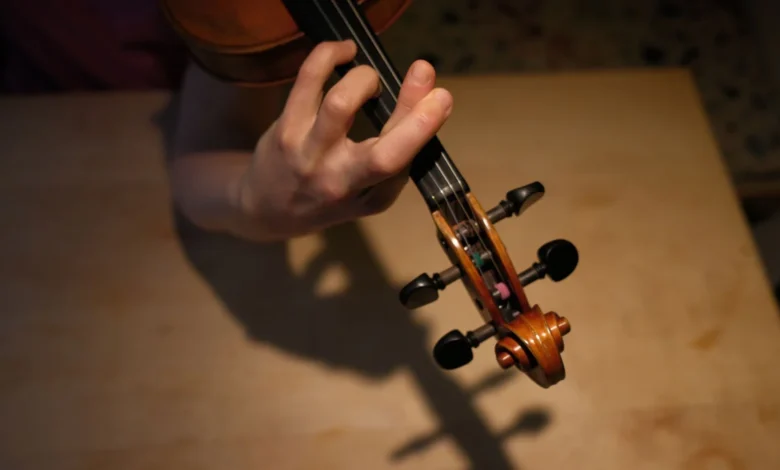
The 17th Henry Wieniawski Violin Competition, held in the historic city of Poznań, Poland, stands as one of the most rigorous and prestigious testing grounds for young virtuosos in the global classical music circuit. Named in honor of the legendary Polish violinist and composer Henryk Wieniawski, the competition—which traces its roots back to 1935—has served as a career-defining platform for some of the greatest masters of the instrument. As the event progresses through its arduous stages, the recent performances, including those of Chinese violinist Meng Zou, highlight the immense technical and emotional demands placed upon semi-finalists striving to secure their place in the final rounds.
The Legacy of the Wieniawski Competition
Established by Adam Wieniawski, the nephew of the namesake, the competition was created to celebrate Polish musical heritage while providing a professional launchpad for the next generation of talent. Over the decades, it has earned a reputation for being exceptionally unforgiving. Unlike some smaller regional contests, the Wieniawski Competition requires a profound mastery of the Romantic repertoire, specifically demanding that participants engage with the fiery, technically dense works of Wieniawski himself, alongside concertos by composers such as Sibelius, Brahms, and Tchaikovsky.
The 17th edition of the competition has drawn a record number of applicants from across the globe, reflecting the increasing professionalization of youth competitions. Candidates face a series of elimination rounds that test not only their stamina but their ability to interpret complex orchestrations under the scrutiny of a jury composed of world-renowned concert violinists and pedagogues.
A Critical Look at Recent Performances
The recent performance by Meng Zou during the semi-final round provided a microcosm of the intense pressure inherent in the competition. Performing the second movement of the Sibelius Violin Concerto, Zou opted for a bold, overdriven tonal approach. While his interpretation displayed a burning intensity, critics and observers noted that the performance faced structural challenges. The outer movements, in particular, lacked the consistent articulation required to fully distinguish the performance from the standard set by historic recordings.
In the context of the Wieniawski competition, where the standard of perfection is set remarkably high, such inconsistencies are often magnified. The Sibelius concerto, known for its icy, ethereal beauty paired with demanding technical passages, requires a delicate balance of lyricism and raw power. When a performer chooses to push the dynamic limits of the instrument—as Zou did—they risk losing the clarity of the musical narrative. For the jury, the decision-making process involves weighing these moments of visceral, emotional communication against the objective technical cleanliness required of a top-tier soloist.

The Anatomy of the Competition Timeline
The structure of the 17th Henry Wieniawski Violin Competition is designed to test every facet of a violinist’s capabilities:
- Preliminary Selection: Based on video auditions, a wide field of international applicants is whittled down to a manageable group of invited contestants.
- Stage I and II: These rounds focus on solo works, including caprices by Wieniawski and Paganini, requiring absolute technical precision.
- The Semi-Finals: This stage introduces the full concerto experience with orchestral accompaniment. It is here that the physical stamina of the performer is truly put to the test, as they must lead the orchestra through complex musical shifts.
- The Finals: The culmination of the event, where the final remaining candidates perform concertos with the Poznań Philharmonic Orchestra.
This multi-stage process ensures that only those who can maintain consistent performance quality over the course of several days—or weeks—reach the podium. The emotional fatigue of competing in a high-stakes environment like Poznań often leads to the "inconsistencies" observed in even the most promising talents, as the psychological weight of the competition takes its toll.
Statistical Demands and Performance Metrics
The difficulty of the competition is quantifiable through the sheer volume of the repertoire required. Contestants must prepare a massive body of work, often exceeding four hours of memorized music. The jury evaluates candidates based on several key metrics: intonation, bowing technique, phrasing, stylistic understanding, and stage presence.
Data from previous iterations of the competition suggest that success at the Wieniawski is a strong predictor of a sustained international career. Past laureates, such as Ginette Neveu and David Oistrakh, went on to become pillars of the classical music world. Consequently, the pressure on current participants is immense; a single subpar performance in the semi-finals can effectively terminate a candidate’s trajectory toward the final, regardless of their performance in earlier, easier rounds.
Official Perspectives and Jury Standards
While the jury deliberations remain confidential, the general consensus among observers at the competition is that the panel is looking for "completeness." A performer may have a beautiful, "overdriven" tone in a slow movement, but if they cannot navigate the rapid, intricate articulations of the outer movements with total control, they rarely advance.
Professional feedback from the judging panel often emphasizes that competition playing is a distinct skill set from concert playing. In a competition, the performer is under a microscope, and every slight hesitation or minor pitch imperfection is amplified by the silence of the concert hall and the proximity of the microphones. The goal is to identify a musician who can serve the composer’s intent while maintaining an individual voice—a task that proves elusive for many in the heat of the moment.

The Broader Impact on the Classical Music Industry
The rise of high-profile competitions like the Wieniawski reflects a broader trend in the classical music industry toward "gamification." With fewer traditional management pathways available to young musicians, winning or placing in a major competition has become the primary vehicle for securing artist management, recording contracts, and concert engagements.
This environment, while providing a clear meritocratic path, has been criticized for potentially favoring technical perfection over individual artistry. When performers like Meng Zou attempt to inject a "burning" personal tone into their playing, they are often fighting against a system that rewards the "safe," clean performance. The tension between the need for individual expression and the demand for absolute technical accuracy remains the central conflict of the modern violin competition.
Conclusion: The Future of the Competition
As the 17th Henry Wieniawski Violin Competition moves toward its conclusion, the focus shifts to how the remaining contestants will navigate the final challenges. The performance of the Sibelius concerto, and the subsequent critiques, serve as a reminder that the competition is not merely a test of who can play the fastest or the loudest. It is a grueling, multi-layered examination of a musician’s ability to remain composed, expressive, and technically flawless under the most intense professional scrutiny imaginable.
For those who advance, the path to the finals represents the culmination of years of practice, sacrifice, and preparation. For those who do not, the experience is nonetheless a critical point of development. The Wieniawski remains, as ever, a crucible—one that strips away the superficial and leaves only the true essence of the violinist’s craft. The coming days will ultimately reveal which of these rising stars has the resilience to withstand the pressure and emerge as the next laureate of one of the world’s most demanding musical honors.