Rafał Blechacz Explores the Gravitas of C Minor in New Deutsche Grammophon Release of Mozart and Beethoven Concertos


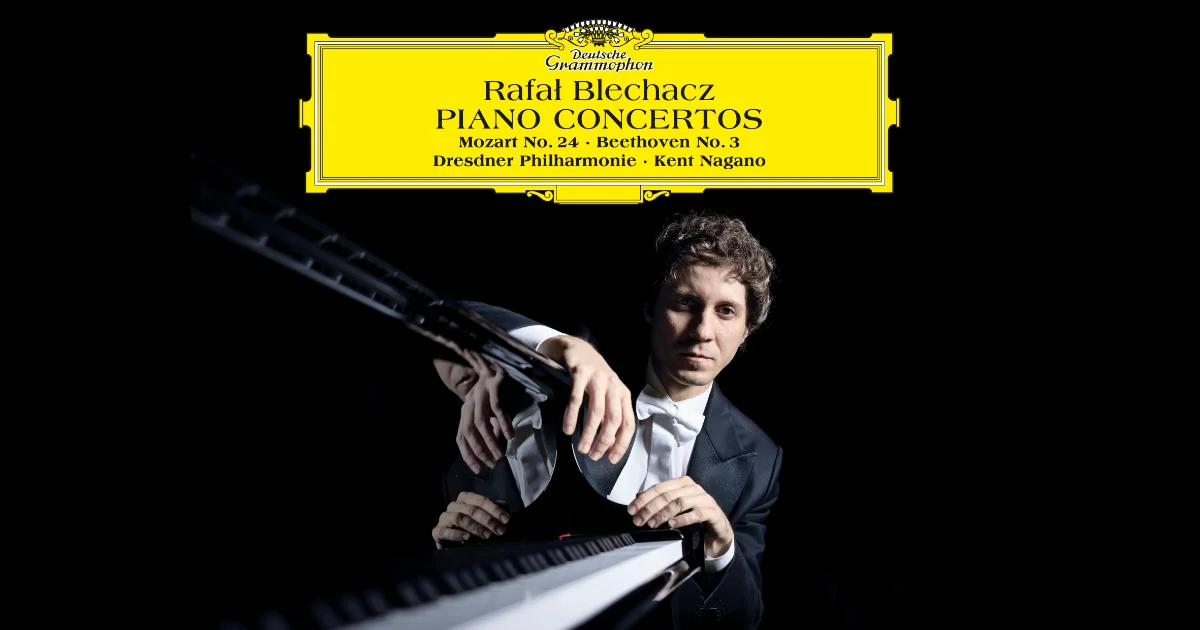
Acclaimed Polish pianist Rafał Blechacz has expanded his discography with a new album released under the prestigious Deutsche Grammophon label, continuing an artistic journey that began nearly two decades ago. The recording, designated under catalogue number DG 4868940, pairs Wolfgang Amadeus Mozart’s Piano Concerto No. 24 in C minor, K. 491, with Ludwig van Beethoven’s Piano Concerto No. 3 in C minor, Op. 37. The release also features Beethoven’s 32 Variations in C minor, WoO 80, as a solo capstone. For this ambitious project, Blechacz collaborated with the esteemed Dresdner Philharmonie under the baton of conductor Kent Nagano, exploring the profound emotional architecture of the key of C minor.
Background Context and Artistic Evolution
The thematic genesis of this latest release traces back to 2008, when Blechacz recorded an album of sonatas by Haydn, Beethoven, and Mozart for Deutsche Grammophon. That early project established his affinity for the classical canon, showcasing a refined technique and a meticulous approach to phrasing. Over the subsequent years, the pianist has selectively curated his studio projects, cementing a reputation as an artist who prioritizes interpretive depth over sheer volume of output.
The unifying motif of the new recording is the key of C minor—a tonality historically associated by classical composers with struggle, heroism, and dramatic solemnity. In music history, C minor holds a privileged status, particularly in the works of the First Viennese School. Mozart used minor keys sparingly in his concerto repertoire, writing only two out of twenty-three original piano concertos in a minor tonality (No. 20 in D minor, K. 466, and No. 24 in C minor). Beethoven similarly elevated C minor to a symbol of psychological conflict and ultimate triumph, most famously demonstrated in his Fifth Symphony and Piano Concerto No. 3.
Blechacz’s decision to center the album around this specific emotional weight reflects a deliberate choice to engage with the darker, more turbulent currents of the classical and early romantic repertoire. Collaborating with conductor Kent Nagano and the Dresdner Philharmonie offered the pianist a symphonic partner capable of matching the rich, resonant acoustic demands of these orchestral introductions.
Musical Analysis of the Repertoire
Mozart’s Piano Concerto No. 24 in C Minor
Mozart’s Piano Concerto No. 24 occupies a unique position in his catalogue. Prefiguring the storm-and-stress aesthetic often attributed to Beethoven, the concerto’s opening Allegro establishes a gravity that distinguishes it from the brighter, more galant character of Mozart’s other concertos.
In this new recording, the Dresdner Philharmonie delivers a well-blended and resonant sound. However, music critics have noted that the orchestral passages occasionally lack the raw, aggressive edge found in alternative modern interpretations—such as Leif Ove Andsnes’s 2022 recording with the Mahler Chamber Orchestra on Sony, or Jean-Efflam Bavouzet’s angular urgency with the Manchester Camerata under Gábor Takács-Nagy on Chandos.
Blechacz’s execution at the keyboard is characterized by a lithe, vocal, and silky tone, emphasizing the natural elegance of Mozart’s arching phrases. Yet, this uniformity of texture sometimes mutes the dramatic contrast required by the score. For instance, the second theme can sound overly placid where sharper textural differentiation might enhance the emotional stakes.
In the central Larghetto, which features some of Mozart’s most exquisite scoring for wind instruments, the ensemble proves cohesive, though listeners accustomed to Mitsuko Uchida’s 1989 recording with Jeffrey Tate and the English Chamber Orchestra might miss a sharper delineation of character between the woodwinds and strings. Uchida’s comparatively deliberate tempo allows for a more individualized structural narrative.
Beethoven’s Piano Concerto No. 3 in C Minor
Moving chronologically into Beethoven’s third piano concerto, the album captures the pivotal transitional phase between the composer’s early Classical influences and the heroic ethos of his middle period. The extended orchestral introduction lays a sturdy foundation, allowing Blechacz to display his considerable eloquence in the more lyrical passages.
Despite these moments of delicate coloring, challenges arise when the soloist must contend with the sheer symphonic power of the orchestra. During the cadenza, listeners seeking the quintessential Beethovenian turbulence, urgency, and restless drive may find the interpretation relatively restrained.
The subsequent Largo, set in the serene key of E major, offers a gentle glow, supported by the beautifully balanced interplay of interchanging woodwinds floating above rolling arpeggios, despite occasional heavy close-miking of the piano from the 3:30 mark onward. The concluding rondo maintains its characteristic jauntiness, punctuated by the muscular, barreling energy of the Dresden ensemble during the orchestral interludes.
The 32 Variations in C Minor, WoO 80
Closing the album as a solo offering, Beethoven’s 32 Variations demonstrate Blechacz’s technical agility and precision. His crisp staccatos and nimble passagework clearly delineate the intricate counterpoint embedded within the work.
While the performance is energetic, it maintains a light-handed texture that stops short of a fully orchestral piano sound. Furthermore, the C minor-to-major transitions (specifically tracks 11 and 12) exude an appropriate atmosphere of tranquility, but they miss the sense of a monumental harmonic arrival. Comparisons inevitably arise with historic benchmarks, such as Mitsuko Uchida’s 1999 recording or Glenn Gould’s idiosyncratic and fiercely obstinate 1970 interpretation, both of which offer a more robust architectural dimension.
Industry Implications and Reception
The release of DG 4868940 arrives at a time when classical music audiences and streaming platforms increasingly value curated thematic programming over standard recital formats. By anchoring a release in the explorations of a single key across two master composers, Deutsche Grammophon continues a tradition of conceptual album packaging designed to attract both audiophiles and casual digital consumers via platforms like Apple Music Classical and Presto Music.
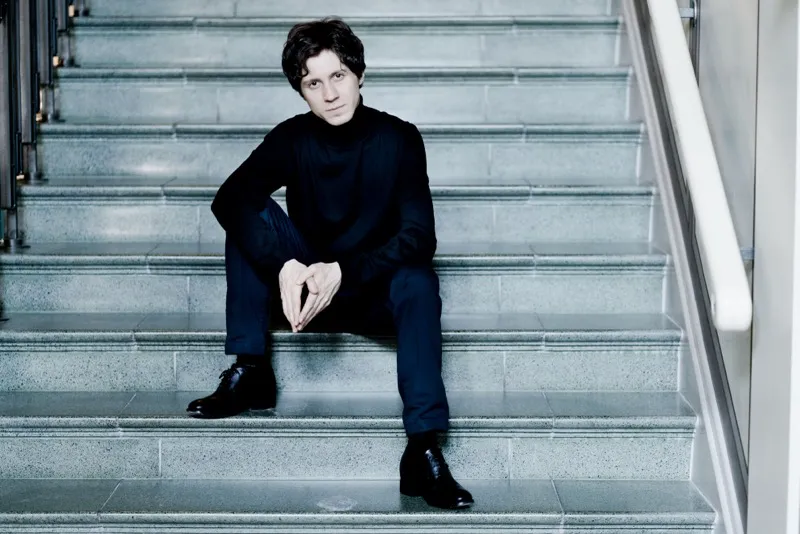
Industry analysts observe that while Blechacz has built an international career on his extraordinary sensitivity to micro-nuance, scale, and poetry—traits that earned him first prize at the prestigious International Chopin Piano Competition in Warsaw in 2005—these inherently dramatic concerto masterworks demand an assertive theatricality that occasionally stretches outside his primary comfort zone. Consequently, while the album provides valuable insights into Blechacz’s evolving musicianship, foundational catalog recommendations for these specific concertos may remain anchored in historic interpretations.
Album Details and Availability
The physical and digital distribution of the album is managed globally by Deutsche Grammophon.
- Album Mozart: Piano Concerto No. 24 & Beethoven: Piano Concerto No. 3
- Record Label: Deutsche Grammophon
- Catalogue Number: DG 4868940
- Featured Artists: Rafał Blechacz (piano), Dresdner Philharmonie, Kent Nagano (conductor)
- Formats: Digital streaming, high-resolution audio download, and physical compact disc.
The release is currently accessible for streaming on major platforms, including Apple Music Classical, and available for physical and digital purchase via specialized retailers such as Presto Music. As Blechacz continues his concert engagements across Europe and North America, this recording serves as a significant marker in his ongoing partnership with Deutsche Grammophon, illustrating the challenges and rewards of revisiting the central pillars of the classical keyboard repertoire.