Ex-Turnstile Guitarist Brady Ebert Ruled Incompetent to Stand Trial in Attempted Murder Case

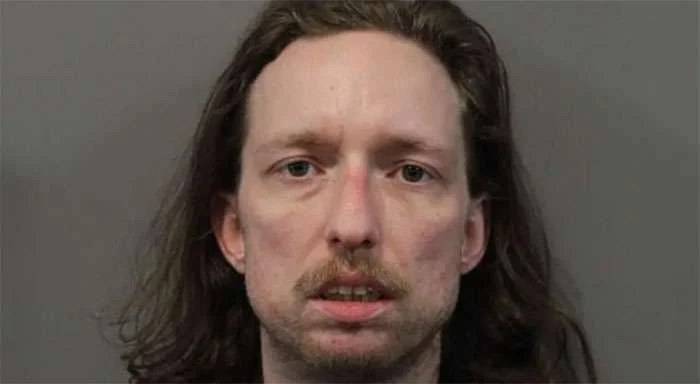
The legal proceedings regarding former Turnstile guitarist Brady Ebert have reached a significant impasse. On Tuesday, Montgomery County Circuit Court Judge Karla Smith ruled that the 30-year-old musician is mentally incompetent to stand trial for attempted murder. The ruling, which effectively halts the trial process originally scheduled to commence on October 5, 2026, was delivered following a competency evaluation requested by the defense. Judge Smith further determined that Ebert poses a documented danger to himself and the public, ordering that his competency status be subject to a reevaluation hearing currently slated for January 19, 2027.
The courtroom proceedings took an volatile turn immediately following the judge’s declaration. Despite the court’s order to remain silent, Ebert engaged in a verbal outburst, vociferously challenging the presence of his court-appointed attorney, Mark Sobel. Ebert insisted that he had officially terminated Sobel’s representation during a preliminary hearing earlier in September. Throughout the disruption, he characterized the legal proceedings as an "extreme miscarriage of justice" and leveled accusations against local law enforcement, claiming that the arrest warrant issued against him was obtained through illegal means. The outburst necessitated the intervention of court officers, who promptly escorted the defendant from the premises.
Chronology of the Incident and Legal Proceedings
The charges against Ebert stem from a violent incident occurring in March 2026. According to court filings, Ebert allegedly utilized a 2001 Buick LeSabre to strike 79-year-old William Yates. The victim, who is the father of Turnstile frontman Brendan Yates, sustained severe injuries during the encounter. The subsequent investigation led to the filing of multiple criminal charges, including attempted first-degree murder.
The timeline of the case has been marked by mounting tension between the defendant and the judicial process:
- March 2026: The alleged incident occurs in Maryland, resulting in the hospitalization of William Yates and the subsequent arrest of Brady Ebert.
- September 2026 (Early): During an initial hearing, defense attorney Mark Sobel formally requests a mental health evaluation to determine if his client possesses the cognitive capacity to understand the charges and assist in his own defense.
- September 2026 (Late): Judge Karla Smith reviews the medical and psychiatric assessments, ultimately finding that Ebert does not meet the legal threshold for competency.
- October 5, 2026: The original date scheduled for the commencement of the jury trial is vacated due to the competency ruling.
- January 19, 2027: The court sets this date for a follow-up hearing to review updated psychiatric evaluations and determine if competency has been restored.
Legal Implications of Incompetency Rulings
In the American judicial system, the standard for competency to stand trial is governed by the precedent set in Dusky v. United States (1960). A defendant must possess a "rational as well as factual understanding" of the proceedings against them and have the ability to consult with their lawyer with a reasonable degree of rational understanding.
When a judge rules a defendant incompetent, the state’s primary objective shifts from prosecution to restoration. Defense attorney Mark Sobel noted after Tuesday’s hearing, "Hopefully, he’ll get the proper treatment for his competency to be restored, so we can proceed to trial in this case." In many jurisdictions, this involves transferring the defendant to a secure mental health facility where they receive medication or therapy aimed at stabilizing their cognitive function. If, after a specified period, the defendant remains incompetent, the state may be forced to dismiss charges without prejudice or pursue civil commitment proceedings to ensure public safety.
The Separation of Turnstile and Brady Ebert
The legal crisis surrounding Brady Ebert has brought renewed attention to his former professional life. Ebert served as a foundational member of the hardcore band Turnstile but was dismissed from the group in 2022. At the time of his departure, the band released a statement that provided insight into the deteriorating relationship between the musician and his former bandmates.
"Turnstile cut ties with Brady Ebert in 2022 in response to a consistent pattern of harmful behavior affecting himself, the band, and the community," the band stated. "After exhausting every available resource to support his access to help and recovery, a boundary ultimately had to be set when healthy communication was no longer possible and he began threatening violence… We have no language left for Brady."
This public distancing underscores the severity of the behavioral patterns that had been identified by those close to him years prior to the 2026 criminal incident. While the band has continued its trajectory as one of the most prominent acts in contemporary alternative music, the shadow of their former guitarist’s legal troubles remains a point of concern for those involved in the band’s orbit.
Current Status of Turnstile
Despite the ongoing legal drama involving their former bandmate, Turnstile remains active on the touring circuit. The band is currently engaged in their "NEVER ENOUGH PT. 2" North American tour, a rigorous schedule that features performances across major cities. The tour is slated to conclude on October 18, 2026, in Santa Ana, California.
Furthermore, the band is scheduled for a high-profile appearance on Saturday Night Live on October 3, 2026. Industry analysts suggest that while the band has successfully separated its brand from Ebert, the media attention surrounding the attempted murder case presents a unique public relations challenge. The band’s management has maintained a policy of silence regarding the specifics of the trial, focusing instead on their artistic output and current tour commitments.
Societal and Community Impact
The case of Brady Ebert has prompted broader discussions regarding the intersection of mental health and the criminal justice system, particularly within the music industry. The incident involving William Yates has left a lasting impact on the local Baltimore community, as the victim was a respected individual.
The courtroom behavior exhibited by Ebert—specifically his rejection of counsel and his verbal outbursts—is common in cases where mental health is a primary factor. Legal experts point out that the court’s decision to prioritize a competency evaluation over a speedy trial is a procedural safeguard designed to ensure that any eventual verdict is considered constitutionally valid. If the case were to proceed while the defendant was mentally unfit, it would invite automatic appeals and likely result in a mistrial or a reversal of any potential conviction.
As the legal system waits for the January 2027 reevaluation, the focus remains on whether psychiatric intervention can stabilize the defendant. For the victims, the delay represents a prolonging of the uncertainty regarding justice for the injuries sustained in March. For the legal system, it is a test of its ability to manage defendants whose mental health precludes the standard application of criminal law.
In summary, the transition of the Brady Ebert case into the realm of mental health treatment rather than criminal litigation marks a critical juncture. The proceedings are currently on hold, with the court prioritizing the restoration of the defendant’s cognitive health as a prerequisite for any further legal action. As the public and the parties involved look toward the January hearing, the complexities of the case continue to highlight the often-difficult balance between public safety, legal accountability, and the protection of the mentally ill within the judicial framework.