The Estate of Elvis Presley Files Landmark Copyright Lawsuit Against AI Giant Anthropic

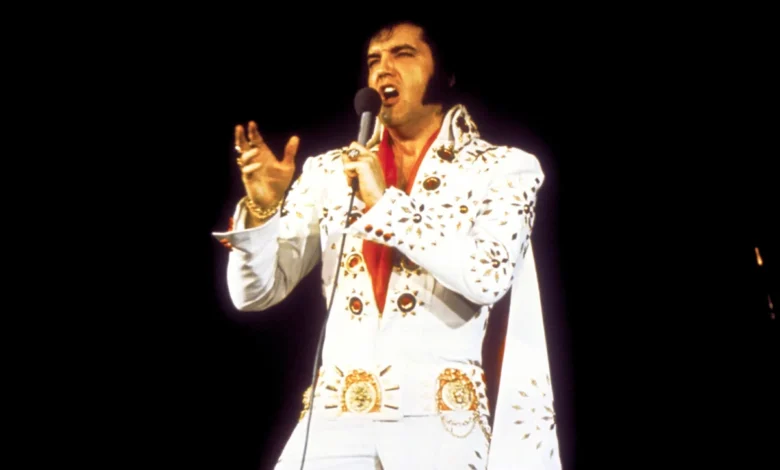
The intellectual property holders of Elvis Presley, the legendary figure often referred to as the King of Rock and Roll, have initiated a high-stakes legal confrontation against the artificial intelligence developer Anthropic. Filed on Friday, October 23, in a federal court, the lawsuit alleges that the tech firm systematically utilized hundreds of Presley’s iconic musical compositions to train its large language models (LLMs) without authorization or compensation. This litigation represents a significant escalation in the ongoing tension between the creative industries and the burgeoning field of generative AI, marking the first time a globally recognized cultural icon of this stature has taken direct legal action against a major AI developer.
The Scope of the Allegations
At the heart of the complaint are 274 copyrighted musical works, a catalog that serves as the bedrock of American rock and pop history. Among the tracks specifically cited in the court filings are foundational hits such as "Can’t Help Falling in Love," "Don’t Be Cruel," "A Little Less Conversation," "All Shook Up," "Return to Sender," and "(You’re The) Devil in Disguise."
The plaintiffs, a collective of entities including units of Authentic Brands Group—the licensing powerhouse that manages Presley’s estate—contend that Anthropic has built its technological infrastructure upon a foundation of mass copyright infringement. Lead attorney Richard Busch, a seasoned litigator renowned for his work in high-profile music copyright cases, issued a stark assessment of the defendant’s practices. "The Elvis Plaintiffs bring this action to enforce these exclusive rights against the defendant that has built its entire business model based on copyright infringement at a scale never seen before," Busch stated in the filing.
Chronology of the Legal Battle
The landscape of AI-related copyright litigation has evolved rapidly since the emergence of sophisticated generative tools. To understand the significance of the Elvis estate’s intervention, one must look at the timeline of the broader industry conflict:
- Early 2023: As generative AI tools like ChatGPT and Claude began seeing widespread adoption, concerns regarding the ingestion of copyrighted training data moved from academic debate to active legal concern within the music industry.
- June 2024: Major record labels, including Universal Music Group, Sony Music, and Warner Music Group, filed massive copyright infringement lawsuits against AI music generators Suno and Udio, alleging that the platforms were trained on copyrighted recordings to create "derivative" musical works.
- Late 2024: Warner Music Group reached a landmark settlement with Suno, signaling a potential shift toward a licensing-based model for AI music generation. However, other major players, including Sony and UMG, maintained their legal challenges.
- October 2025 (Ongoing): Various publishers and songwriters have filed suit against Anthropic, alleging that the company’s Claude model is capable of reproducing copyrighted lyrics and musical structures, thereby bypassing traditional licensing requirements.
- October 23, 2026: The Elvis Presley estate formally files its complaint against Anthropic, bringing the issue of individual artist rights and legacy preservation to the forefront of the debate.
The "Fair Use" Defense and Industry Implications
The central legal friction in this case—and dozens of others like it—revolves around the interpretation of "fair use" under United States copyright law. Anthropic and its peers in the AI industry typically argue that the process of "training" models on vast swaths of internet data constitutes a transformative, non-infringing use. They contend that the models do not store copies of the songs in a traditional sense, but rather learn statistical patterns and linguistic relationships from the data.

Conversely, plaintiffs like the Elvis estate argue that the models are fundamentally "unlicensed derivative works." They maintain that by ingesting the totality of a song’s structure and lyrical content, the AI is essentially "stealing" the essence of the work to create a product that competes directly with the original artist’s catalog. If a court were to rule in favor of the estate, it could force AI companies to drastically alter their data acquisition strategies, potentially requiring them to pay billions in licensing fees to music rights holders.
Expert Analysis of the Legal Strategy
Richard Busch’s involvement in this case is particularly notable. Busch previously represented Eminem in early 2000s litigation concerning digital distribution rights and was the lead counsel for the Marvin Gaye estate in the watershed "Blurred Lines" trial. His strategy often centers on the protection of the artistic "heart" of a composition—the specific creative choices that define an artist’s signature.
By focusing on Elvis Presley, the estate is leveraging the immense cultural and historical weight of the artist’s work. Unlike suits involving contemporary pop stars, where the debate might center on market displacement, the Elvis litigation highlights the moral and proprietary rights of legacy artists. The plaintiffs argue that these are not merely data points, but "some of the most groundbreaking, revolutionary, influential, and enduring musical compositions in human history."
Broader Impact on the AI Sector
The implications for Anthropic are significant. As a company that prides itself on building "helpful, harmless, and honest" AI, the accusation that it has built its core business model on the unauthorized exploitation of intellectual property threatens its public image and financial stability.
Furthermore, this case arrives at a time when lawmakers and regulatory bodies, including the U.S. Copyright Office, are actively exploring new frameworks for AI. A ruling in the Elvis Presley case could serve as a bellwether for how the judiciary views the intersection of creative labor and machine learning.
If the estate succeeds, the music industry will likely demand a universal licensing scheme, similar to those that govern radio airplay and streaming services. If Anthropic prevails, the AI industry may gain legal precedent that effectively shields it from copyright liability for training data, potentially leaving artists and rights holders with limited recourse in the digital age.

Official Responses and Future Outlook
As of the current reporting, Anthropic has not provided a formal statement regarding the specific allegations brought by the Elvis estate. However, in previous filings regarding similar copyright disputes, the company has maintained that its technology operates within the bounds of existing intellectual property law.
The case is expected to move through the discovery phase, where the plaintiffs will likely demand transparency regarding the specific datasets used to train the latest iterations of Claude. Analysts suggest that the case will likely take years to reach a resolution, possibly ending up in the Supreme Court, given the foundational nature of the copyright questions involved.
For now, the music industry remains in a state of watchful waiting. The filing by the Elvis Presley estate signals that no artist—living or deceased—is exempt from the challenges posed by the rapid acceleration of AI technology. It serves as a reminder that as technology advances, the legal definitions of ownership, creativity, and authorship are being rewritten in real-time. The outcome of this litigation will likely define the economic relationship between artificial intelligence and the arts for decades to come, setting a precedent that will influence everything from songwriting to film production and digital content creation.
As the legal proceedings commence, the global community of musicians, fans, and technology enthusiasts will be monitoring the court’s interpretation of how a machine "listens" to the King. The decision will determine whether the legacy of the most iconic voice in rock history remains the property of his estate, or if it has effectively entered the public domain of the machine-learning era.