Jamaican Dancehall Singer Shabba Ranks Sues to Claw Back Publishing Catalog

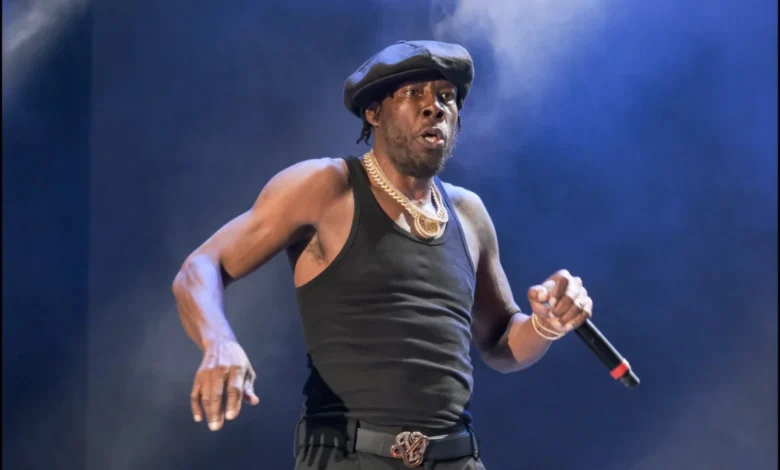
The legendary Jamaican dancehall artist, born Rexton Gordon, officially filed a lawsuit against the publishing arm of the renowned reggae label Greensleeves Records on Friday, September 11. The legal action represents a pivotal moment for the artist’s career, as he seeks to regain control over compositions that defined an era of music, including Billboard Hot 100 successes such as "Slow and Sexy," "Housecall," "Mr. Loverman," and "Let’s Get It On." Central to the dispute is the 1990 track "Dem Bow," a song that provided the blueprint for the "dembow" rhythm—a percussive foundation that has since become the lifeblood of the global reggaeton genre.
The Mechanism of Copyright Termination
The core of the litigation rests on Section 203 of the U.S. Copyright Act, which allows authors to terminate grants of copyright transfer after a period of 35 years. This provision was designed by Congress to provide a "second bite at the apple" for creators, recognizing that artists often lack bargaining power early in their careers and may sign away their life’s work for nominal sums.
Shabba Ranks’ legal team, led by attorneys at Reitler Kailas & Rosenblatt, argues that the artist is fully entitled to invoke this termination right. By reclaiming his publishing, the dancehall icon aims to secure the future royalties and administrative control of a catalog that continues to generate significant revenue and cultural influence decades after its initial release.
The "Work-for-Hire" Contention
The defense mounted by Greensleeves Records rests on the "work-for-hire" doctrine. Under U.S. copyright law, works created as part of an employment contract—or specifically commissioned for certain purposes—are exempt from the termination rights afforded to independent creators.

Greensleeves maintains that the 1989 publishing agreement signed by Rexton Gordon explicitly categorized his musical compositions as "works made for hire." If the court upholds this classification, it would effectively strip Shabba Ranks of his ability to terminate the transfer, leaving the copyrights permanently in the hands of the publisher.
Shabba’s attorneys are aggressively contesting this characterization. In the court filing, they argue that the designation is legally invalid regardless of the language used in the original contract. Their argument posits that Shabba Ranks was never an employee of Greensleeves and that musical compositions, by their inherent nature as creative works, cannot be unilaterally converted into "work-for-hire" status simply by the inclusion of boilerplate contract language. This legal nuance is expected to be the central battlefield of the case, as it touches upon standard industry practices that have governed the music business for decades.
A Legacy Defined by "Dem Bow"
The inclusion of the track "Dem Bow" in the lawsuit adds a layer of immense cultural and financial weight to the proceedings. The rhythm, characterized by its distinctive syncopated beat, has become the foundational heartbeat of modern reggaeton, appearing in countless hits by global superstars ranging from Daddy Yankee to Bad Bunny.
The "dembow" rhythm has previously been the subject of intense litigation. The music industry is currently navigating a complex, industry-wide copyright battle regarding the origins and ownership of this specific rhythmic pattern. For Shabba Ranks to re-establish his rights to the original 1990 composition at this juncture is a move that could ripple through the reggaeton industry, potentially forcing a reassessment of how royalties are attributed across the entire genre.
Chronology of the Dispute
The current legal standoff did not emerge overnight. The tension between the artist and his former label has been building since at least 2023, when Shabba Ranks first issued a formal notice of termination to Greensleeves Records.

- 1989: Rexton Gordon (Shabba Ranks) signs his initial publishing agreement with Greensleeves Records.
- 1990: The release of the "Dem Bow" rhythm, which becomes a seminal track in Jamaican dancehall and an international influence.
- 1991–1993: The peak of Shabba Ranks’ commercial success, with hits like "Mr. Loverman" and "Housecall" climbing international charts and solidifying his status as a global star.
- 2023: Shabba Ranks formally notifies Greensleeves of his intent to exercise his U.S. Copyright Act termination rights.
- 2023–2024: Negotiations between the parties fail to reach an amicable resolution, with Greensleeves citing the "work-for-hire" clause as a barrier.
- September 11, 2026: Shabba Ranks files a formal lawsuit in court, seeking a declaratory judgment to validate his termination of rights.
Broader Industry Implications
The Shabba Ranks case is part of a growing trend of "legacy artists" utilizing modern legal frameworks to audit and reclaim their catalogs. The outcome of this case will likely be watched closely by legal experts and music industry executives alike, as it could set a precedent for how older, international artists can navigate U.S. copyright law.
This lawsuit follows a similar high-profile dispute involving the rap duo Salt-N-Pepa and Universal Music Group. In that matter, the artists have challenged the ownership status of their early recordings, arguing that they should have the right to reclaim their copyrights under the same termination provisions. Furthermore, the major record labels are currently petitioning the Supreme Court to overturn rulings that have expanded the reach of these termination rights, suggesting that the industry is bracing for a significant shift in the balance of power between publishers and songwriters.
Analysis of Potential Outcomes
If Shabba Ranks prevails, he would gain control over the exploitation of his compositions, including synchronization licensing for film, television, and advertising. Given the enduring popularity of his 90s hits, this could represent a substantial increase in his annual income.
Conversely, a victory for Greensleeves would reinforce the strength of the "work-for-hire" clause, providing a shield for labels against the rising tide of termination notices. If the court rules that a contract’s categorization of a work as "work-for-hire" is binding, it could effectively nullify the legislative intent of the copyright termination provision for thousands of artists who signed similar agreements during the 1980s and 1990s.
The Stance of the Parties
As of the time of reporting, representatives for both Shabba Ranks and Greensleeves Records have remained silent. No formal public statement has been issued by either side, which is common in active litigation where legal strategy is prioritized over public relations. However, the intensity of the language used in the initial filing—specifically the assertion that the publisher’s claim is fundamentally incompatible with the U.S. Copyright Act—suggests that both parties are prepared for a protracted and rigorous discovery process.

Economic and Cultural Value
The value of music catalogs has skyrocketed in recent years, with private equity firms and major labels spending billions to acquire the rights to iconic songs. By challenging his agreement, Shabba Ranks is essentially testing whether the creator of the music can participate in the current valuation of his work, or if the rights remain permanently tethered to the original commercial entities that facilitated their distribution.
For fans of dancehall and the wider Caribbean diaspora, the outcome of this case is more than a matter of accounting. It is a question of authorship and the recognition of the pioneering figures who laid the foundation for today’s global pop landscape. As the case moves toward initial hearings, the industry remains in a state of anticipation, waiting to see if the legal system will uphold the rights of the artist or the contractual protections of the institution.
The court is now tasked with interpreting whether the 1989 agreement constitutes a valid assignment of rights that survives the test of time, or if the statutory protections of the U.S. Copyright Act take precedence. The decision will not only resolve the ownership of Shabba Ranks’ catalog but may serve as a bellwether for the future of songwriter rights in the digital age.
Related posts: