The seismic evolution of Arctic Monkeys from Sheffield indie rockers to global icons and the story of Do I Wanna Know


The trajectory of Arctic Monkeys is a definitive study in artistic maturation, marking a shift from the frenetic, guitar-driven urgency of their 2006 debut to the cinematic, lounge-inflected sophistication of their 2022 output. At the center of this transformation lies the 2013 single Do I Wanna Know?, a track that not only redefined the band’s sonic identity but served as the catalyst for their successful conquest of the North American mainstream.
The Genesis of a New Sound
By 2012, the band—comprising Alex Turner, Matt Helders, Jamie Cook, and Nick O’Malley—had established a permanent presence in Los Angeles. This geographic shift fundamentally altered their creative process. Influenced by the expansive production styles of hip-hop and the rhythmic sensibilities of contemporary R&B, the band sought to deconstruct the traditional rock quartet format.
In interviews during the promotional cycle for their fifth studio album, AM, frontman Alex Turner described an intentional approach to songwriting: applying the perspective of an R&B producer to a rock ‘n’ roll framework. This involved a move away from the dense, layered arrangements of their early work toward a more minimalist, percussion-heavy aesthetic. The band began treating individual instrument tracks as modular building blocks, a method Turner compared to the intricate, sample-based production techniques associated with Timbaland.

A Chronology of Creation
The development of Do I Wanna Know? can be traced back to a two-week residency at the Joshua Tree studio in California, a location previously utilized for the recording of their 2009 album, Humbug. According to drummer Matt Helders, the track began as a sparse, bass-heavy experiment. It was one of the few compositions from those sessions to survive the editing process, though its initial form was vastly different from the final, anthemic release.
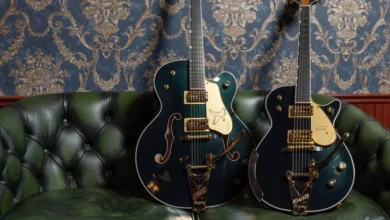
The song’s evolution was heavily reliant on a specific piece of equipment: a 12-string Vox Star Stream guitar that Turner had purchased as a curiosity. The instrument’s unique resonance provided the bedrock for the song’s iconic, 12-second opening riff. Producer James Ford, a long-time collaborator, noted that the guitar seemed to possess a latent musicality that Turner merely needed to coax out. Turner himself has often framed the discovery of the riff through a lens of musical romanticism, suggesting that the melody was a "ghost" residing within the instrument.
The Technical Shift: Rhythm and Vocals
The transition to a four-track recorder necessitated a simplification of the percussion. Helders, tasked with maintaining a groove that could "knock" like a 50 Cent track, abandoned the complex, frantic fills that defined his early work in favor of a steadier, more deliberate beat. This rhythmic anchor allowed the guitars and vocals to occupy more sonic space, creating the "brooding" atmosphere that characterizes the record.
The vocal arrangement also underwent a significant change. Originally, the band reached out to the sibling trio HAIM to provide the falsetto backing vocals that accent the chorus. Due to conflicting studio schedules, the collaboration did not materialize—a moment Este Haim later described with deep regret. Consequently, bassist Nick O’Malley and Helders stepped into the roles of "space choirboys." This arrangement not only solved a logistical hurdle but also introduced a complex harmonic structure that would become a hallmark of the band’s subsequent projects, including Tranquility Base Hotel & Casino and The Car.

Impact and Statistical Dominance
The release of Do I Wanna Know? in June 2013 functioned as the lead single for the AM album, and its performance was unprecedented for an independent rock act. The song currently holds over 3 billion streams on Spotify and has generated nearly 2 billion views on YouTube. Its success was bolstered by an innovative animated music video directed by David Wilson and produced by Blinkink. The visual style, which utilized fluid, shifting animations reminiscent of the work of cartoonist Vince Collins, became a viral sensation.
The cultural impact of the track cannot be overstated. It served as the bridge between the band’s UK-centric popularity and their breakthrough in the United States. With the release of AM, Arctic Monkeys became the first independent-label act to secure five consecutive UK Number 1 albums. Furthermore, the album debuted at Number 6 on the US Billboard 200, the band’s first-ever appearance in the American Top 10. This success was sustained by other high-performing tracks from the same era, including "Why’d You Only Call Me When You’re High?" and "I Wanna Be Yours."
Broader Implications and Legacy
The success of Do I Wanna Know? forced a re-evaluation of the band’s place in the global music industry. By successfully synthesizing the aesthetic of California’s desert rock with the precise production values of modern pop and R&B, Arctic Monkeys proved that rock bands could evolve without losing their critical edge.
The track remains a case study for music industry analysts regarding the longevity of digital-era hits. Despite being over a decade old, its consistent performance in streaming charts suggests that it has transcended its status as a "radio hit" to become a modern standard. The song’s reliance on space and silence—a stark contrast to the loudness wars that defined much of the 2000s music production—is often cited by guitarists and producers as a masterclass in dynamic control.

Reflections from the Industry
Critics and contemporaries have frequently pointed to the song as the pivot point where Alex Turner solidified his status as a songwriter of the highest caliber. By moving away from the observational, rapid-fire lyrical style of his youth—which focused on the minutiae of Sheffield nightlife—to the more introspective and melodically complex phrasing found in Do I Wanna Know?, Turner signaled a shift in focus toward the emotional weight of a track.
The band’s ability to "crack America" without compromising their core sound remains one of their most significant business achievements. By utilizing a heavy, accessible riff that resonated across demographic lines, they managed to capture a mainstream audience that had largely moved away from guitar-based music.
Conclusion
As of the mid-2020s, Do I Wanna Know? remains the definitive anthem of the Arctic Monkeys’ catalog. Its legacy is not merely in the numbers it has generated, but in the doors it opened for the band. It provided the necessary confidence to experiment further, leading to the experimental, piano-led directions of their later records. Whether viewed as a technical achievement in production or a pivotal moment in the history of 21st-century rock, the track serves as a permanent marker of a band that refused to remain static. For both the casual listener and the industry observer, the song stands as a testament to the idea that a simple, well-executed riff can still change the course of a career. Over a decade later, the cultural "crawlin’ back" to the sound of that opening riff shows no sign of abating, cementing the track’s status as a foundational pillar of modern alternative music.