American Baritone Trevor Haumschilt-Rocha Wins First Prize at the 2026 Sumi Jo International Singing Competition


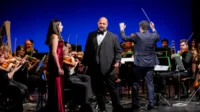
In a definitive display of vocal mastery and artistic maturity, the 2026 Sumi Jo International Singing Competition concluded its final round with the crowning of American baritone Trevor Haumschilt-Rocha as the first-prize winner. The 27-year-old San Diego native emerged at the top of a highly competitive field, solidifying his status as one of the most promising young voices in the contemporary operatic landscape. The competition, which has rapidly ascended to become one of the most prestigious platforms for emerging vocalists, celebrated its latest cohort of winners against a backdrop of intense global interest, drawing hundreds of applicants from across the world.
The results of the 2026 edition reflect a diverse array of talent, with the top three prizes being awarded to artists from the United States, South Korea, and Romania. Following Haumschilt-Rocha’s victory, the second prize was awarded to South Korean bass Seungho Yoo, whose resonance and stage presence garnered significant acclaim from the panel. The third prize went to Romanian mezzo-soprano Paula Iancic, an artist noted for her expressive depth and technical precision. Beyond the primary rankings, the Hyundai Special Jury Prize was shared by two notable performers: Ukrainian soprano Evelina Liubonko and Sun Fei.
A Rigorous Path to the Podium: The Selection Process
The journey to the final stage of the Sumi Jo International Singing Competition is notoriously rigorous, designed to test the endurance, versatility, and psychological fortitude of the participants. For the 2026 cycle, the competition received an overwhelming 500 applications from vocalists representing dozens of nations. From this initial pool, a preliminary screening committee narrowed the field to just 24 artists who were invited to participate in the live rounds.
The selection process involves several stages, including a preliminary digital audition where singers submit recordings of diverse repertoire, followed by semi-final and final rounds performed in front of a live audience and a distinguished panel of experts. The 2026 finalists were required to demonstrate proficiency in various languages and styles, ranging from the intricate coloratura of the Baroque era to the dramatic demands of 19th-century Verismo and the nuanced complexities of contemporary composition.
Trevor Haumschilt-Rocha’s ascent to the first prize was marked by a series of performances that the jury described as both technically flawless and emotionally resonant. At 27, Haumschilt-Rocha represents the "golden age" for developing baritones, possessing a voice that has reached a level of maturity capable of handling the core lyric baritone repertoire while hinting at a future in more dramatic roles. His victory is seen as a significant milestone for American vocal pedagogy, as he is a product of some of the United States’ most respected conservatory programs.
Profiles of the Prize Winners
The 2026 winners represent a microcosm of the global opera industry’s future. Trevor Haumschilt-Rocha, hailing from San Diego, California, has been a rising star on the competition circuit for several years. His win in this competition is expected to open doors to major houses in Europe and North America. Observers noted his ability to combine a rich, velvety timbre with an innate sense of storytelling, a combination that is highly sought after by modern casting directors.
Seungho Yoo, the second-prize winner, continues the strong tradition of South Korean male singers excelling on the international stage. Known for their robust training and exceptional vocal power, South Korean bassos have become a staple of international opera houses, and Yoo’s performance in the 2026 competition suggests he is the next in line for a major career. His interpretation of the basso profondo repertoire was cited as a highlight of the final round.
Paula Iancic, the third-prize winner from Romania, brought a distinct Eastern European sensibility to the competition. The mezzo-soprano voice is often one of the most difficult to cast, requiring a balance of warmth in the lower register and brilliance in the upper extension. Iancic’s placement in the top three underscores her readiness for the professional stage, particularly in the demanding roles of Rossini and Mozart.
The sharing of the Hyundai Special Jury Prize between Evelina Liubonko and Sun Fei highlights the exceptional level of talent that extended beyond the top three. Liubonko, representing Ukraine, delivered performances that were imbued with a sense of urgency and poignancy, while Sun Fei showcased the meticulous technique and artistic refinement that has become a hallmark of the burgeoning Chinese opera scene.
The Jury: A Panel of Industry Titans
The prestige of the Sumi Jo International Singing Competition is largely derived from the caliber of its adjudicators. The 2026 jury was comprised of some of the most influential figures in the classical music and opera industries, ensuring that the winners were vetted by those who hold the keys to the world’s most important stages.
The panel was led by Alain Lanceron, the former chief of Warner Classics and Erato. Lanceron is widely regarded as one of the most influential recording executives in history, having discovered and nurtured the careers of numerous legendary singers. His presence on the jury provided a "record-industry perspective," focusing on the marketability and long-term recording potential of the contestants.
Joining Lanceron was Jonathan Friend, a veteran casting adviser who has held significant roles at the Metropolitan Opera and currently serves as a consultant for the Houston Grand Opera. Friend’s expertise in identifying voices that can project in large houses and sustain long-term careers was vital to the deliberation process.
The administrative and house-management side of the industry was represented by Mélanie Allmendinger, an administrator from the Royal Opera House, Covent Garden, and Paolo Gavazzeni of La Scala in Milan. Their involvement ensured that the singers were evaluated not just as vocalists, but as professionals capable of navigating the complex demands of world-class opera houses.
Rounding out the jury was the world-renowned tenor Marcelo Álvarez. As one of the few active performers on the panel, Álvarez provided a "singer’s perspective," evaluating the contestants on their technique, breath control, and the intangible "it-factor" that defines a true stage animal.
The Legacy of Sumi Jo and the Competition’s Context
The competition is the brainchild of the legendary South Korean soprano Sumi Jo. A Grammy Award winner and the first Asian soprano to establish herself as a superstar in the world’s leading opera houses—including La Scala, the Met, and the Vienna State Opera—Sumi Jo has dedicated the latter part of her career to supporting the next generation of artists.
The competition was established with the specific goal of bridging the gap between Eastern and Western musical traditions. While South Korea has become a powerhouse of vocal talent, Jo recognized the need for a high-profile platform that could bring global talent to a singular stage, judged by a panel of Western industry leaders. The inaugural editions of the competition were held in France, specifically at the historic Château de la Ferté-Imbault, providing a romantic and culturally rich environment that emphasizes the heritage of the art form.
The 2026 edition continues this tradition of excellence. By selecting winners like Haumschilt-Rocha, the competition reinforces its mission to find "the complete artist"—someone who possesses not only a world-class instrument but also the linguistic skills, acting ability, and professional temperament required in the modern era of high-definition broadcasts and global tours.
Broader Impact and Industry Implications
The victory of an American baritone in a competition founded by a South Korean icon and judged by European and American experts speaks to the increasingly globalized nature of opera. For Trevor Haumschilt-Rocha, this win is likely to result in immediate contract offers. Historically, winners of major international competitions see a significant uptick in engagements with "A-level" houses within 12 to 18 months of their victory.
Furthermore, the success of Seungho Yoo and Paula Iancic highlights the shifting demographics of the opera world. As traditional audiences in Europe and North America evolve, the influx of talent from Asia and Eastern Europe continues to revitalize the art form. The Sumi Jo International Singing Competition serves as a critical barometer for these trends, showcasing where the highest level of training and talent is currently concentrated.
From a data perspective, the 2026 competition saw a 15% increase in applications compared to the previous cycle, suggesting that young singers are increasingly viewing this specific competition as a "must-enter" event on par with the Operalia or the Cardiff Singer of the World. The inclusion of the Hyundai Special Jury Prize also indicates strong corporate support, which is essential for the sustainability of high-level cultural events in the 21st century.
Conclusion and Future Outlook
As the curtain falls on the 2026 Sumi Jo International Singing Competition, the focus now shifts to the professional trajectories of its winners. Trevor Haumschilt-Rocha enters the next phase of his career with a significant accolade that will undoubtedly serve as a catalyst for his international debut. For the runners-up and special prize winners, the exposure gained from performing before such a distinguished jury is an invaluable asset that often leads to management contracts and secondary prizes.
The competition has once again proven that despite the challenges facing the classical music industry, the level of raw talent and dedication among young singers remains at an all-time high. Under the guidance of Sumi Jo and the watchful eyes of the world’s leading casting directors, the 2026 winners are well-positioned to lead the next generation of operatic excellence, ensuring that the art form continues to thrive on the global stage.