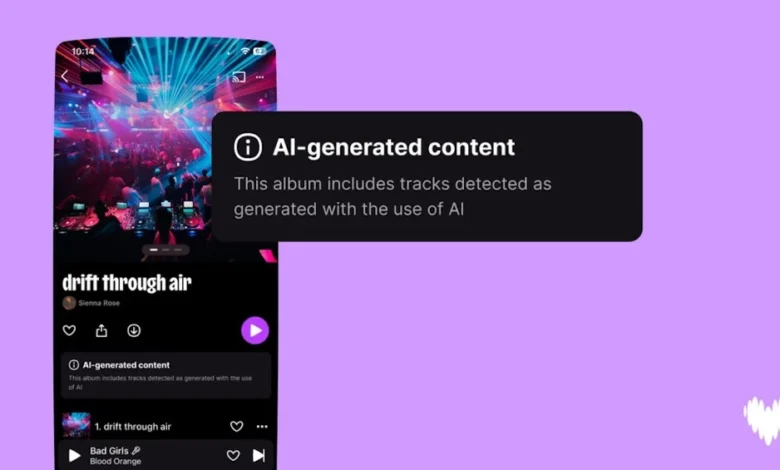
Paris-based streaming giant Deezer has announced a significant shift in its content landscape, reporting that AI-generated music now constitutes over half of all tracks uploaded to its platform each day. This milestone marks a critical juncture for the music industry, highlighting the rapid proliferation and increasing influence of artificial intelligence in creative production. The company stated that approximately 90,000 AI-generated tracks are submitted daily, a figure that represents more than 50% of total daily uploads. This represents a notable increase from April of the same year, when Deezer reported 75,000 AI-generated tracks per day, accounting for 44% of all new content. According to reports from Music Business Worldwide, this is the first time AI-generated music has definitively overtaken human-made music in terms of daily upload volume on the platform, signaling a profound change in how music content is created and disseminated.
Deezer’s Proactive Stance Amidst Surging AI Content
Deezer has been at the forefront of addressing the challenges posed by AI-generated music, particularly concerning issues of fraud and the dilution of royalty payments. The company has reiterated its commitment to actively removing and demonetizing AI-generated tracks that do not adhere to its content policies. This stance aligns with its January statement, which outlined a policy of shunning royalty payments on 85% of AI music identified by its advanced AI detection tools.
Alexis Lanternier, CEO of Deezer, underscored the company’s long-standing efforts in a recent press statement. "Deezer has been at the frontline of fighting fraud and reducing payment dilution related to AI music for almost two years," Lanternier stated. He added, "Now that half of all daily uploads are AI-generated tracks, we are taking additional steps to safeguard the rights of artists and songwriters, while maintaining focus on music that fans actually love." This statement reflects the growing urgency within the industry to protect human artistry and ensure fair compensation in an increasingly automated content environment. Deezer’s proprietary AI detection tools, designed to identify synthetically generated music, were expanded and launched across 20 streaming platforms in June, demonstrating a broader effort to mitigate the impact of unregulated AI content across the digital music ecosystem.
A Chronology of AI in Music and Industry Responses
The rapid ascent of AI-generated music on platforms like Deezer is not an isolated event but rather the culmination of several years of technological advancements and evolving industry responses. Generative AI models capable of composing, arranging, and producing music have become increasingly sophisticated and accessible. Tools such as Google’s MusicLM, Stability AI’s Stable Audio, Suno AI, and Udio have democratized music creation, allowing users with minimal musical expertise to generate high-quality tracks in various genres.
Timeline of Key Developments:
- Early 2020s: Emergence and refinement of generative AI models for music, moving beyond simple algorithmic composition to more nuanced and human-like outputs.
- November 2025 (Study Publication): A pivotal study reveals that 97% of people cannot differentiate between AI-generated and human-made music, underscoring the advanced capabilities of AI in mimicking human creativity and raising questions about authenticity.
- January (Current Year): Deezer issues an initial statement on AI music, outlining its policy to demonetize 85% of AI-generated tracks and combat payment dilution, marking one of the earliest comprehensive policies from a major streaming service. Bandcamp, a popular platform for independent artists, bans "wholly or substantially" AI-generated music, adopting a more restrictive approach.
- April (Current Year): Deezer reports that AI-generated tracks account for 75,000 daily uploads, representing 44% of total new content, indicating a significant and rapidly growing trend.
- May (Current Year): Spotify and Universal Music Group (UMG) announce a landmark licensing deal, signaling a different approach by enabling fans to use AI to generate remixes and covers of songs, provided artists grant permission. This highlights a potential avenue for collaborative and authorized AI use.
- June (Current Year): Deezer launches its AI music detection tools across 20 streaming platforms, expanding its efforts to identify and manage AI content beyond its own service.
- Past Month (Pre-Announcement): TIDAL, another prominent streaming service, announces its new AI music policy, explicitly excluding fully AI-generated music from royalty payments, aligning with Deezer’s stance on compensation.
- Recent Announcement: Deezer confirms AI-generated music now surpasses 50% of daily uploads, with 90,000 tracks submitted daily, marking a critical threshold.
This timeline illustrates a rapidly evolving landscape where streaming platforms and industry stakeholders are grappling with how to integrate, regulate, or restrict AI-generated music.
Diverse Industry Responses: A Spectrum of Policies
The music industry’s response to the surge in AI-generated content has been varied, reflecting the complexity of the issue and the differing business models and philosophies of various platforms.
While Deezer and TIDAL have adopted a more restrictive approach by excluding fully AI-generated music from royalty payments and actively demonetizing such content, other platforms are exploring different avenues. Bandcamp, known for its artist-centric model, took an early and decisive stance by banning "wholly or substantially" AI-generated music. This move underscores a commitment to preserving human artistry and ensuring that the platform remains a space for human creators.
In contrast, platforms like Traxsource and Apple Music have opted for transparency through labeling systems. Traxsource, a digital music store focused on electronic music, has implemented a policy requiring labels to disclose whether their music is human-made or AI-assisted. Similarly, Apple Music has developed new transparency tags that give users the option to label AI-generated music. These tagging systems aim to provide consumers with more information about the origin of the music they stream, allowing for informed choices and potentially fostering a market for "human-verified" content.
A particularly notable development is the licensing deal between Spotify and Universal Music Group (UMG) in May. This agreement signifies a willingness to explore the potential benefits of AI, specifically by allowing fans to use AI to generate remixes and covers of songs, albeit with explicit permission from artists. This collaborative model suggests that AI could serve as a creative tool for engagement and fan interaction, rather than solely as a threat to human creativity. This approach contrasts sharply with the protective measures taken by Deezer and TIDAL, indicating a bifurcated industry strategy: one focused on curbing the influx of potentially infringing or low-quality AI content, and another exploring the authorized, creative applications of AI.
The Economic Implications for Artists and the Industry
The overwhelming volume of AI-generated music poses significant economic challenges for human artists and the broader music industry. The most immediate concern is the dilution of royalty payments. Streaming revenue models typically involve complex calculations based on total streams and subscription revenues, often distributed proportionally. When 90,000 AI-generated tracks flood a platform daily, each potentially garnering a share of streams, the revenue pool for human artists is inevitably fragmented and diminished.
For independent artists, who often rely heavily on streaming revenue, this influx of AI content can make it even harder to gain visibility and earn a living wage. The sheer volume of AI tracks creates a "noise" problem, making it difficult for genuine human-made music to cut through the clutter and reach listeners. This market saturation could devalue music as a whole, driving down the perceived worth of creative output.
Furthermore, the cost of creating AI music is often negligible compared to human production. Artists invest time, money, and emotional labor into their craft, including studio time, instrument purchases, mixing, mastering, and marketing. AI, on the other hand, can generate tracks in minutes at virtually no cost. This disparity creates an unfair competitive landscape, where AI can produce content at scale that human artists simply cannot match. This could force human artists to reconsider their strategies, potentially leading to a greater focus on live performances, merchandise, or niche fan engagement.
Navigating Copyright and Ethical Quandaries
Beyond economic concerns, the rise of AI-generated music raises profound legal and ethical questions, particularly concerning copyright and authorship. A central issue is the training data used by generative AI models. Many AI music generators are trained on vast datasets of existing music, often without explicit permission from copyright holders. This practice opens the door to potential copyright infringement lawsuits, as the AI’s output might inadvertently or directly mimic copyrighted works. The legal frameworks around AI-generated content are still nascent, leading to a grey area regarding who owns the copyright to AI-created music: the user who prompted it, the developer of the AI model, or potentially no one if it’s deemed non-human creation.
The ethical implications extend to issues of originality and authenticity. If AI can produce music indistinguishable from human creations, as the November 2025 study suggests, it challenges traditional notions of artistic merit and intellectual property. There’s also the concern of "deepfakes" in music, where AI could be used to generate new songs in the style or even voice of existing artists without their consent, potentially harming their reputation or exploiting their likeness. This raises questions about artistic integrity and control over one’s creative identity. Industry bodies, legal experts, and policymakers are actively working to establish clearer guidelines and regulations to address these complex issues, but progress is slow compared to the rapid pace of technological development.
The Challenge of Detection and Authenticity
Deezer’s commitment to using AI detection tools highlights a burgeoning technological arms race. As AI generation capabilities improve, so too must the methods for identifying AI-created content. The fact that 97% of people cannot distinguish between human and AI-made music underscores the sophistication of current AI models and the difficulty of this detection task.
Effective AI detection is crucial for several reasons: it helps platforms enforce their policies, protects artists from fraudulent claims, and potentially allows consumers to make informed choices. However, AI detection itself is not infallible. There’s always the risk of false positives (human music being flagged as AI) or false negatives (AI music going undetected). The development of these tools requires significant investment in machine learning and data analysis, creating an ongoing challenge for streaming platforms. The future may see a continuous back-and-forth between AI generation advancements and AI detection improvements, mirroring the dynamic seen in other areas of digital security.
Impact on the Listener Experience and the Future of Curation
The exponential growth of AI-generated music also has significant implications for the listener experience. While some AI music might be innovative and engaging, a substantial portion is likely to be formulaic, low-quality, or derivative, generated primarily to game algorithms and accrue micro-royalties. This influx of potentially uninspired content could lead to a degraded listening experience, making it harder for users to discover truly compelling music.
The role of human curation, therefore, becomes even more critical. In an ocean of AI-generated tracks, listeners might increasingly rely on trusted curators, critics, and human-led playlists to navigate the vast content landscape. Streaming platforms might need to invest more in human editorial teams or develop more sophisticated recommendation algorithms that prioritize quality and authenticity over sheer volume. The concept of "human-verified" music could become a valuable differentiator, appealing to listeners who prioritize genuine artistic expression.
The Future Landscape: Coexistence or Conflict?
The current trajectory suggests that AI-generated music is not a fleeting trend but a fundamental shift in the music ecosystem. The industry faces a critical juncture: whether to foster a future of coexistence, where AI serves as a tool for human creativity and collaboration, or one of conflict, where AI-generated content competes directly and unfairly with human artistry.
The path forward likely involves a multi-faceted approach. This includes robust regulatory frameworks for copyright and compensation, advanced AI detection and transparency tools, and innovative business models that ensure human artists are fairly rewarded. Platforms like Spotify’s partnership with UMG offer a glimpse into how authorized and artist-controlled AI tools could enhance creative possibilities. However, the immediate challenge remains the unregulated flood of AI content, which necessitates strong gatekeeping measures from platforms like Deezer.
Ultimately, the goal is to cultivate an environment where technology empowers rather than diminishes human creativity, preserving the value of art in an increasingly digital and automated world. The fact that AI-generated music now dominates daily uploads on a major platform like Deezer serves as a stark reminder of the urgency and complexity of this ongoing transformation.