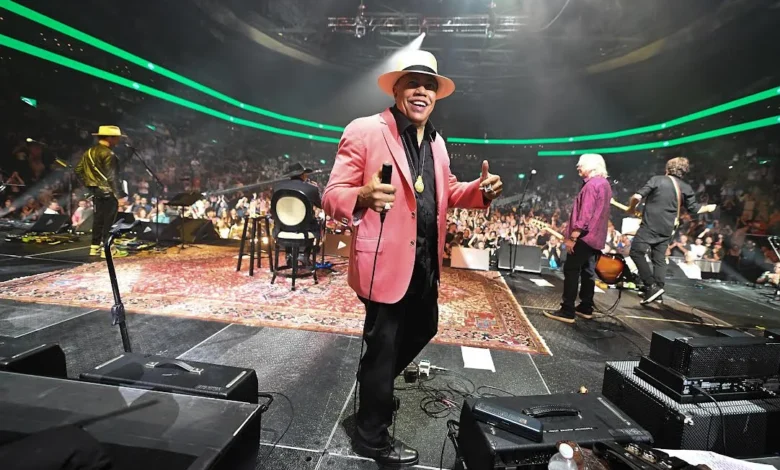
Billy Branch stands as a towering pillar in the landscape of contemporary American music, representing a direct, living bridge to the architects of the post-war Chicago blues movement. As a protégé of legends like Willie Dixon, Junior Wells, and James Cotton, Branch has spent nearly five decades not only performing but acting as a guardian of a genre that provided the bedrock for modern rock, soul, and R&B. Despite his status as a Blues Hall of Fame inductee, a three-time Grammy nominee, and an Emmy Award winner, Branch remains a vocal critic of the city that birthed the sound he champions, arguing that Chicago has failed to adequately institutionalize its own cultural history.
The Architect of a Legacy
Branch’s career trajectory is inseparable from the history of Chicago’s rise as the global capital of the blues. Beginning his professional journey in the late 1970s as a member of the Willie Dixon All Stars, Branch was positioned at the epicenter of a musical revolution. Having appeared on over 300 recordings, his influence extends beyond the stage and into the classroom. His "Blues in Schools" program, established in 1978, has served as a primary vessel for historical preservation, ensuring that younger generations understand the sociological and musical importance of the blues.
The significance of the blues to Chicago’s identity cannot be overstated. Following the Great Migration, musicians from the Mississippi Delta brought their acoustic traditions to Chicago, where they were amplified by the industrial grit of the city. Labels like Chess Records and Vee-Jay Records transformed this regional folk art into a global phenomenon. Yet, as Branch observes, the city that exported this sound to the world has struggled to maintain a permanent, physical monument to the artists who defined it.
A Comparative Analysis: Chicago vs. Memphis
The frustration voiced by Branch, and echoed by icons like Buddy Guy, centers on a perceived lack of civic commitment compared to other music-centric cities. In Memphis, for instance, the influence of the blues and soul is immediate upon arrival. The city utilizes its airport as a cultural gateway, featuring exhibits on B.B. King, Elvis Presley, and the Stax Museum of American Soul Music.
In contrast, Chicago has seen numerous attempts to establish a major, centralized blues museum fail to gain institutional traction. These initiatives have historically been thwarted by a combination of logistical hurdles—such as the inability to secure a permanent location—and the subsequent withdrawal of financial backing from venture capitalists and sponsors. For Branch, this represents an "oversight" rather than active malice; the blues has been taken for granted as a constant, permanent fixture of the city’s air, rather than a fragile historical asset requiring active curation.
Chronology of a Cultural Void
The history of the Chicago blues museum movement is one of fits and starts. Throughout the late 20th and early 21st centuries, various non-profits and cultural committees have floated proposals for a permanent site, with budgets ranging from $40 million to $50 million. Despite these substantial figures, the disconnect between funding and infrastructure—the lack of a dedicated space—has consistently stalled progress.
Recent developments, however, offer a glimmer of hope. The Mojo Museum, housed in the former residence of Muddy Waters, represents a grassroots success story. While the scale is modest, it serves as a tangible site of pilgrimage for fans. Branch views this as a necessary step forward, but maintains that a comprehensive, city-supported institution is required to do justice to the scale of Chicago’s musical contribution. He advocates for a more proactive municipal strategy: integrating blues history into public transit, airport arrivals, and official tourism initiatives, similar to the city’s past efforts at Midway Airport.
A New Generation: The Blues Renaissance
While the institutional recognition of the blues remains in a state of flux, the music itself is experiencing a demographic shift. Branch points to an emerging generation of young, highly skilled artists, such as D.K. Harrell and Mathias Lattin, as evidence of the genre’s enduring vitality.
The rise of 19-year-old phenom D.K. "Young Rell" Davenport is particularly significant. Branch, who has mentored the young artist, notes that Harrell possesses a historical fluency that rivals veteran musicians. This transfer of knowledge from the elders to the youth is critical, as it ensures that the technical nuance of the Chicago sound—the specific phrasing, the rhythm, and the improvisation—is not lost. This "renaissance," as Branch describes it, is also reflected in broader media, with recent Oscar-related programming and blues-based film projects like Sinners bringing the genre into the contemporary cultural spotlight.
The Blues Is My Biography: A Modern Evolution
Branch’s latest studio effort, The Blues Is My Biography, serves as both a retrospective of his own journey and a forward-looking statement on the genre’s adaptability. Produced by Larry Batiste, the album is a departure from traditionalist expectations. It incorporates heavy horn arrangements, expansive background vocals, and explicit social commentary.
The album features 11 original or co-written tracks that address the complexities of modern life, moving beyond the standard lyrical tropes of the genre. Songs like "How You Living," a foray into hip-hop blues, and "Ballad of the Million Men," a reggae-infused piece, demonstrate Branch’s intent to keep the blues relevant in a changing sonic landscape. By blending these influences, Branch aims to avoid the stagnation that often plagues legacy artists. He is currently campaigning for the album to receive Grammy consideration, viewing the project as his most refined and significant work to date.
Economic and Cultural Implications
The failure to establish a major museum has broader economic implications for Chicago. Music tourism is a multi-billion dollar industry; cities that curate their history effectively generate sustainable revenue through museum admissions, guided tours, and event-based tourism. Chicago’s oversight in this area means that a significant portion of its cultural "brand" remains unmonetized and, more importantly, unpreserved for posterity.
Sociologists often argue that the blues is not merely entertainment but a historical record of the African American experience during the 20th century. By failing to provide a dedicated space for this record, the city risks the erosion of the physical artifacts—the instruments, the manuscripts, and the homes—that tell this story. The "blues renaissance" currently underway, led by artists like Branch and Harrell, provides a window of opportunity for the city to correct this trajectory.
Conclusion: The Path Forward
Billy Branch’s critique of Chicago’s relationship with the blues is a call to action. He advocates for a synergy between the private sector, the municipal government, and the arts community. The objective is clear: to transform the perception of the blues from a "taken for granted" element of Chicago’s past into a prioritized pillar of its future.
As Branch continues to tour and promote The Blues Is My Biography, his focus remains dual-pronged: preserving the technical excellence of the Chicago blues tradition while pushing the genre to engage with contemporary issues. Whether Chicago will finally rise to meet the challenge of housing its own history remains an open question, but the dedication of artists like Branch ensures that, at the very least, the music itself will continue to thrive, evolve, and demand the respect it has earned over the last century.