Reviewed: Malcolm Braff with Petter Eldh & Lukas König| Jonas Cambien’s Maca Canu | Phil Haynes’ 2 Horns & What?

The Architectural Rhythms of Malcolm Braff
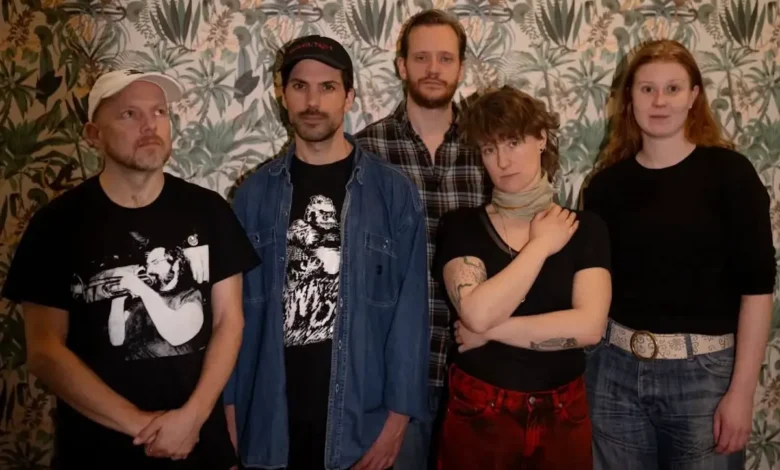
Malcolm Braff, a Swiss pianist whose formative years were shaped by a global upbringing—spanning Brazil, Cape Verde, and Senegal—has long been recognized for a percussive, world-inflected aesthetic. His recent release, Outside, recorded in August 2020, features a trio collaboration with Swedish bassist Petter Eldh and Austrian drummer Lukas König. The project serves as a compelling bridge between Braff’s earlier explorations, such as his 2011 Enja album Inside, and the modern Berlin-centric jazz scene defined by intricate mathematical subdivisions.
Chronology and Compositional Evolution
The four-track EP, released via Unit Records, highlights a period of intense experimentation. The recording sessions, held in Crémines, Switzerland, between August 5 and 11, 2020, focused on the tension between structured composition and chaotic improvisation. Musicologists have noted that Braff’s departure from traditional harmonic progression toward a rhythm-centric focus aligns him with the legacy of Don Pullen. The compositions, including Vienese Grüt À La Berlinaise and 3TOES, demonstrate a synthesis of rigid, "stiff" classical formality and the fluid, off-kilter rhythms common in the current European experimental circuit.
Implications of the Trio’s Methodology
The collaboration with Eldh—whose work with Kit Downes’ Enemy has been pivotal in the evolution of modern jazz trio dynamics—suggests a shift in Braff’s approach. By prioritizing complex rhythmic layering over melodic resolution, the trio creates a soundscape that is inherently abstract. The long delay between the 2020 recording and its release has led to questions regarding the sustainability of such specialized, niche-focused avant-garde projects in the current streaming-dominant market, yet the critical reception emphasizes the enduring relevance of Braff’s rhythmic obsession.
Jonas Cambien and the Evolution of Maca Canu
Jonas Cambien, the Belgian-born, Oslo-based pianist, continues his exploration of genre-defying music with the second release from his ensemble, Maca Canu. Following his acclaimed solo effort Man Eating Tree, Cambien’s group has evolved into a quintet, incorporating trombonist Guro Kvåle to join the existing frontline of Signe Emmeluth, Ingebrigt Håker Flaten, and Andreas Wildhagen.
The Quintet Expansion and Technical Sophistication
The ensemble, which describes its sound as an "exploding kunstkammer of curiosities," utilizes an eclectic toolkit ranging from Ethio-jazz to minimalist drone. The 2026 sessions at Amper Tone in Oslo resulted in a 36-minute program that highlights the group’s transition from a loose improvisational collective to a highly disciplined, kinetic unit.
The track Tree Frog serves as a primary example of this shift, utilizing Reichian minimalism—a stark contrast to the chaotic "prepared-piano" sound of Cambien’s earlier solo work. The integration of the all-female frontline (Emmeluth and Kvåle) alongside the rhythmic anchor of Flaten and Wildhagen allows for a nuanced exploration of texture. Cosmic Vacuum Cleaner evokes the free jazz vernacular of the late 1960s, yet it is framed by a modern, structural rigor that distinguishes the band from its historical predecessors.
Cultural and Artistic Context
The success of Maca Canu suggests a growing appetite for "disorienting" musical experiences—works that intentionally subvert listener expectations through sudden shifts from shapeless improvisation to structured breakbeats. By juxtaposing nocturnal, minimalist vignettes like Hunting Mosquitos with the aggressive, "firecracker" energy of Desert Rat, Cambien positions the group at the forefront of the Scandinavian experimental movement. The album serves as a definitive statement on the viability of non-linear composition in contemporary jazz.
Phil Haynes: A Legacy of Adventurous Percussion
Phil Haynes, a drummer whose career spans four decades, remains a central figure in the avant-garde movement. His recent output, a double-disc set titled AvAnt MODerN & JAzZ nOW, marks a departure from the larger ensembles of his past—notably his "4 Horns And What?" project—in favor of more skeletal, chamber-like quintet formations.
The Shift to Chamber-Jazz Formats
Historically, Haynes’ ensembles were characterized by a "free jazz meets New Orleans polyphony" aesthetic, featuring a dense cast of soloists including Ellery Eskelin and John Tchicai. The new recordings, featuring Nathan Wooley, Peyton Pleninger, and Jonathan Ragonese, demonstrate a refined, intimate approach.
The recording sessions, split between a live performance at Bucknell University in March 2026 and a studio session in New York in May 2026, provide a dual-perspective on Haynes’ current trajectory. The live set with Wooley and Pleninger leans into the "loft-jazz" tradition, utilizing literary recitations and free-bop foment. In contrast, the studio session—JAzZ nOW—is a exercise in controlled abstraction, emphasizing the quick-witted interplay between the horn players and the rhythmic impetus provided by Haynes, whose drumming remains firmly rooted in the post-bop tradition of Elvin Jones.
Fact-Based Analysis of the Project
The significance of AvAnt MODerN & JAzZ nOW lies in its ability to reconcile the experimental freedom of the 1980s with the technical discipline of modern chamber jazz. Haynes’ ability to navigate these two worlds—the spontaneous, live, text-heavy performance and the precise, studio-produced abstract piece—highlights a career-long commitment to pushing the boundaries of the jazz idiom.
Broader Impact and Industry Implications
These three releases, while distinct in their geographic and aesthetic focus, share common themes that reflect the current state of independent jazz:
- Rhythmic Complexity: Each artist is moving away from traditional "swing" toward more complex, often fragmented rhythmic structures. This trend is clearly visible in Braff’s percussive focus, Cambien’s minimalist drones, and Haynes’ post-bop abstractions.
- Archival and Live Integration: There is an increasing trend toward releasing recordings that bridge the gap between archival sessions (Braff) and contemporary live performances (Haynes). This allows for a more holistic view of an artist’s progression.
- Small-Group Dynamism: The shift toward quintets (Cambien) or trio/duo formats (Haynes, Braff) reflects both an economic reality in touring and an aesthetic preference for higher degrees of individual creative agency.
Future Outlook
The release of these albums through independent labels—Unit Records, Sonic Transmissions, and Corner Store Jazz—underscores the resilience of the independent jazz infrastructure. Despite the challenges of the current digital landscape, these artists continue to find success by cultivating specific, high-intent audiences.
The inclusion of detailed discographical data for each project—listing personnel, recording dates, and locations—serves as a reminder that even in an era of fluid, digital-first music distribution, the "official" record of a session remains a crucial element of musical scholarship. As these artists continue to influence the next generation of performers, their work stands as a testament to the enduring evolution of jazz as a language of constant change and rigorous, disciplined experimentation. The continued output of veterans like Phil Haynes, combined with the innovative, genre-bending approaches of Cambien and Braff, ensures that the avant-garde remains a vibrant and essential component of the global musical conversation.