Jamie Safir Steps Into the Spotlight with Momentism After Twelve Years as a Premier Sideman

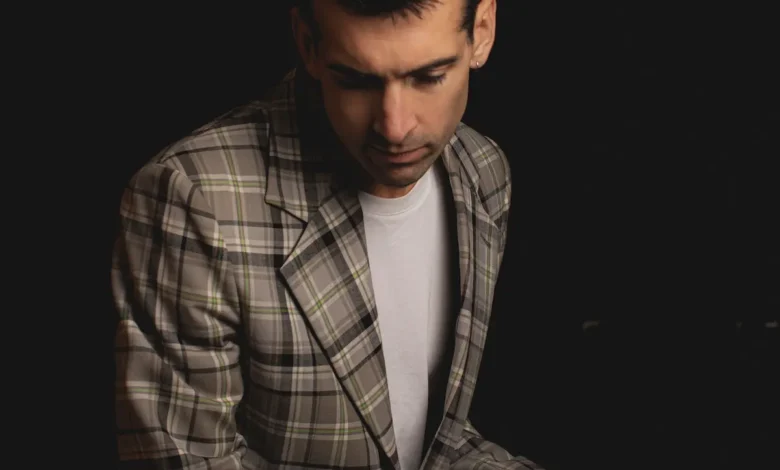
For the past twelve years, the Manchester-born pianist Jamie Safir has occupied a unique space in the British music industry. While he has been a fixture on the international circuit, his presence has largely been defined by his role as a versatile collaborator, providing the harmonic bedrock for a diverse array of vocal heavyweights, including Annie Lennox, Will Young, Veronica Swift, and Kylie Minogue. Now, with the release of his latest project, Momentism, Safir has officially transitioned from the shadows of the accompaniment chair to the forefront of his own creative endeavor, marking a significant milestone in his professional evolution.
The album, released via Chill Tone Records (CT0009), serves as a comprehensive statement of intent. Recorded on February 16, 2026, in London, the project features a core trio comprising Safir on piano, Conor Chaplin on bass, and Luke Tomlinson on drums. To add textural depth to the 11-track collection, the ensemble is augmented by the venerable tenor saxophonist Iain Ballamy, who lends his distinctive voice to five of the compositions.
A Career Defined by Collaborative Excellence
To understand the weight of Safir’s solo debut, one must examine the trajectory of his career since his emergence on the scene. Safir’s reputation has been built on a rare ability to bridge the gap between pop-sensibility and high-level jazz improvisation. His work with artists like Annie Lennox and Kylie Minogue requires not only technical virtuosity but also a disciplined restraint—a skill set that arguably informs the compositional structure of Momentism.
For over a decade, Safir has been a "musician’s musician," often sought after for his ability to translate complex arrangements into accessible, emotive performances. His transition to bandleader is a well-documented path in jazz history, following in the footsteps of peers who eventually sought to document their own singular voice after years of serving the artistic visions of others. Industry observers note that the shift from sideman to leader often results in a more curated, focused sonic identity, as the artist is no longer beholden to the specific stylistic demands of a touring pop act.
The Compositional Architecture of Momentism
The album is almost entirely the product of Safir’s pen, with the sole exception of "Amethyst," which was co-written with vocalist Emma Smith. The tracklist—comprising "Momentism," "Boulevardier," "Zacharius," "Hirsute Pursuit," "Amethyst," "Duke Balington," "Black Star Sapphire," "Clocker," "The World In The Evening," "Mad Sad Bad," and "Esprit D’Escalier"—offers a journey through various moods and tempos.
The title track, "Momentism," sets the stage with a neoclassical aesthetic, emphasizing melodic clarity and piano technique. This gives way to "Boulevardier," a composition that introduces Iain Ballamy’s tenor saxophone. Ballamy’s contribution is a pivotal element of the album’s sound, providing a robust, lyrical foil to Safir’s intricate keyboard work. The interplay between the two is perhaps best evidenced in "Duke Balington"—a clear homage to Duke Ellington—where the melody is slow, deliberate, and layered with the complex harmonic progressions characteristic of the swing era, yet filtered through a contemporary lens.
Similarly, "Black Star Sapphire," subtitled "For Strayhorn," pays direct tribute to the legendary composer Billy Strayhorn. The piece functions as a study in harmonic reverence, capturing the sophisticated, bittersweet quality that defined the Ellington-Strayhorn collaborations.
Rhythmic Precision and Structural Variation
The rhythm section of Conor Chaplin and Luke Tomlinson provides the necessary infrastructure to support Safir’s piano-forward approach. In "Amethyst," Tomlinson’s drumming displays a restraint reminiscent of the Danish jazz tradition, specifically the work of Snorre Kirk. This understated approach allows the piano’s melodic nuances to remain the primary focus of the listener.
Conversely, the album is not without its technical explorations. "Clocker" stands out as a high-energy centerpiece, where the tempo increases significantly, allowing Chaplin to showcase an intricate bass interlude. This track serves as a necessary injection of vitality, contrasting with the more contemplative, sometimes repetitive motifs found in tracks like "Hirsute Pursuit" or "The World In The Evening."
Critical Analysis and Stylistic Considerations
From a structural perspective, Momentism is a deeply emotive record. However, its prevailing tone is one of profound introspection. The album moves from the initial neoclassical flourishes to a series of slow-paced, atmospheric numbers, eventually concluding with the short, wistful piano solo "Esprit D’Escalier," which fades into silence.
The thematic consistency of the album is both its greatest strength and its primary point of critique. While the compositions are undeniably heartfelt and demonstrate a high degree of craftsmanship, the emotional landscape remains firmly grounded in a somber, perhaps even melancholy, register. Critics of the work have noted that the sequencing, while fluid, might have benefited from a more aggressive injection of upbeat, high-tempo compositions to provide a more dynamic listening experience. By maintaining a slow, deliberate pace for the majority of the runtime, the album risks a degree of fatigue for the listener, despite the undeniable talent on display.
Contextualizing the Release
The release of Momentism comes at a time when the London jazz scene is experiencing a period of intense global interest. As a hub for both experimental and traditional jazz, the London scene has produced a high volume of solo debuts in the last 24 months. Safir’s entry into this market is distinguished by his background in mainstream music production. Unlike many of his contemporaries who rose through the ranks of experimental jazz collectives, Safir’s background with major pop labels and high-profile touring acts brings a level of production polish and commercial awareness to the album that is often absent in independent jazz releases.
Industry analysts suggest that the "sideman-to-leader" pivot is a strategic move for artists who have reached the ceiling of their influence in pop accompaniment. By establishing a solo discography, Safir is building a brand that is independent of his previous employers, effectively ensuring his long-term viability as a composer and bandleader.
Implications for the Future
As an artistic statement, Momentism succeeds in defining Jamie Safir as a composer who values thematic integrity and melodic development over virtuosic excess. While the album leans heavily into a melancholic aesthetic, it provides a firm foundation for his future output. The collaboration with Iain Ballamy suggests a desire to remain connected to the heritage of the saxophone-piano quartet, a staple of the jazz tradition that Safir handles with modern sensibilities.
The implications for Safir’s career are clear: he is no longer merely a support player. With a full-length studio album under his own name, he is now positioned to headline jazz festivals and secure independent distribution for future projects. Whether he chooses to lean into the introspective style showcased here or experiment with the more upbeat, rhythmic possibilities hinted at in "Clocker," remains to be seen.
For fans of modern piano jazz, Momentism offers a rare glimpse into the private musical language of a performer who has spent years defining the sound of others. It is a work of refinement, demonstrating a clear command of jazz history and a willingness to explore the quieter, more emotive corners of the genre. As Safir moves forward, the success of this project will likely be measured by his ability to maintain this level of compositional quality while perhaps expanding his emotional range in future recordings.
The project stands as a testament to the fact that, after twelve years of facilitating the artistic vision of pop stars, Jamie Safir has successfully articulated a vision of his own—one that is, above all else, deeply personal and undeniably his.