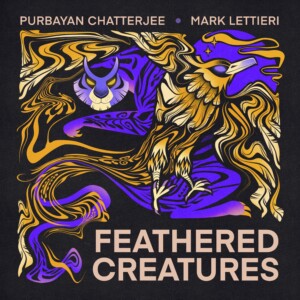
Mark Lettieri and Purbayan Chatterjee Bridge Continents and Genres with Collaborative Album Feathered Creatures

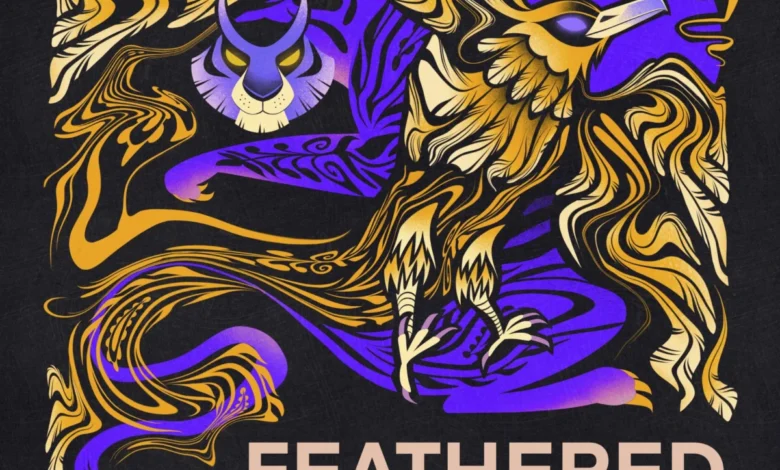
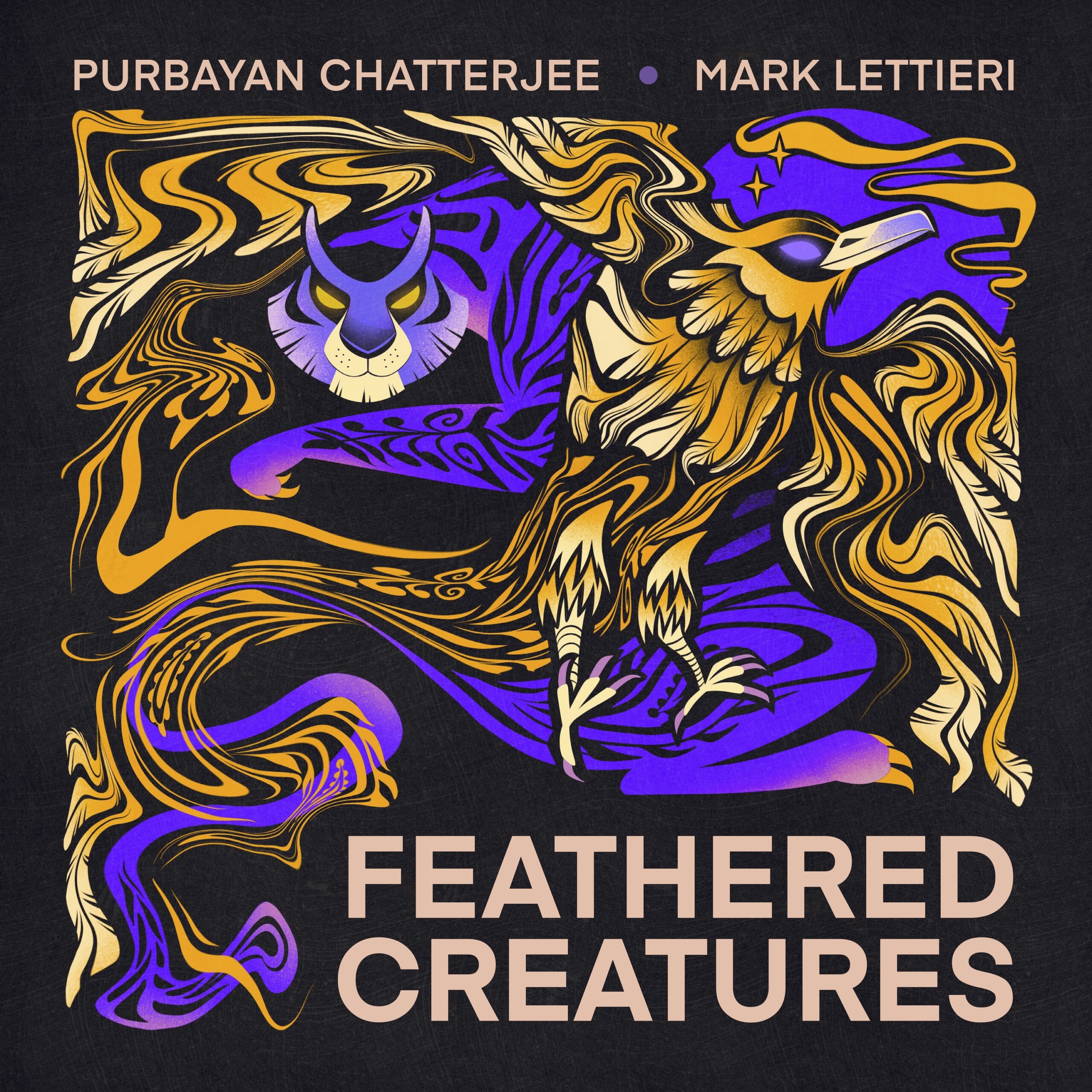
The global music landscape has long been a fertile ground for the intersection of disparate traditions, but few collaborations in recent years have captured the synergy of East and West as vibrantly as the partnership between American guitarist Mark Lettieri and Indian sitar virtuoso Purbayan Chatterjee. Their collaborative project, culminating in the release of the album Feathered Creatures, represents a sophisticated fusion of jazz-fusion, progressive rock, electronic dance music (EDM), and Hindustani classical music. This artistic union, which began with a chance encounter during a concert tour, has evolved into a comprehensive exploration of how traditional instrumentation can be reimagined within a contemporary, digital-forward framework.
The Genesis of a Cross-Continental Partnership
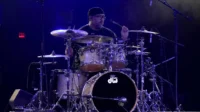
The story of Feathered Creatures began not in a recording studio, but on a stage in India. Mark Lettieri, a five-time Grammy Award-winning guitarist known for his work with the acclaimed fusion collective Snarky Puppy and his own solo projects like The Fearless Flyers, was touring the subcontinent with Snarky Puppy. During a stop in India, the band invited Purbayan Chatterjee to sit in for a session. Chatterjee, a master of the Senia Maihar gharana and one of the most prominent sitarists of his generation, delivered a performance that immediately transfixed Lettieri.
Reflecting on that initial meeting, Lettieri noted that he was "gobsmacked" by Chatterjee’s technical proficiency and his unique approach to an ancient instrument. Chatterjee has gained international renown not only for his mastery of traditional ragas but also for his innovation in the realm of the "electric sitar." By treating the sitar with the sensitivity of a classical instrument but the tonal flexibility of an electric guitar, Chatterjee has carved out a niche that bridges the gap between the ancient and the avant-garde. Lettieri remarked that he had never heard the sitar played with the specific phrasing and energy typically associated with high-level electric guitar performance, sparking an immediate creative curiosity.
The two musicians maintained a friendship following the tour. A year later, as Chatterjee began conceptualizing a new studio album, he reached out to Lettieri to propose a formal collaboration. Despite the geographic distance—with Lettieri based in the United States and Chatterjee in India—the duo decided to proceed using modern digital recording techniques.
Architectural Soundscapes: The Making of Feathered Creatures
The production of Feathered Creatures was a masterclass in remote collaboration. Joined by keyboardist and producer Nakul Chugh, the trio began a process of "digital alchemy," sending tracks back and forth across continents. This method allowed each artist to layer their contributions with meticulous detail, resulting in a sound that feels organic despite its fragmented construction.
Nakul Chugh played a pivotal role in shaping the album’s "sonic palette." His ministrations on the keyboards provided the atmospheric glue that allowed the sitar and guitar to coexist without clashing. In many fusion projects, the dense harmonic structures of Western jazz can sometimes overwhelm the microtonal nuances of Indian classical music. However, Chugh’s arrangements ensured that there was ample space for both Lettieri’s rhythmic "funk-inflected" guitar work and Chatterjee’s soaring melodic lines.
The album’s lead track, "Soar," serves as a definitive thesis statement for the project. The composition begins ethereally, anchored by acoustic piano and airy, wordless vocal textures that evoke a sense of vast, open space. As the track progresses, it takes flight—living up to its title through a rhythmic shift inspired by electronic music beats. Chatterjee’s fingers navigate the sitar with a dexterity that mimics the "shredding" of a rock guitarist, yet retains the characteristic "meend" (glissando) and resonance of the Indian tradition. Meanwhile, Lettieri provides a textured backdrop of low-in-the-mix guitar parts and ghostly vocal layers, creating a wall of sound that feels both grounded and celestial.
Profiles in Virtuosity: Mark Lettieri and Purbayan Chatterjee
To understand the weight of this collaboration, one must look at the individual trajectories of the primary artists. Mark Lettieri has become a pillar of the modern guitar community. His work with Snarky Puppy has helped redefine the "jam band" and fusion genres for a new generation, blending complex arrangements with accessible, groove-oriented hooks. His solo albums, particularly Deep: The Baritone Sessions, have showcased his ability to innovate with instrument range and tone. In Feathered Creatures, Lettieri leans into his progressive rock and EDM influences, providing a sturdy, rhythmic framework that challenges Chatterjee to push the sitar into new rhythmic territories.
Purbayan Chatterjee, on the other hand, represents the vanguard of Indian classical music’s evolution. A disciple of the legendary sitar maestro Ustad Shahid Parvez, Chatterjee was a child prodigy who received the President of India Award for Best Instrumentalist at age 15. While his foundation is strictly classical, he has never been a traditionalist in the restrictive sense. He is the creator of the "Dwapara," a transparent electric sitar that allows for greater sustain and compatibility with effects pedals. His previous global collaborations, including work with artists like Bela Fleck and Chick Corea, prepared him for the intricate interplay required on an album like Feathered Creatures.
Technical Analysis of "Soar" and "Hibiscus"
The track "Soar" is characterized by its "invigorating blend of cultures." From a musicological perspective, the track utilizes electronic-music inspired beats—reminiscent of downtempo and breakbeat—which provide a modern pulse for the sitar’s polyrhythmic runs. The "cheery, uplifting runs" mentioned by critics highlight Chatterjee’s ability to translate the joy of a morning raga into a contemporary pop-fusion context.
Another standout track on the album, "Hibiscus," serves as a poignant tribute to the lineage of Indo-Jazz fusion. The artists dedicate this piece to the legacy of the tabla masters who paved the way for such cross-cultural dialogues. Specifically, the track pays homage to the innovations of Zakir Hussain, whose work with John McLaughlin in the band Shakti remains the gold standard for Eastern and Western musical integration. By invoking the spirit of Hussain and his father, Ustad Alla Rakha, Lettieri and Chatterjee acknowledge that they are standing on the shoulders of giants. "Hibiscus" features intricate rhythmic cycles that mirror the "tala" (rhythmic framework) of Indian music, while Lettieri’s guitar adds a layer of Western harmonic sophistication.
The Broader Impact of Indo-Jazz Fusion in the 21st Century
The release of Feathered Creatures comes at a time when "World Music" is moving away from being a catch-all category for non-Western sounds and toward a more integrated, "borderless" reality. The success of the album on the GroundUP Music label—a label known for fostering experimental and genre-defying artists—suggests a growing appetite for music that refuses to be pigeonholed.
Historically, the fusion of sitar and Western instruments was often treated as a novelty, popularized in the 1960s by the association between Ravi Shankar and George Harrison. However, projects like Feathered Creatures demonstrate that the relationship has matured. It is no longer about adding "exotic" flavor to a rock song; it is about a deep, structural synthesis where the sitar is treated as a lead voice capable of navigating the complexities of prog-rock and EDM.
The implications of this collaboration extend beyond the music itself. It serves as a testament to the power of digital connectivity. In an era where physical travel can be restricted by logistics or global events, the ability for artists like Lettieri, Chatterjee, and Chugh to create a cohesive, high-fidelity work of art from different sides of the globe is a significant milestone. It suggests that the future of musical innovation will increasingly rely on these "virtual residencies," where cultural exchange is limited only by the speed of an internet connection.
Conclusion: A New Flight Path for Modern Fusion
Feathered Creatures is more than just a collection of songs; it is a dialogue between two masters of their respective crafts who share a common language of improvisation and technical excellence. Through tracks like "Soar" and "Hibiscus," Mark Lettieri and Purbayan Chatterjee have created a sonic landscape that is both technically dazzling and emotionally resonant.
As the album gains traction among jazz enthusiasts and world music fans alike, it reaffirms the idea that the most exciting developments in contemporary music often happen at the intersections of established traditions. By blending the ancient resonance of the sitar with the modern grit of the electric guitar and the pulse of electronic music, the duo has not only paid tribute to the innovators of the past but has also charted a new course for the future of global fusion. The "invigorating blend of cultures" found within Feathered Creatures ensures that this collaboration will be remembered as a highlight of the current era of international musical partnership.