The Return of Cecilia Bartoli to Kissinger Sommer 2026 A Baroque Queen Reclaims Her Throne in Bad Kissingen

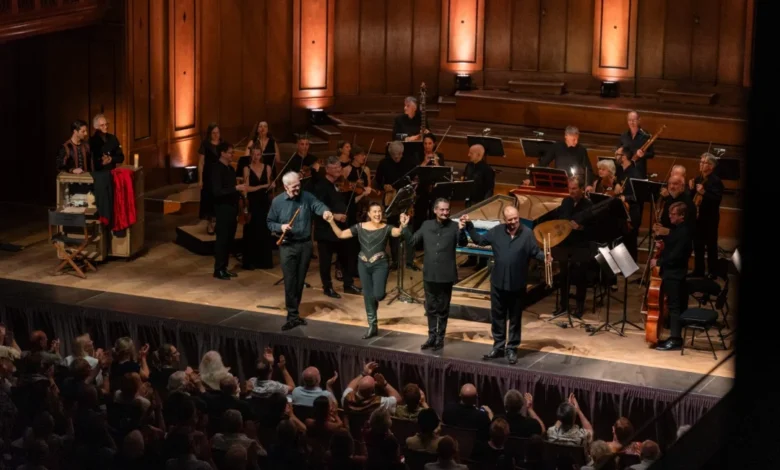
The 2026 edition of the Kissinger Sommer festival reached its final weekend with an event of significant cultural weight: the return of Cecilia Bartoli to the historic stage of Bad Kissingen after a ten-year absence. The appearance of the world-renowned Italian mezzo-soprano was not merely a scheduled performance but the centerpiece of the festival’s 40th-anniversary celebrations. To accommodate the immense public interest and the star’s specific artistic requirements, festival organizers took the unprecedented step of extending the official schedule by an entire week. This extension effectively created a "festival-within-a-festival," offering audiences a concentrated residency of three concerts over three consecutive nights, culminating in a gala titled "Baroque Queen."
The presence of Bartoli, who celebrated her 60th birthday in 2026, served as a bridge between the festival’s storied past and its contemporary standing as one of Europe’s premier summer music events. Since its inception in 1986, Kissinger Sommer has sought to pair the architectural grandeur of the Bavarian spa town with the highest level of international musical talent. Bartoli’s return was viewed by many as a homecoming for an artist who helped define the modern era of Baroque vocal interpretation.
Architectural and Acoustic Context of the Max-Littmann-Saal
The gala took place in the Max-Littmann-Saal, the crown jewel of the Regentenbau complex. Completed in 1913, the hall is celebrated for its neo-classical and Art Nouveau aesthetics, but more importantly, for its superior acoustics. Constructed largely of cherry wood, the interior provides a rich, warm, and clear sound profile with a natural reverberation that is highly sought after by vocalists and chamber ensembles alike.
Due to the overwhelming demand for tickets—a testament to Bartoli’s enduring "diva" status—the festival management was forced to modify the venue’s configuration. The adjacent Grüner Saal (Green Hall) was opened and integrated into the main auditorium to increase seating capacity. This logistical adjustment allowed a larger audience to experience the performance without compromising the intimate acoustic environment for which the Max-Littmann-Saal is famous. Observers noted that the sound remained balanced even in the newly opened sections, a credit to the hall’s original engineering.
Collaborative Artistry: Les Musiciens du Prince – Monaco
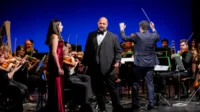
Accompanying Bartoli was her long-standing collaborative ensemble, Les Musiciens du Prince – Monaco, under the baton of Gianluca Capuano. Founded in 2016 at the Opéra de Monte-Carlo with Bartoli as artistic director, this period-instrument orchestra has become synonymous with the revival of rare Baroque and Bel Canto repertoire.
In this gala setting, the ensemble demonstrated a refined, supportive approach. Unlike their performances in fully staged operatic productions where they often take a more aggressive, driving role, Capuano steered the musicians toward a sensitive and warm backdrop. The evening opened with the Sinfonia from George Frideric Handel’s "Rinaldo." The interpretation was notable for its brisk tempo and the inclusion of a rare drum part, which provided an energetic, rhythmic pulse that signaled the start of a high-stakes musical evening.
A Journey Through the Baroque Canon
The program was meticulously curated to showcase the various facets of Bartoli’s vocal technique. She made her entrance with a series of long-sustained notes, a signature of her vocal control that remains remarkably intact as she enters her seventh decade. Following two brief excursions into the works of Nicola Porpora—the teacher of the legendary Farinelli—the program shifted to Antonio Vivaldi’s "Sovvente il sole" from "Andromeda liberata."
In this piece, Bartoli’s collaboration with the solo violin created a "silk-like cushion" of sound. Her interpretive choice for the da capo section involved an extreme pianissimo strategy. While this created a profound, "breath-holding" effect that silenced the large hall, some technical observers noted that the volume dropped to such a level that vocal projection occasionally struggled to fill the expanded space of the Max-Littmann-Saal. However, the emotional impact of the whisper-quiet delivery appeared to resonate deeply with the audience.
The first half continued with Handel’s "Lascia la spina" from the oratorio "Il Trionfo del Tempo e del Disinganno." Bartoli’s rendition was stripped of superfluous ornamentation, focusing instead on the raw, pleading sincerity of the character Piacere. Supported by the undulating textures of the continuo harpsichord, she again employed a radical pianissimo. While her phrasing remained impeccable, the sheer sonic fragility of the performance bordered on the ethereal, prioritizing beauty of tone over dramatic volume.
Theatricality and the Cleopatra Persona
The second half of the program leaned into the theatricality for which Bartoli is famous. After an instrumental interlude featuring the Sinfonia from Johann Adolf Hasse’s "Marc’Antonio e Cleopatra"—performed by the orchestra with exceptional clarity and elegance—Bartoli returned to the stage in a new costume. Appearing as the Egyptian queen, she performed "V’adoro, pupille" from Handel’s "Giulio Cesare."
This segment was enhanced by the presence of dancer Giovanni Imbroglia, who framed Bartoli with large feather fans, evoking the flamboyant atmosphere of 18th-century court entertainment. The combination of visual spectacle and Bartoli’s seductive vocal delivery transformed the aria into a highlight of the evening. The performance moved from the "pure beauty" of the music into a more immersive, multi-sensory experience.
The program then transitioned into a musical "battle" in the trio "Mi deride… Desterò dall’empia Dite" from Handel’s "Amadigi da Gaula." This piece featured a competitive dialogue between the oboe, trumpet, and voice. While some listeners found the trumpet’s articulation slightly muddy in the faster passages, the oboe provided a crisp, convincing counterpoint to Bartoli’s fiery coloratura. The theatricality of the "battle" was high, fitting for a summer gala intended to entertain a diverse festival crowd.
Technical Challenges and Artistic Milestones
Despite the high artistic quality, the evening was not without technical flaws. The surtitle team, positioned in the royal box, struggled to keep pace with the singer’s improvisational flourishes and the orchestra’s brisk transitions. On several occasions, the wrong lyrics were displayed, or the text remained static while the performance moved forward. While a minor distraction for those familiar with the repertoire, it was a rare lapse in the festival’s usually high production standards.
A poignant moment arrived toward the end of the official program with the performance of "What passion cannot Music raise and quell" from Handel’s "Ode for St Cecilia’s Day." Choosing a piece dedicated to the patron saint of music was particularly apt for an artist named Cecilia who was celebrating a landmark birthday. Introduced by a somber and thoughtful cello solo, Bartoli utilized her "elastic timbre" to deliver a performance that reflected her decades of experience and her status as a seasoned veteran of the stage.
The Finale: Encores and Legacy
The conclusion of the formal program was met with a standing ovation, prompting Bartoli to deliver an exceptionally generous set of five encores. These included Agostino Steffani’s "Mie fide schiere, all’armi" and a selection of popular Italian melodies, such as "Non ti scordar di me." During these pieces, the singer appeared to shed the formal constraints of the Baroque "Queen" and embraced the role of a charismatic entertainer, relishing the interaction with the audience.
As the Kissinger Sommer celebrates its 40th year, the implications of Bartoli’s return are multifaceted. For the local tourism board and festival organizers, the event was an unmitigated success, drawing international visitors to Bad Kissingen and reaffirming the town’s status as a UNESCO World Heritage "Great Spa Town of Europe."
However, some critical voices noted that the program felt "safe." Much of the repertoire and the interpretive approach were reminiscent of Bartoli’s "Farinelli" touring project from years prior. For dedicated musicologists and "Historically Informed Performance" (HIP) enthusiasts who traveled specifically for the event, there was a sense that Bartoli remained firmly within her comfort zone. While her vocal agility remains world-class, the concert was more a celebration of her legacy than an exploration of new musical territory.
Ultimately, the 2026 "Baroque Queen" gala served its purpose as a high-profile anchor for the festival’s anniversary. It demonstrated that even at 60, Cecilia Bartoli possesses the magnetism and technical skill to command a major European stage. The evening was a reminder of the power of star quality in the classical music industry—a force capable of extending festival schedules, reshaping historic halls, and captivating thousands with the mere flicker of a pianissimo note.