Operalia 2026 Concludes in Shanghai: Emma Marhefka and Vladyslav Buialskyi Take Top Honors in Global Opera Showcase

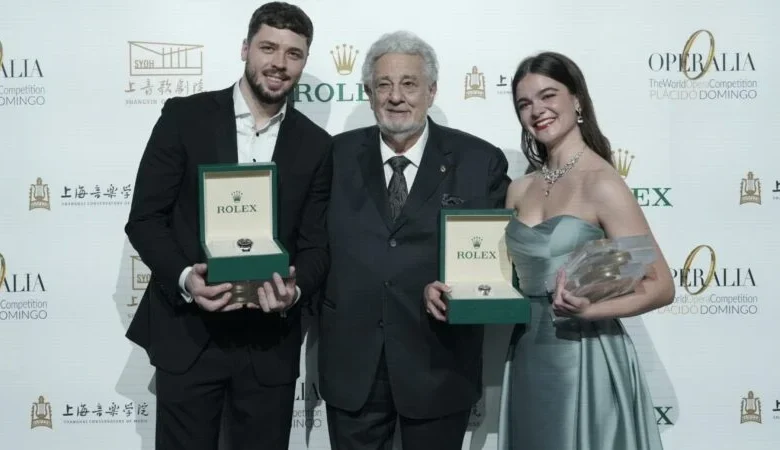
The prestigious Operalia competition, widely recognized as one of the most rigorous and influential global platforms for emerging operatic talent, concluded its highly anticipated 2026 edition in Shanghai, China. Bringing together some of the world’s most promising young voices, this year’s competition culminated in a thrilling final round judged by an elite panel of general directors and artistic leaders from the world’s most storied opera houses.
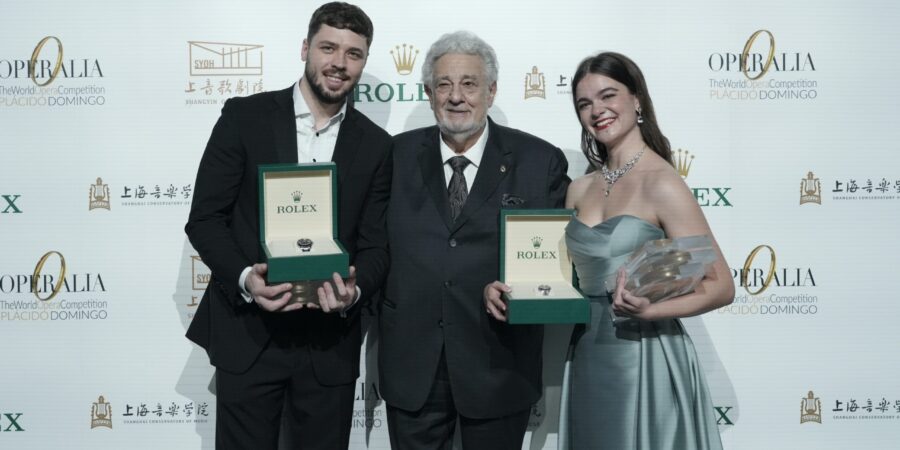
When the dust settled on the grand stage, American soprano Emma Marhefka and Ukrainian bass-baritone Vladyslav Buialskyi shared the coveted First Prize, capturing the attention of the international jury and solidifying their places as rising stars to watch on the global stage. The event not only celebrated vocal excellence and interpretive depth but also underscored the truly international scope of the art form, drawing competitors from every corner of the globe to vie for career-altering accolades.
Main Facts of the 2026 Competition
The final results of the Operalia 2026 competition reflect a remarkable distribution of talent across multiple nationalities, voice types, and specialized repertoires. Following Marhefka and Buialskyi’s joint triumph at the top of the podium, the Second Prize was awarded to American soprano Tessa McQueen and South Korean baritone Junhyeok Felix Park, both of whom delivered critically acclaimed performances throughout the rounds. Rounding out the primary podium finishes, Ukrainian bass Roman Chabaranok claimed the Third Prize, showcasing the profound depth of Slavic vocal training in the lower registers.
Beyond the core prizes, several specialized awards were distributed to honor unique artistic contributions and mastery of specific repertoires. American soprano Tessa McQueen added to her successful evening by capturing the prestigious Birgit Nilsson Prize—an accolade honoring exceptional interpretations of Wagnerian or heavy dramatic repertoire—sharing the honor with British tenor Robert Lewis.
Audience engagement was equally fervent, with the Rolex Prize of the Audience being awarded to co-first-prize winners Emma Marhefka and Vladyslav Buialskyi, reflecting their powerful connection with the live crowd in Shanghai.
Specialization in the beloved Spanish lyric-dramatic genre of Zarzuela was also fiercely contested. Emma Marhefka claimed her third major win of the evening by securing The Pepita Embil Prize of Zarzuela, while Cuban baritone Eleomar Cuello captured The Don Plácido Domingo Ferrer Prize of Zarzuela for his compelling delivery of the Spanish idiom. Finally, the CulturArte Prize, which supports the career development of a promising artist, was awarded to Spanish soprano Sofía Esparza.
Background Context and History of Operalia
Founded in 1993 by legendary tenor and arts administrator Plácido Domingo, Operalia: The World Opera Competition was established with a singular, vital mission: to discover young opera singers of all voice types and nationalities and to guide them at the beginning of their international careers. Over more than three decades, Operalia has earned a reputation as the Olympic Games of the opera world, where a single successful performance can instantly transform an unknown conservatory student into a sought-after house debutant.
What sets Operalia apart from other vocal competitions is its nomadic nature. Rather than being permanently anchored to a single city or institution, Operalia travels the globe each year, partnering with major cultural capitals and prestigious opera houses. Past editions have taken place in iconic venues across Europe, the Americas, Asia, and the Middle East, including Paris, Tokyo, Los Angeles, Milan, Budapest, Guadalajara, and Astana, among others.
The 2026 edition in Shanghai marks another milestone in the competition’s ongoing effort to engage diverse global audiences and tap into the rapidly expanding classical music market in Asia. Shanghai, a burgeoning global hub for the performing arts boasting state-of-the-art concert halls and opera facilities, provided a magnificent backdrop for the intensive preliminary, semifinal, and final rounds.
The Jury: Industry Leaders at the Helm
The credibility and career-launching power of Operalia rest heavily on the composition of its jury. Unlike traditional competitions judged exclusively by local conservatory professors or critics, Operalia’s jury panel is composed almost entirely of active general directors, artistic administrators, and casting heads from the world’s premier opera institutions.
For the 2026 competition in Shanghai, the jury room featured key decision-makers from organizations such as the Metropolitan Opera in New York, the Dutch National Opera, Teatro alla Scala in Milan, and the Wiener Staatsoper (Vienna State Opera), alongside other influential industry leaders. For the competitors, singing before this panel represents an unprecedented direct line to the highest levels of professional opera production. A singer who impresses the jury in Shanghai may find themselves receiving professional inquiries, agency representation, or direct casting offers for upcoming seasons in New York, Vienna, Milan, and Amsterdam.
This direct pipeline to employment is precisely what has made Operalia the gold standard for vocal competitions worldwide.
Chronology and Structure of the Competition
The journey to the Operalia 2026 stage in Shanghai began many months prior with a rigorous global screening process. Hundreds of applicants from dozens of countries submitted video auditions, which were meticulously reviewed by a preliminary panel to select the lucky few invited to participate in the live competition rounds.
Once assembled in Shanghai, the participants underwent a grueling schedule of rehearsals, coaching sessions, and preliminary rounds. Competitors were required to present a varied repertoire encompassing multiple languages, styles, and centuries of music, ranging from the sparkling coloratura of early 19th-century bel canto to the soaring psychological intensity of late-romantic and contemporary works, alongside mandatory Spanish Zarzuela selections for those advancing in that specific category.
From the initial cohort, the field was systematically narrowed through the semifinal round until a select group of finalists emerged for the grand finale. Accompanied by a full symphony orchestra—often conducted under the watchful eye of Plácido Domingo or a similarly distinguished maestro—the finalists performed their chosen signature arias before the judging panel and a packed house of opera aficionados, diplomats, and industry professionals. The evening culminated in the public announcement of the winners and the presentation of the coveted trophies and cash prizes designed to help jumpstart the artists’ professional trajectories.
Broader Impact and Alumni Legacy
The legacy of Operalia is perhaps best measured by the extraordinary roster of artists who passed through its doors before achieving international superstardom. Winning or even placing in Operalia has historically served as a reliable crystal ball for the future of the operatic canon.
Previous winners and alumni of the competition form a who’s who of contemporary classical vocalism. The illustrious roster includes such luminaries as Ekaterine Buachidze, Mihai Damian, Kathleen O’Mara, Le Bu, Juliana Grigoryan, Anthony León, Adriana Gonzalez, Xabier Anduaga, Adela Zaharia, and Levy Sekgapane. Many of these past laureates now command the stages of the Royal Opera House in London, the Paris Opéra, the Lyric Opera of Chicago, and the Bayreuth Festival.
For the class of 2026—led by co-first-prize winners Emma Marhefka and Vladyslav Buialskyi, alongside their fellow medalists Tessa McQueen, Junhyeok Felix Park, and Roman Chabaranok—the conclusion of the Shanghai competition marks not an endpoint, but a beginning.
Fact-Based Analysis of Implications for the Industry
The success of Operalia 2026 in Shanghai highlights several key trends currently shaping the global classical music landscape. First, it demonstrates the continuing decentralization and globalization of top-tier operatic talent. The winners and finalists represent a rich tapestry of cultural backgrounds, reinforcing the reality that world-class vocal pedagogy and artistic interpretation are thriving across North America, Europe, Asia, and Latin America.
Second, the choice of Shanghai as the host city underscores the strategic importance of the Asian market for the future of opera. As traditional European and North American audiences face demographic shifts and funding pressures, major cultural institutions are increasingly looking toward East Asia—and China in particular—as a vital hub for both audience development and high-level artistic production.
Finally, the multi-award successes of artists like Emma Marhefka (who captured First Prize, the Audience Prize, and the Zarzuela Prize) point to an evolving expectation in the modern opera industry: today’s successful singers must possess not only exceptional vocal beauty and technical precision, but also extreme versatility, stylistic breadth, and charismatic stage presence capable of captivating diverse audiences across multiple idioms.
As the curtains close on Operalia 2026, the international opera community turns its gaze toward the future, eager to watch how these newly minted laureates will shape the repertoire, fill the houses, and inspire audiences on the world’s grandest stages for decades to come.