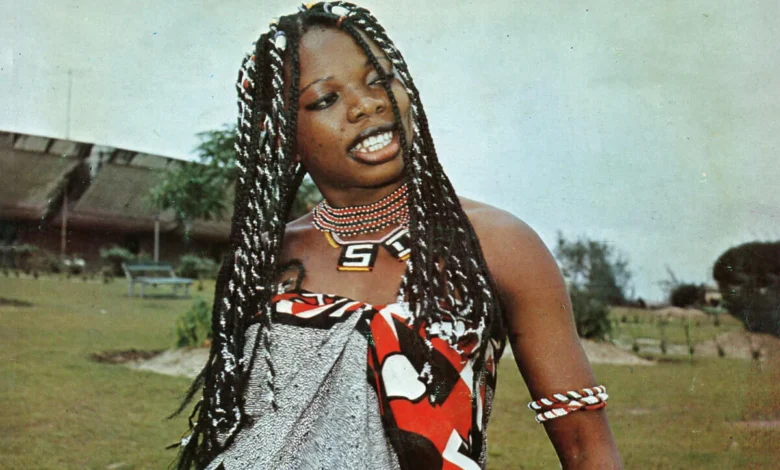
The cultural and sonic landscape of Nigeria during the 1980s represents one of the most dynamic, fertile, and transformative periods in modern music history. Far from being a mere chronological extension of the preceding decade, the 1980s in Nigerian popular music was an era of intense stylistic mutation, technological advancement, and socio-political upheaval. While global music histories often frame the 1970s as the definitive golden age of Afrobeat—largely anchored by the monumental rise of Fela Kuti—the decade that followed witnessed a staggering cross-pollination of genres. Traditional rhythms collided with imported electronic instrumentation, studio experimentation, and international diasporic influences, creating a vibrant musical ecosystem that stubbornly refused to fit into neat categorical boxes.
A comprehensive retrospective of this era, highlighted by archival releases such as Strut Records’ celebrated Nigeria 80 compilation series, captures this unruly stretch of Nigerian musical history. It maps the territory between Afrobeat’s initial global explosion and the birth of new indigenous movements, showcasing how juju, funk, highlife, reggae, and proto-hip-hop bled into one another. To understand the explosive sound world of 1980s Nigeria is to examine a society in flux, navigating the complexities of post-independence identity, economic turbulence, and a rapidly modernizing urban landscape.
Main Facts of the Nigerian Music Renaissance
The musical output of Nigeria in the 1980s was defined by a unique convergence of socio-economic factors and artistic innovation. Following the oil boom of the 1970s, Nigeria’s economy experienced significant fluctuations, eventually entering a period of structural adjustment and austerity by the mid-1980s under military regimes. Despite these domestic pressures, the nation’s music industry was remarkably self-sufficient and prolific. Lagos and Ibadan served as major epicenters where recording studios, pressing plants, and live music venues operated at a relentless pace.
During this period, the definition of Nigerian popular music expanded exponentially. While legendary figures like Fela Kuti continued to use Afrobeat as a vehicle for fierce political critique, a new generation of artists began incorporating synthesizers, drum machines, and slicker production techniques borrowed from Western disco, funk, and soul. At the same time, masters of traditional forms like juju music—most notably King Sunny Ade and Ebenezer Obey—achieved unprecedented international prominence, signing major global record deals and touring extensively.
The cross-pollination of sounds was not limited to domestic genres. The global spread of reggae, championed globally by Bob Marley, deeply resonated in West Africa, leading to a thriving Nigerian reggae scene led by artists like Majek Fashek. Simultaneously, highlife evolved from its horn-driven 1950s and 60s iterations into guitar-heavy, synthesized dance music. This melting pot of influences created an environment where experimentation was not just welcomed by audiences, but demanded by a competitive and fast-moving market.
Chronology of a Musical Evolution: The 1980s Timeline
To fully grasp the trajectory of Nigerian music during this decade, it is necessary to trace the chronological shifts that occurred both within the country and in its relationship with the global music industry.
1980–1982: The Post-Oil Boom Confidence and Global Exports
At the dawn of the decade, the Nigerian music industry was riding high on the economic optimism of the late 1970s. Record labels were heavily invested in local talent, and live performance circuits were booming. This period marked the initial international push for juju music. International labels recognized the commercial viability of Nigerian artists, leading to high-profile licensing deals that brought sounds like King Sunny Ade’s Juju Music (1982) to Western audiences.
1983–1985: Economic Hardship and Technological Shifts
The overthrow of President Shehu Shagari’s government by military coup in late 1983, coupled with declining global oil prices, ushered in an era of severe economic austerity. Import restrictions made vinyl production increasingly expensive, while cassette tapes began to dominate the market due to their affordability and ease of duplication. Musically, this period accelerated the adoption of electronic instrumentation. Synthesizers and electronic drum pads became more accessible, allowing artists to create full-sounding arrangements with smaller touring bands.
1986–1988: The Rise of Consciousness and New Wave Genres
As military rule persisted under General Ibrahim Babangida, musicians assumed the mantle of social commentators, addressing economic hardship, corruption, and societal decay. This era saw the commercial peak of Nigerian reggae, with Majek Fashek’s 1988 breakout hit "Send Down the Rain" capturing the collective yearning for relief and prosperity. Concurrently, the groundwork for Nigerian hip-hop and electronic dance music was laid as urban youth absorbed American hip-hop, breakdancing, and R&B, blending them with local percussion and pidgin English lyrics.
1989–1990: Consolidation and the Global World Music Boom
By the end of the decade, the "world music" category had been formally established in the West, providing a formalized pipeline for African artists to reach international markets. Nigerian musicians who had spent the decade refining their hybrid sounds found themselves positioned at the forefront of this global movement, paving the way for the modern Afrobeats wave of the 21st century.
Supporting Data and Industry Metrics
Evaluating the scale of the 1980s Nigerian music scene requires looking at archival data, production metrics, and consumption shifts:
- Format Transition: Industry data from West African distribution networks indicate that by the mid-1980s, cassette tapes accounted for an estimated 70% to 80% of total music sales in Nigeria, largely due to rampant vinyl piracy and the higher cost of imported vinyl pressing materials.
- Studio Density: Greater Lagos alone hosted dozens of professional recording facilities during the decade, including EMI Nigeria, Decca West Africa, Polygram Nigeria, and independent studios like Rogers All-Stars and Homzy. These studios operated around the clock to keep up with consumer demand.
- Export Reach: According to archival release data from specialty labels such as Strut Records and analog reissue projects, hundreds of distinct long-playing (LP) records were commercially released in Nigeria annually between 1980 and 1989, spanning regional languages including Yoruba, Igbo, Hausa, Efik, and Nigerian Pidgin.
Official Responses and Perspectives from Cultural Custodians
Musicologists, historians, and surviving artists from the era have frequently emphasized that the 1980s were misunderstood by contemporary observers who expected the decade to simply replicate the 1970s template.
Cultural historians note that the stylistic shifts of the 1980s were a natural byproduct of urbanization and technological democratization. As multi-track recording equipment and affordable synthesizers trickled into West African markets, musicians viewed these tools not as threats to traditional authenticity, but as enhancements to their creative palette.
"The musicians of that era were master alchemists," notes a prominent Lagos-based music archivist. "They were taking imported drum machines from Japan, mixing them with polyrhythms passed down through generations, filtering them through church highlife and American funk, and spitting out something entirely original. It was an era of adaptation and survival."
Industry veterans have also pointed out that the economic pressures of the 1980s forced artists to become more entrepreneurial. With the decline of institutional label support amid economic structural adjustments, many musicians formed their own independent labels, managing their own production, distribution, and marketing—a DIY ethos that directly mirrors the independent structure of today’s modern Afrobeats industry.
Broader Impact and Long-Term Implications
The enduring legacy of the 1980s Nigerian sound world extends far beyond archival curiosity. The genre-bending experimentation of this era established the structural DNA for contemporary Nigerian pop music.
- The Blueprint for Afrobeats: The seamless blending of local rhythms with international hip-hop, dancehall, and electronic production—a hallmark of today’s global Afrobeats superstars like Burna Boy, Wizkid, and Davido—was pioneered by the risk-taking producers and artists of the 1980s.
- Diasporic Connections: The increased movement of Nigerian musicians to London, New York, and Paris during this decade solidified international distribution channels, proving that African popular music could achieve commercial viability outside the continent without diluting its cultural specificity.
- Archival Revaluation: In recent years, international interest in 1980s Nigerian music has surged, driven by digital streaming platforms, vinyl reissue labels, and crate-diggers. This global rediscovery has brought much-needed royalties, recognition, and institutional respect to veteran artists whose contributions were previously overlooked by mainstream global music histories.
Ultimately, the sound world of 1980s Nigeria stands as a testament to human creativity under pressure. By refusing to let their musical culture stagnate, the artists of this era ensured that Nigerian popular music remained a living, breathing, and infinitely elastic force—one that continues to reverberate across global soundscapes today.