Dollar Brand/Don Cherry/Carlos Ward :: The Third World-Underground – Aquarium Drunkard

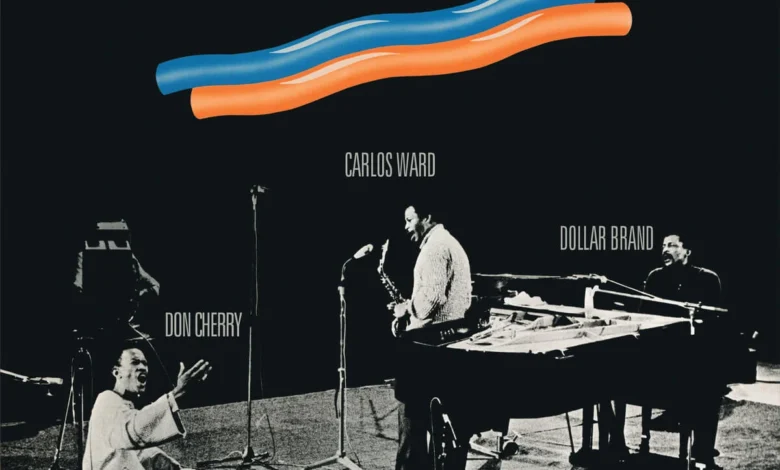
A legendary live recording capturing three towering figures of avant-garde and post-bop jazz during pivotal transitional phases of their respective artistic evolutions is finally receiving a comprehensive, worldwide reissue. Originally pressed as a Japan-only release, The Third World-Underground features pianist Abdullah Ibrahim—then performing under his birth name and adopted Muslim name, Dollar Brand—alongside cornetist Don Cherry and reedist Carlos Ward. The album preserves a remarkably joyous, lyrical, and deeply rhythmic live performance that dispenses with traditional rhythm sections, relying entirely on the interplay of piano, brass, and woodwinds to generate its immense sonic architecture.
For decades, acquiring a physical copy of this performance meant navigating the used import market or relying on low-generation cassette dubs circulated among dedicated collectors of free jazz and improvised music. The newly remastered edition, spearheaded by contemporary archival reissue imprints, seeks to rectify this geographic exclusivity and introduce the masterwork to a contemporary audience. By stripping away conventional instrumentation—specifically the acoustic bass and drum kit—the trio manages to carve out a unique sonic space where freedom of movement replaces standard harmonic foundations.
Main Facts and Historical Context
Recorded live in front of an appreciative audience, The Third World-Underground documents a specific convergence of musical philosophies during an era of profound sociopolitical and artistic upheaval. The mid-to-late 1970s represented a period of intense global migration and cross-pollination among jazz expatriates, many of whom sought refuge, inspiration, and working opportunities in Europe and Asia.
Abdullah Ibrahim, born Adolf Johannes Brand in Cape Town, South Africa, had spent years in exile due to the oppressive apartheid regime in his home country. His exposure to American jazz via the ports of Cape Town, combined with his deep roots in traditional South African church music, Cape Malay styles, and Islamic devotional music, created a singular piano vocabulary. By the time of this recording, Ibrahim’s transition from Dollar Brand was well underway, reflecting a deeper spiritual and political alignment with his African heritage.
Don Cherry, meanwhile, was already established as one of the most innovative and elastic trumpeters in the history of modern music. Having co-pioneered the free jazz movement alongside saxophonist Ornette Coleman in the late 1950s and early 1960s, Cherry spent the subsequent decades operating as a musical globetrotter. He integrated pocket trumpet and cornet playing with world music traditions, pocket percussion, and modal explorations. Cherry’s philosophy was inherently communal and borderless; he treated music as a universal language capable of bridging disparate cultural divides.
Completing the trio is Carlos Ward, an alto saxophonist and flutist whose versatile tone and technical precision made him an invaluable collaborator across multiple jazz subgenres. Ward, who worked extensively with both John Coltrane and Abdullah Ibrahim, possessed a rare ability to bridge the gap between rigorous post-bop structures and absolute free improvisation. His lyrical phrasing provided a crucial textural bridge between Ibrahim’s cascading, percussive piano chords and Cherry’s soaring, nimble cornet lines.
Chronological Evolution of the Trio
To fully understand the significance of The Third World-Underground, it is necessary to examine the timeline of how these three artists crossed paths and developed their distinctive stripped-down methodology.
In the early 1960s, Don Cherry and Abdullah Ibrahim met in Europe, where both musicians were living and touring independently. Europe provided a welcoming environment for American jazz expatriates and African artists alike, offering steady performance venues and appreciative audiences that contrasted sharply with the racially segregated and economically precarious club scene in the United States.
By the late 1960s and early 1970s, Ibrahim had established a strong base in Europe, frequently recording for independent labels such as the West German ENJA imprint. His musical direction was shifting away from standard American songbook interpretations toward meditative, cyclical vamps rooted in South African township music, specifically the iconic anthem "Mannenberg," which would become a protest standard in South Africa.
Don Cherry’s trajectory during this period involved deep explorations of world music through his residency in Sweden and extensive travels across Africa, Asia, and the Americas. Cherry’s embrace of pocket-sized instruments allowed him to travel light and collaborate spontaneously with local musicians wherever he landed. This nomadic lifestyle fostered a performance style that prioritized direct emotional communication over academic complexity.
Carlos Ward’s integration into this orbit occurred during the mid-1970s, as New York and European creative jazz scenes experienced a renaissance of cooperative ensembles. Ward’s agility on the saxophone and flute matched the exploratory impulses of both Ibrahim and Cherry.
The specific concert captured on The Third World-Underground took place during a Japanese tour. At the time, Japan possessed one of the most sophisticated and enthusiastic jazz listener bases in the world, regularly hosting American and European masters in state-of-the-art concert halls. The original release was restricted to the Japanese market, making it an elusive grail item for international fans who missed the initial pressing window.
The Aesthetic of Bassless and Drumless Trios
One of the most striking aspects of The Third World-Underground is the complete absence of a rhythm section. In traditional jazz nomenclature, the rhythm section—typically comprising a double bass and a drum kit—provides the harmonic foundation, pulse, and tempo anchor for soloists. However, groups such as the cooperative trio led by Ibrahim, Cherry, and Ward demonstrate that these elements can be internalized, implied, or generated entirely through melodic and harmonic interplay.
In this configuration, Abdullah Ibrahim’s left hand assumes the responsibilities of a walking or driving bassline, utilizing heavy ostinatos, cyclical vamp patterns, and percussive chordal strikes that mimic the forward momentum of a drum kit. Meanwhile, his right hand unleashes cascading, hymn-like melodies that evoke traditional African choral singing and gospel traditions.
Don Cherry operates as a dynamic counter-melodist. Playing the cornet or pocket trumpet, Cherry utilizes breath control, microtonal inflections, and spacious phrasing to float above Ibrahim’s rolling piano vamps. Rather than filling every sonic space with notes, Cherry understands the power of silence, utilizing negative space to create tension and release.
Carlos Ward acts as the primary melodic bridge, shifting effortlessly between sharp, angular bop lines and soaring, folkloric modal phrasing on alto saxophone and flute. When Ward and Cherry play in unison, their tones blend into a rich, vocalized cry that recalls traditional horn choirs found in various African and ritualistic music practices.
Musicologists and jazz historians have long noted that this bassless format encourages a higher degree of listening and responsiveness among ensemble members. Without a heavy rhythm section dictating the downbeat, the musicians are free to shift tempos, modulate keys, and alter the emotional intensity of the performance in real-time, resulting in a fluid, organic narrative arc throughout the set.
Industry Implications and Archival Resurgence
The formal reissue of The Third World-Underground arrives at a time of heightened global interest in archival jazz recordings. Over the past decade, independent record labels, working in cooperation with estates and surviving artists, have systematically combed through broadcast archives, private collections, and regional record labels to rescue historically significant sessions from obscurity.
Industry analysts note that physical media sales—particularly vinyl LPs and compact discs—have experienced a sustained resurgence, driven largely by dedicated collectors and younger demographics seeking tangible connections to musical history. Releases of this caliber serve multiple purposes: they preserve cultural heritage, provide rightful royalties to the estates of deceased artists, and reframe the historical narrative of jazz as a truly global art form rather than a strictly American phenomenon.
Furthermore, making these recordings widely accessible via streaming platforms alongside high-grade physical editions ensures that contemporary musicians and students of improvised music can study the methods of masters who operated outside commercial mainstream constraints. The absence of a standard rhythm section in The Third World-Underground offers a valuable masterclass in dynamic control, spatial awareness, and cross-cultural synthesis.
Critical Reception and Legacy
Upon its initial, limited release in Japan, The Third World-Underground earned critical praise among dedicated followers of avant-garde and spiritual jazz, yet its geographical limitation kept it from achieving the widespread canonical status enjoyed by Ibrahim’s contemporaneous studio albums such as African Piano or The Pilgrim.
Contemporary critics reviewing the newly remastered edition have emphasized the timelessness of the performance. Far from sounding dated or overly academic, the music radiates a visceral, joyous energy that transcends genre boundaries. The inclusion of fanfares, vocalized shouts, and exuberant thematic motifs transforms what could have been a cerebral exercise in free improvisation into a deeply celebratory communal experience.
As the jazz world continues to reckon with its diverse, international roots, the wide availability of The Third World-Underground provides an essential puzzle piece in understanding the artistic trajectories of Abdullah Ibrahim, Don Cherry, and Carlos Ward. By stripping away conventional instrumentation, these three masters demonstrated that the true core of jazz lies not in adherence to rigid formulas, but in the fearless, empathetic communion of human voices speaking through their instruments.