Revisiting Psycho II At Forty: How A Disparated Horror Sequel Evolved Into A Psychological Character Study On Rehabilitation

Four decades after its initial theatrical release, Richard Franklin’s 1983 psychological thriller Psycho II occupies a fascinating, highly reassessed space within cinema history. Long overshadowed by Alfred Hitchcock’s 1960 masterwork, the film has gradually transitioned from being viewed as an unnecessary cash-grab sequel into a sophisticated character study examining institutional rehabilitation, societal stigma, and the profound burdens of trauma. Rather than merely recycling the formulaic slash-and-slash mechanics that came to define the 1980s slasher boom, Psycho II pivots toward a nuanced exploration of Norman Bates as a tragic figure trying to navigate a world reluctant to forgive or forget his past.
The Evolution of a Legacy: From Slasher to Psychological Drama
When Universal Pictures first greenlit a sequel to Hitchcock’s seminal classic, industry insiders and moviegoers alike met the announcement with skepticism. The original film was widely considered untouchable—a cinematic watershed that redefined censorship boundaries, revolutionized marketing strategies, and introduced a radically disruptive narrative structure through the mid-film demise of its primary protagonist, Marion Crane.
However, screenwriter Tom Holland and director Richard Franklin chose a subversive path. Instead of manufacturing a conventional monster movie filled with faceless victims and cheap jump scares, they structured the narrative around a deceptively simple yet provocative premise: What happens to a severely mentally ill criminal after spending twenty-two years in a psychiatric institution, and how does society react when he is deemed rehabilitated and released back into the community?
About midway through Psycho II, audiences in 1983 realized they were not watching a conventional horror sequel, but a carefully constructed character study. The film is fundamentally disinterested in functioning as a traditional slasher; instead, it is deeply invested in the rehabilitation of Norman Bates and how those in Bates’s immediate orbit react to that reintegration. Viewers enter the cinema anticipating a relentless boogeyman, yet they find themselves confronted by a fatally flawed protagonist. In a remarkable tonal shift, the film manages to make audiences root for Norman Bates as he struggles to maintain his sanity against a backdrop of gaslighting, skepticism, and local hostility.
Chronology and Background: The Road to the Bates Motel
To understand the unique structural approach of Psycho II, it is essential to examine the production timeline and the cultural landscape of horror cinema in the early 1980s.
By the late 1970s and early 1980s, the horror genre was dominated by low-budget, high-yield slasher franchises such as John Carpenter’s Halloween (1978) and Sean S. Cunningham’s Friday the 13th (1980). These films established a formula characterized by masked killers, graphic violence, and interchangeable teenage victims. When Universal Pictures began developing a sequel to Psycho, studio executives initially envisioned a contemporary entry that would mirror these modern trends.
However, development took a turn when author Robert Bloch, who wrote the original 1959 novel, published a satirical sequel novel titled Psycho II in 1982. While Universal ultimately discarded Bloch’s screenplay treatment—which featured Hollywood filmmakers trying to adapt the Bates murders into a movie—they retained the core concept of Norman Bates returning to society.
The production timeline unfolded across 1982 and 1983:
- Spring 1982: Universal hires screenwriter Tom Holland to draft a narrative that bridges the twenty-two-year gap since the original film.
- Summer 1982: Director Richard Franklin, an Australian filmmaker heavily influenced by Alfred Hitchcock, signs on to direct, emphasizing suspense and psychological realism over explicit gore.
- Fall 1982: Anthony Perkins agrees to reprise his iconic role, bringing a matured, empathetic vulnerability to the character. Vera Miles also returns as Lila Loomis (now Lila Crane), providing continuity and fierce opposition to Norman’s release.
- May 1983: Psycho II premieres in North American theaters, grossing over $34 million against a modest $5 million budget, proving both a commercial success and a critical surprise.
Data and Box Office Performance
Financially, Psycho II performed exceptionally well, defying the typical diminishing returns associated with horror sequels. Its performance highlights both the enduring appeal of the intellectual property and the public’s appetite for intelligent genre filmmaking during an era saturated with formulaic imitations.
According to box office tracking data from the era:
- Opening Weekend: Grossed approximately $8 million across 1,416 screens, securing the top spot at the domestic box office.
- Total Domestic Gross: Reached nearly $35 million, making it one of the highest-grossing independent-style horror releases of 1983.
- Return on Investment: With a production budget estimated between $5 million and $8 million, the film yielded a profit margin exceeding 300 percent for Universal Pictures, ensuring the greenlighting of subsequent sequels, including Psycho III (1986) and Psycho IV: The Beginning (1990).
The Thematic Focus: Rehabilitation Versus Retribution
At the heart of Psycho II is a profound sociological and ethical question: Can an individual who has committed horrific acts due to severe psychiatric illness ever truly be cured, and does society have an obligation to accept their rehabilitation?
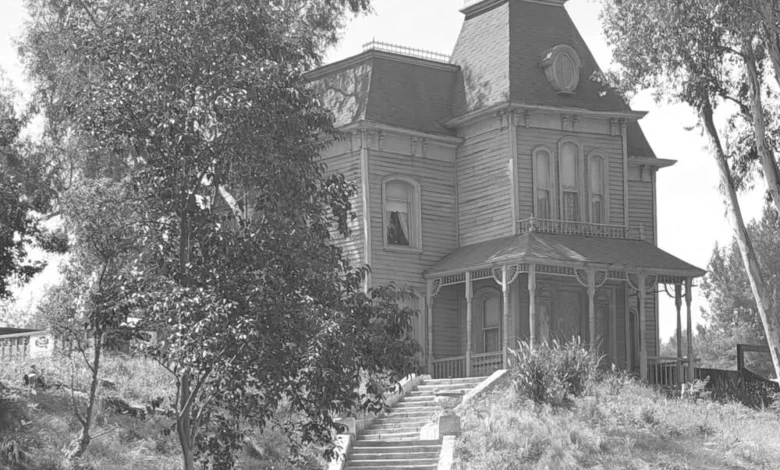
When Norman Bates (played with poignant fragility by Anthony Perkins) is released from the state mental institution after more than two decades, the court-appointed psychiatrist, Dr. Bill Raymond (Robert Loggia), insists that Norman is no longer a danger. Norman is given a job at a local diner, moves back into the infamous Victorian house overlooking the motel, and attempts to forge a normal, productive life.
However, the town of Fairvale refuses to grant him absolution. Lila Loomis, sister of the late Marion Crane, leads a vocal campaign to revoke his release, viewing his freedom as an intolerable insult to her family’s memory. Meanwhile, a cynical new motel manager, Warren Toomey (Dennis Franz), attempts to exploit the property for illicit gains, while a troubled young runaway named Mary Spoor (Meg Tilly) finds shelter under Norman’s roof.
This dynamic creates a complex web of paranoia. The audience is constantly kept off-balance: Is Norman genuinely trying to stay sane, perhaps being manipulated by unseen forces or gaslit by individuals who want to see him fail, or is the repressed persona of Mother inevitably resurfacing? The brilliance of Tom Holland’s script lies in how it weaponizes audience expectations. We know Norman’s history, yet the narrative invites us to empathize with his isolation, his earnest desire to please, and his terror at his own internal demons.
Critical Reception and Retrospective Analysis
Upon its initial release, contemporary film critics were divided. Some mainstream reviewers dismissed the film as an unnecessary desecration of a sacred cinematic text, while more discerning critics recognized its sophisticated subversion of genre tropes.
Over the decades, critical consensus has shifted dramatically in favor of Psycho II. Modern film scholars frequently cite it as a masterclass in sequel-making, demonstrating how to expand a universe without cheapening the original work. In retrospective analyses, critics emphasize Anthony Perkins’s performance as a career-defining achievement that added unexpected emotional depth to a cinematic icon.
Industry observers note that the film anticipated contemporary discussions surrounding criminal justice reform, the stigma of mental illness, and the challenges of societal reintegration. By framing the monster as a victim of both his own psychological pathology and society’s refusal to forgive, Psycho II transcends the traditional boundaries of horror.
Broader Impact and Legacy on the Horror Genre
The influence of Psycho II extends far beyond its immediate financial success. By proving that a horror sequel could function as a complex psychological drama, the film paved the way for subsequent franchises to experiment with tone, character development, and narrative perspective.
Furthermore, the film’s exploration of unreliability—where both the protagonist and the audience cannot entirely trust their own perceptions—became a foundational trope in psychological thrillers throughout the late 1980s and 1990s.
As cinematic landscapes continue to revisit legacy franchises through reboots, requels, and long-delayed sequels, Psycho II remains the gold standard for how to approach a classic property with reverence, intelligence, and narrative audacity. Forty years later, the film endures not merely as a companion piece to Hitchcock’s original masterpiece, but as a compelling, empathetic examination of the human capacity—and the societal failure—for rehabilitation.