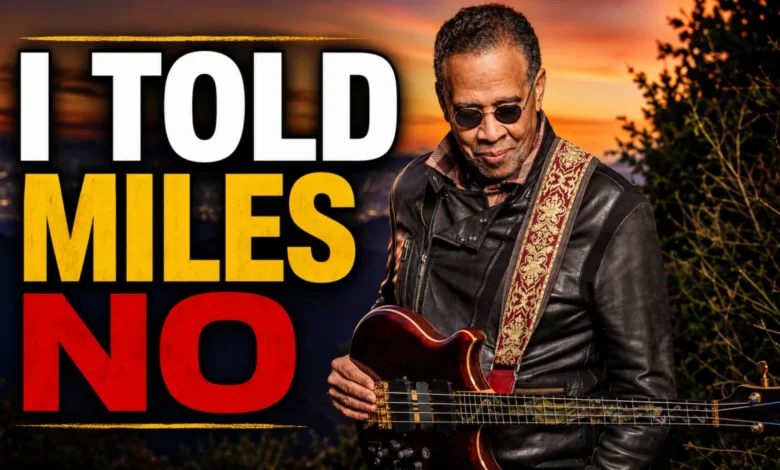
For more than five decades, Stanley Clarke has fundamentally altered the landscape of contemporary music, transforming the bass guitar from a supportive rhythmic foundation into a melodic, percussive, and emotional lead voice. His influence spans the history of jazz fusion, progressive rock, and funk, marking him as one of the few instrumentalists whose technical prowess is consistently subordinated to the clarity of his artistic vision. In a recent JAZZIZ podcast interview, Clarke provided an intimate retrospective on a career defined not merely by the velocity of his playing, but by the philosophy of intention—a guiding principle that he suggests is the true bridge between complex musicianship and human connection.
The Architect of a New Sonic Language
Stanley Clarke’s career trajectory is inseparable from the seismic shifts that occurred in jazz during the late 1960s and early 1970s. During this era, the boundaries between jazz, rock, and R&B began to dissolve, a movement that would eventually be categorized as "fusion." Clarke was at the epicenter of this shift. As a founding member of Return to Forever alongside keyboardist Chick Corea, Clarke helped pioneer a sound that utilized the sheer volume and visceral energy of rock while retaining the sophisticated harmonic and improvisational vocabulary of jazz.
His work with Return to Forever, particularly on landmark albums such as Light as a Feather (1973) and Romantic Warrior (1976), remains a touchstone for bassists worldwide. Clarke’s innovation was twofold: he mastered the acoustic upright bass with a technical facility that rivaled horn players, and he revolutionized the electric bass, treating it as an instrument capable of blistering solos and intricate, lyrical phrasing. This dual mastery allowed him to occupy a unique space in music history, one where he bridged the traditional bebop heritage with the electronic experimentalism of the new era.
Chronology of an Influential Career
The evolution of Stanley Clarke’s musical identity can be viewed through several distinct phases, each reflecting a specific aspect of his technical and creative development:
- 1971–1972: The Miles Davis Era: Clarke’s entry into the professional jazz scene was marked by his association with giants like Art Blakey, Dexter Gordon, and Joe Henderson. His brief but formative interactions with Miles Davis remain a staple of his personal history, serving as a masterclass in the necessity of artistic courage.
- 1972–1977: The Return to Forever Years: This period established Clarke as a global icon. The band’s transition from a Latin-jazz ensemble to a high-octane fusion powerhouse set the standard for instrumental virtuosity in the 1970s.
- 1974–1980: The Solo Ascent: With his self-titled 1974 album and the commercial breakthrough of School Days (1976), Clarke proved that a jazz-fusion bassist could achieve significant mainstream chart success.
- 1981–1990: The George Duke Partnership: His collaborative work with keyboardist George Duke resulted in a series of highly successful R&B/funk projects, including the Clarke/Duke Project, demonstrating his versatility and ability to pivot between genres without losing his technical identity.
- 1990–Present: The Elder Statesman and Educator: Clarke has transitioned into a role as a mentor and film composer, while continuing to lead ensemble projects like the Stanley Clarke Band, which won a Grammy Award for Best Contemporary Jazz Album in 2011.
The Philosophy of Intention
Throughout the JAZZIZ conversation, Clarke emphasizes that the "virtuosity trap"—the tendency for musicians to equate speed and complexity with quality—is a barrier to genuine communication. For Clarke, the absence of lyrics in instrumental music places a heavier burden on the performer to convey emotion. "You can play fast and do all that kind of stuff," Clarke notes. "But if you can’t figure out how to get the emotion across… you really have to stretch."
This perspective is rooted in his early spiritual and musical influences, including the work of John Coltrane. Clarke cites Coltrane’s ability to communicate profound human experiences through the saxophone as a primary model for his own playing. By focusing on "intention," Clarke suggests that a performer must decide what a piece of music is meant to communicate before they ever strike a note. The notes, in his view, are merely the syntax; the intention is the narrative.
Analytical Context: The Technical Legacy
To understand the magnitude of Clarke’s contribution, one must analyze the technical standard he set. Before Clarke, the electric bass was largely viewed as a rhythm-section utility, responsible for locking in with the kick drum. Clarke’s approach—characterized by his use of the "thumb" technique and his mastery of high-register melodic lines—effectively forced a re-evaluation of the instrument’s potential.
Supporting data regarding the commercial impact of fusion in the 1970s highlights the success of this shift. Albums like School Days peaked at No. 34 on the Billboard 200, an extraordinary feat for a jazz-fusion record. This success proved that audiences were not just interested in technical prowess, but were responding to the emotional energy and accessible melodies that Clarke embedded within his complex arrangements. By successfully crossing over into mainstream charts, Clarke helped sustain the jazz industry during a period when traditional jazz was experiencing a decline in radio play.
Perspectives from Peers and Collaborators
The impact of Clarke’s work is reflected in the testimony of his contemporaries and the subsequent generations of bassists he has influenced. Musicians who have worked with Clarke frequently cite his "listening" ability—a trait often overlooked by those who focus solely on his speed. His collaboration with the late George Duke, for instance, is often analyzed as a masterclass in musical dialogue. Peers note that Clarke’s ability to "leave space" in a mix, even when playing complex lines, is what distinguishes him from imitators who prioritize density over clarity.
In discussions with younger musicians, Clarke maintains a consistent stance: the technology of music may change—from analog recording to digital workstations—but the requirement for human intention remains absolute. He remains a vocal advocate for music education, frequently engaging with younger players to emphasize that while theory provides the tools, the "soul" of the music must come from the performer’s personal life experiences and their desire to connect with the listener.
Broader Implications for the Future of Jazz
The implications of Clarke’s career are far-reaching. As the jazz genre continues to evolve into new, hybrid forms, his insistence on the "human element" serves as a counterweight to the rise of algorithmic or purely mechanical music production. Clarke’s legacy is not just in the records he sold or the bass-playing techniques he pioneered, but in the institutional knowledge he has passed down regarding the performance of jazz as a live, visceral experience.
His career demonstrates that innovation is not a solitary endeavor but a communal one, built upon the foundation of past masters and sustained through a constant, critical questioning of what music is meant to achieve. As he looks back on his encounters with the likes of Miles Davis and John Coltrane, Clarke frames his journey not as a closed book, but as a continuous exploration.
Conclusion: A Legacy of Motion
Stanley Clarke remains an active participant in the contemporary musical landscape. Whether he is scoring a film, leading a masterclass, or performing on stage, he maintains the same curiosity that drove him as a young man in Philadelphia. His career serves as a blueprint for the modern musician: a commitment to relentless practice, a willingness to collaborate across genres, and an unwavering belief that music—regardless of its complexity—must possess a clear, intentional, and emotional heart.
The JAZZIZ podcast interview reinforces the notion that Clarke’s stature in the music world is not merely a product of his historical contributions, but of his current relevance. In an era where digital saturation often threatens to dilute the impact of live performance, Stanley Clarke’s reminder—that "the notes matter, but the intention behind them is everything"—remains a vital lesson for artists and audiences alike. His work continues to move forward, mirroring the rhythmic and spiritual growth he has pursued for over half a century.