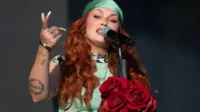
Pop sensation Olivia Rodrigo has once again leveraged her significant platform to advocate for reproductive freedom, asserting that abortion bans are fundamentally "pro-control, not pro-life." This potent statement emerged from her recent discussions with the Center for Reproductive Rights, conducted in anticipation of her inaugural Daisy Chain Fields festival. The conversations, released this week, underscore Rodrigo’s commitment to public education regarding the complex legal and societal landscape of reproductive rights in the United States, particularly in the wake of the Supreme Court’s pivotal 2022 Dobbs decision.
The Post-Dobbs Landscape: A Shifting Legal Terrain
The 2022 Supreme Court ruling in Dobbs v. Jackson Women’s Health Organization marked a watershed moment in American legal history, effectively overturning the nearly 50-year precedent set by Roe v. Wade (1973) and Planned Parenthood v. Casey (1992). This decision eliminated the federal constitutional right to abortion, returning the authority to regulate or ban the procedure entirely to individual states. The immediate aftermath saw a rapid and dramatic restructuring of abortion access across the nation. Within months, numerous states enacted stringent bans or severe restrictions, leading to what many describe as a patchwork of accessibility where a person’s reproductive options are largely determined by their zip code.
During her conversations with Center for Reproductive Rights President and CEO Nancy Northup, alongside legal and policy experts Autumn Katz, Nimra Chowdhry, and Meetra Mehdizadeh, Rodrigo delved into the intricacies of this post-Dobbs environment. The discussions highlighted how states, previously constrained by federal protections, moved swiftly to implement laws ranging from outright bans at conception to restrictions at early gestational stages, often without exceptions for rape or incest. This legislative flurry has not only curtailed access but has also created significant legal ambiguities and challenges for healthcare providers and patients alike.
Rodrigo’s Advocacy: Framing the Debate
Rodrigo articulated her personal motivation for engaging with the issue, describing the current landscape as "terrifying." She emphasized that the restrictive laws enacted across the country are not primarily about protecting life but rather about controlling bodily autonomy. "They sound not very pro-life," Rodrigo observed, "but rather pro-control." This reframing challenges the commonly used "pro-life" nomenclature, suggesting an underlying agenda focused on restricting individual freedoms rather than a holistic concern for well-being.
Her perspective resonates with a significant portion of the public and legal scholars who argue that these bans disproportionately affect marginalized communities, exacerbate existing health disparities, and infringe upon fundamental human rights. The Center for Reproductive Rights, a global legal advocacy organization dedicated to advancing reproductive freedom, has been at the forefront of challenging these state-level restrictions, often litigating cases that illustrate the severe consequences of such laws.
Real-Life Impacts of Abortion Bans: Cases and Consequences
The discussions brought to light harrowing real-life examples of the impact of post-Dobbs abortion restrictions. Experts from the Center for Reproductive Rights cited the case of Amanda Zurawski, whose life-threatening pregnancy complications became a nationally recognized example of the dire consequences of abortion bans. Zurawski was denied necessary medical intervention in Texas because doctors feared violating the state’s restrictive abortion laws, despite her fetus having no chance of survival. She developed sepsis and nearly died, underscoring the critical delays in care that can occur when medical judgment is overridden by legal constraints.
Another case highlighted involved a woman who had to be airlifted for emergency medical care after being denied timely treatment for a pregnancy complication. These instances illustrate that abortion bans do not solely prevent elective abortions but can also impede essential medical care for women experiencing miscarriages, ectopic pregnancies, or other serious health crises during pregnancy. The fear of legal repercussions can lead healthcare providers to hesitate, potentially endangering patients’ lives. These examples serve as powerful testimonials to the argument that abortion restrictions are often medically unsound and pose a significant threat to maternal health.
Maternal Healthcare, Midwifery, and Racial Disparities
A crucial segment of Rodrigo’s conversation with the Center for Reproductive Rights focused on the broader context of maternal healthcare and the role of midwifery. Rodrigo raised a critical question: why do states with high maternal mortality rates, such as Georgia, often maintain some of the nation’s most restrictive laws governing midwives? Center for Reproductive Rights Senior Counsel Hillary Schneller provided a sobering explanation, highlighting profound racial disparities in maternal health outcomes in the U.S.
Schneller explained that Black women in the United States die from pregnancy-related causes at approximately three times the rate of white women. This disparity is not merely a statistical anomaly but a reflection of systemic inequities, including limited access to quality healthcare, implicit bias within the medical system, and socio-economic factors. Furthermore, the U.S. stands out among high-income countries for having one of the highest infant mortality rates. Schneller posited that expanding access to midwifery care could significantly improve maternal health outcomes. Midwives often provide comprehensive, personalized care that can be particularly beneficial in underserved communities. Historically, the profession of midwifery, particularly Black midwifery, faced systematic dismantling through racist campaigns, further contributing to the current healthcare disparities. Increasing support for and access to midwifery is thus presented not just as a healthcare solution, but as a matter of racial justice and equity.
The Battle for Mifepristone: A Central Front in Reproductive Rights
Rodrigo also inquired about lesser-known legal and policy battles confronting reproductive rights advocates, leading to a discussion about mifepristone. This medication is one of two drugs commonly used in medication abortions, which now account for roughly 63% of abortions in the U.S. The Center’s representatives explained that despite extensive research supporting its safety and effectiveness, anti-abortion groups continue to push for additional restrictions on mifepristone.
The drug, approved by the FDA over two decades ago, has been subject to numerous legal challenges, including a recent Supreme Court case, FDA v. Alliance for Hippocratic Medicine. Although the Supreme Court ultimately ruled that the plaintiffs lacked standing to challenge the FDA’s regulation of mifepristone, the case underscored the persistent efforts to limit access to this critical medication. These challenges aim to revert to older, more restrictive regulations, such as requiring in-person doctor visits for prescribing and dispensing, or even banning its use entirely. The high prevalence of medication abortions means that any successful restriction on mifepristone would have a widespread and immediate impact on abortion access nationwide, making it a central focus of the ongoing reproductive rights debate.
Daisy Chain Fields: A Festival for Empowerment and Advocacy
The interview series is part of a broader initiative spotlighting the nonprofit partners behind Daisy Chain Fields, Olivia Rodrigo’s new one-day festival scheduled for August 29th at Great Park in Irvine, California. Inspired by the legendary Lilith Fair, a touring festival of the late 1990s that celebrated women in music, Daisy Chain Fields aims to create a similar empowering space. The festival will feature an all-women lineup, including acclaimed artists such as Chappell Roan, Doechii, Mitski, Garbage, Bikini Kill, the Breeders, and Stevie Nicks.
Beyond the musical performances, a key component of the festival is its "Philanthropy Village." Here, attendees will have the opportunity to engage directly with and learn more about organizations dedicated to supporting women and girls. The Center for Reproductive Rights is one of ten nonprofit partners participating, providing a tangible link between Rodrigo’s artistic endeavors and her social activism. This integration of music and advocacy reflects a growing trend among artists to use their platforms to drive social change, offering fans not just entertainment but also avenues for education and engagement with critical issues.
Olivia Rodrigo’s Consistent Voice for Reproductive Freedom
Rodrigo’s outspoken advocacy for reproductive rights is not new. Throughout her GUTS World Tour, she launched the "Fund 4 Good" initiative, directing a portion of ticket proceeds toward organizations supporting reproductive freedom, girls’ education, and the prevention of gender-based violence. This consistent commitment highlights a deepening engagement with social justice issues, moving beyond symbolic gestures to tangible support and educational outreach. Her willingness to engage in detailed discussions with legal experts demonstrates a desire to not only express solidarity but also to understand and articulate the complexities of the issues at hand.
The impact of such celebrity advocacy can be significant. Public figures like Rodrigo possess the unique ability to reach vast, often younger audiences who may not actively seek out information on complex legal or political topics. By openly discussing these issues and collaborating with established organizations like the Center for Reproductive Rights, she helps to normalize conversations around reproductive health and empowers her fanbase to become more informed and engaged citizens.
The Broader Implications and Call to Action
The ongoing national debate over reproductive rights encompasses not just legal and medical dimensions but also profound ethical, social, and political implications. The discussions facilitated by Olivia Rodrigo and the Center for Reproductive Rights underscore the necessity of public education in navigating this complex landscape. As states continue to grapple with the aftermath of Dobbs, the need for accurate information and avenues for civic engagement becomes ever more critical.
For individuals seeking to understand the specific reproductive rights landscape in their own state, the Center for Reproductive Rights offers a valuable "Know Your State" resource. This tool provides up-to-date information on laws, protections, and restrictions across the U.S., empowering citizens to be informed advocates for their own health and the health of their communities.
As Olivia Rodrigo prepares for her Daisy Chain Fields festival and embarks on a lengthy 2026-2027 headlining tour in support of her latest album, you seem pretty sad for a girl so in love, her voice remains a prominent one in the ongoing dialogue surrounding reproductive freedom. Her commitment to using her influence to champion bodily autonomy exemplifies a new generation of artists integrating their art with their activism, shaping not only cultural trends but also critical social discourse.