Remembering Judith Blegen: The Radiant American Soprano Whose Lyrical Brilliance Defined an Era at the Metropolitan Opera

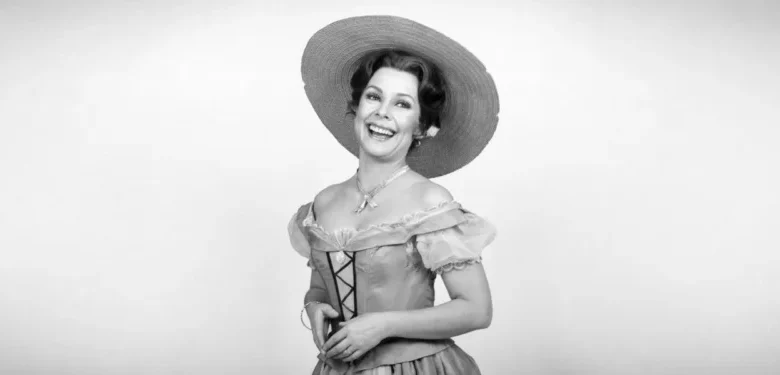
The classical music world is in mourning following the passing of Judith Blegen, the celebrated American soprano renowned for her sparkling stage presence, crystalline vocal agility, and profound musicianship. Blegen died at the age of 85, leaving behind an indelible legacy that spans more than two decades at the pinnacle of the operatic world. Best known for her defining association with the Metropolitan Opera in New York, where she captivated audiences across 284 performances and 21 seasons, Blegen was a consummate artist whose talents extended far beyond the traditional operatic stage into the realms of orchestral recording, international touring, and mainstream television. Her passing marks the end of an era for a specific generation of lyric coloratura sopranos who balanced technical mastery with irresistible theatrical charm.
Early Life and Musical Beginnings
Born in Fayette County, Kentucky, on April 27, 1941, Blegen’s early life was marked by geographical movement and an immersive education in the arts. She spent her formative high school years in Missoula, Montana, a landscape that remained close to her heart throughout her life and career. It was in Montana that her formal musical journey began under the tutelage of John L. Lester, then the head of the voice department at the University of Montana.
However, Blegen’s path to the operatic stage was not a straight line. As a teenager, her primary musical focus was the violin. The discipline, ear-training, and phrasing required of an instrumentalist laid a formidable foundation for her subsequent vocal studies. Transitioning from the violin to serious vocal training, she enrolled at the esteemed Curtis Institute of Music in Philadelphia. There, she honed the pure tone and agile upper register that would eventually become her trademark.
While still honing her craft as a student at Curtis, Blegen seized a critical professional opportunity. In the summer of 1961, she became an apprentice at the prestigious Santa Fe Opera. That same summer, she made her operational stage debut with the company, performing the role of Barbarina in Mozart’s The Marriage of Figaro and the milliner in Richard Strauss’s Der Rosenkavalier. These initial appearances in Santa Fe served as a crucial launchpad. The following year, in 1962, she attended the Music Academy of the West in Santa Barbara, California, before traveling to Rome to further immerse herself in European vocal traditions and linguistic coaching.
A Rapid Ascent on the International Stage
Blegen’s official operatic debut took place in Nuremberg, Germany, in 1965, where she stepped into the demanding shoes of Olympia—the mechanical doll—in Jacques Offenbach’s Les Contes d’Hoffmann. The performance was an immediate critical success, establishing her credentials as a formidable coloratura soprano with a keen comedic sense and sparkling stagecraft.
During her tenure in Nuremberg, Blegen expanded her repertoire rapidly, tackling some of the most challenging and rewarding roles in the lyric soprano canon. Her performances included the title role in Donizetti’s Lucia di Lammermoor, Susanna in Mozart’s Le Nozze di Figaro, and Zerbinetta in Richard Strauss’s Ariadne auf Naxos. Each of these roles demanded immense vocal flexibility, high-lying tessitura, and sparkling dramatic timing—qualities that became synonymous with her artistic signature.
In the same pivotal year of 1965, Blegen made her Italian debut at the Festival dei Due Mondi in Spoleto, further broadening her European footprint. By 1969, her international career reached new heights when she made her debut at the prestigious Vienna State Opera, once again performing the role of Olympia. That same year, she returned to the United States to make a triumphant return to the Santa Fe Opera, solidifying her status as a bi-continental star capable of commanding the world’s most demanding houses.
The Metropolitan Opera Years: A 21-Season Reign
The definitive chapter of Blegen’s career unfolded on the stage of the Metropolitan Opera in New York City. Making her debut with the company in 1970, she embarked on a remarkable 21-season relationship with the house that would see her perform in 20 distinct roles across 284 performances.
At the Met, Blegen became the definitive interpreter of several iconic ingénue and lyric roles. Among her most celebrated characterizations was Adina in Donizetti’s L’Elisir d’Amore, where she frequently shared the stage with legendary tenor Luciano Pavarotti. Their onstage chemistry, combined with vocal brilliance, delighted audiences and captured the playful, heartwarming essence of bel canto comedy.
Equally legendary was her portrayal of Sophie in Richard Strauss’s Der Rosenkavalier. Blegen performed the role 37 times with the Met, mastering its ethereal, floating high notes and innocent charm. Her interpretation was immortalized in a 1982 live television broadcast from the Met, bringing her luminous artistry into living rooms across the nation and preserving her artistry for future generations of opera lovers.
Mozart was another cornerstone of her Met career. Her portrayal of Susanna in Le Nozze di Figaro was lauded for its wit, vocal warmth, and dramatic intelligence. Beyond these signatures, Blegen’s Met repertoire spanned an impressive stylistic breadth. She sang Gilda in Verdi’s Rigoletto, Juliette in Gounod’s Roméo et Juliette, Gretel in Humperdinck’s Hänsel und Gretel, and Mélisande in Debussy’s atmospheric Pelléas et Mélisande.
Her career at the Met concluded in 1991 when she made her final appearance with the company in the role of Marzelline in Beethoven’s Fidelio. Her retirement from the stage marked the end of an era defined by stylistic elegance, vocal consistency, and a profound respect for the score.
Global Prominence and Mainstream Cultural Impact
While deeply rooted in the traditions of the major opera houses of New York, Vienna, and beyond, Blegen’s artistry was not confined to traditional operatic circles. She maintained a prominent presence at other legendary European venues, including the Royal Opera House in London and the Palais Garnier in Paris, where her refined vocalism and theatrical precision won over critics and audiences alike.
Uniquely for an opera singer of her generation, Blegen successfully bridged the gap between high art and mainstream popular culture. She became a frequent guest on The Tonight Show Starring Johnny Carson, charming late-night television viewers with her wit, down-to-earth personality, and occasional vocal demonstrations. By bringing classical vocal art to a mainstream audience without condescension or pretense, she served as an invaluable cultural ambassador for opera during an era when the art form was often perceived as inaccessible.
Discography, Honors, and Critical Acclamation
In addition to her live stage work, Blegen left behind an extensive and critically acclaimed discography. Her recordings reflect her versatility and intellectual curiosity, spanning standard operatic repertoire, contemporary works, and sacred music. Notable recordings include her participation in Alban Berg’s Lulu-Suite, Gian Carlo Menotti’s The Medium, Puccini’s La bohème, and Mozart’s rarely performed opera Zaide.
She was equally at home in the concert hall, as demonstrated by her acclaimed recordings of Haydn’s masterwork oratorio The Creation and Fauré’s serene Requiem. Furthermore, Blegen recorded three solo recital albums, exploring the intimate art of lieder with interpretations of works by Richard Strauss and Hugo Wolf that highlighted her sensitivity to text and nuance.
Her contributions to classical music were recognized with numerous honors and accolades. Among her most prestigious recognitions was a Grammy Award nomination for Best Classical Vocal Soloist Performance, earned for her brilliant work on the recording of Berg’s Lulu Suite. In her home state, she was honored in 1983 with the Montana Governor’s Arts Award, celebrating her international achievements and her enduring ties to her roots.
Personal Life and Legacy
Away from the spotlight, Blegen shared a rich personal and professional life within the classical music community. She was married to Raymond Gniewek, the longtime concertmaster of the Metropolitan Opera Orchestra, who passed away in 2021. Their partnership was a true union of orchestral and vocal excellence within the walls of the Met. Blegen is survived by her son, Tom Singher, from a previous marriage.
The death of Judith Blegen closes a brilliant chapter in the history of American vocal art. In an era dominated by oversized voices and grand theatrical gestures, Blegen proved that subtlety, luminous tone, impeccable pitch, and genuine dramatic truth could command the world’s greatest stages. As tributes pour in from colleagues, institutions, and devoted fans around the globe, her legacy endures through her historic recordings, her televised performances, and the indelible memories of those fortunate enough to witness her radiant artistry live in the opera house.