Album Review: Martin Helmchen Continues His Schubert Piano Sonata Cycle with Volume 2 on Alpha Classics

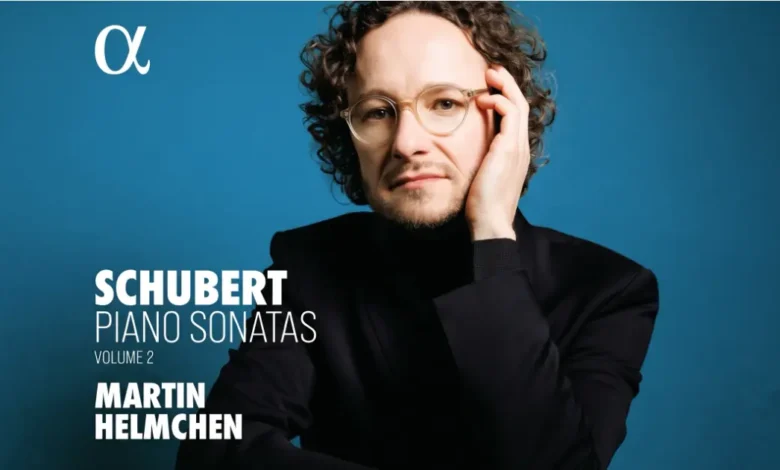
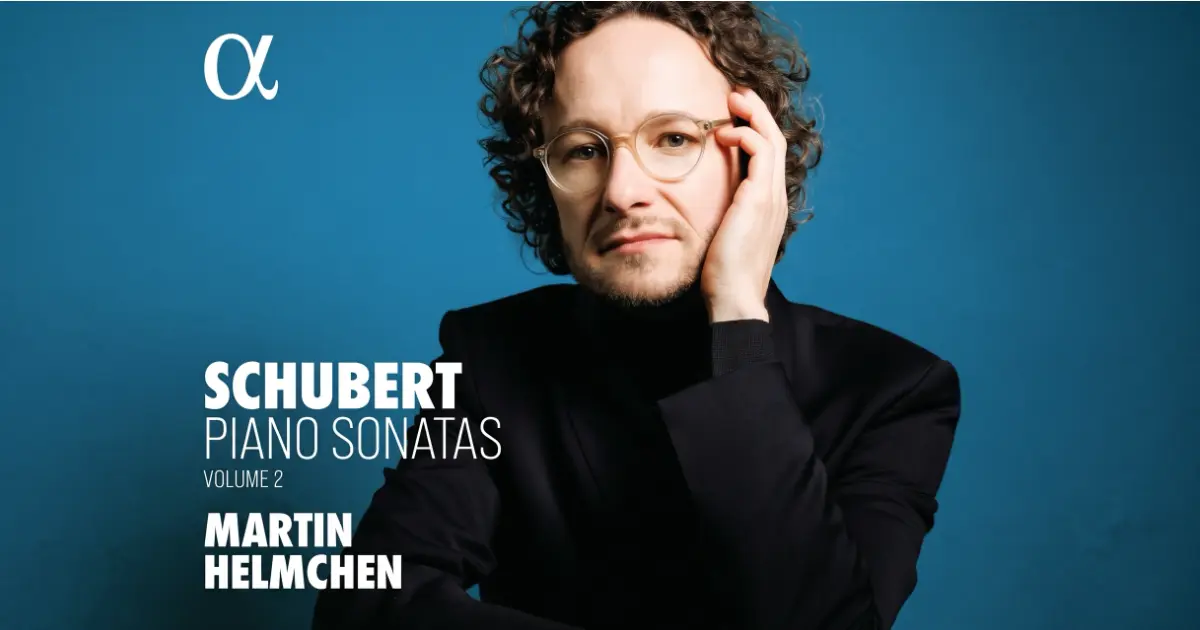
German pianist Martin Helmchen has officially released the second installment of his ambitious four-part survey dedicated to the complete piano sonatas of Franz Schubert. Following the critical reception of Volume 1, which was released in October 2025, this new chapter arrives via the Alpha Classics label under catalogue number ALPHA1283. Recorded once again on a Bösendorfer 280 concert grand piano, the release encompasses a diverse selection of works spanning Schubert’s creative evolution, ranging from earlier experimental efforts to the threshold of his monumental late-period masterpieces.
This installment features four distinct works: the Sonata in E-flat major, D. 568; the Sonata in A minor, D. 845; the incomplete Sonata in F minor, D. 625; and the luminous Sonata in G major, D. 894. Through this carefully curated program, Helmchen continues to explore the architectural complexities and profound emotional shifts characteristic of the Viennese master’s keyboard writing, inviting direct comparison with historic benchmarks established by legendary interpreters of the Austro-German repertoire.
Historical Context and Background of the Repertoire
To understand the emotional and stylistic landscape of the works featured on Volume 2, musicologists often look to the turbulent personal and professional circumstances surrounding Schubert during the mid-to-late 1810s and mid-1820s. The earliest work on the album, the Sonata in E-flat major, D. 568, dates back to 1817—a period marked by artistic resilience in the face of public rejection. Just one year prior, Schubert’s close friend Josef von Spaun attempted to champion the composer’s genius by forwarding a collection of his Goethe song settings directly to the venerated poet himself. The initiative met with silence, the manuscript returned without acknowledgment.
Despite such external discouragement, Schubert’s creative output remained fiercely undeterred. The opening Allegro moderato of D. 568 vibrates with this underlying resolve. Helmchen leverages the distinct sonic profile of his Bösendorfer 280 to capture this energy, employing dry articulation, crystalline clarity, and tightly defined staccatos. While the execution remains bubbly and effusive, certain running passages can occasionally present as overly dry and acutely sharp. When set alongside historical interpretations—such as András Schiff’s acclaimed 1992 Decca recording, which also utilizes a Bösendorfer—critical distinctions emerge. Schiff’s approach consciously rounds off the sonic edges to project a greater sense of charm and an orchestral profile, offering a softer frame for Schubert’s cascading lines.
The structural trajectory of D. 568 continues into its central movements. While Helmchen outlines the melodic contours of the slow movement with precision, his delivery can occasionally feel forceful, allowing contrived and confrontational accents to eclipse the music’s intrinsic sensitivity. Fortunately, the concluding movement restores equilibrium, introducing much-needed nuance and a sparkling, delicate refinement that fulfills the promise of the opening bars.
Dramatic Intensity in the A Minor Sonata
Moving further along Schubert’s chronological timeline, the Sonata in A minor, D. 845 (Op. 42), represents a distinct leap into assertive, multidimensional drama. Composed in 1825 and published as one of his few major piano sonatas during his lifetime, the work demands an interpreter capable of balancing immense structural power with deep psychological introspection.
In the opening Moderato, successful renditions traditionally rely on striking contrasts executed through seamless transitions. Helmchen delivers admirably in terms of raw power, capturing a persuasive, serious fierceness during the movement’s most intense passages. However, the pervasive heaviness—compounded by abrupt, coercive interjections that abruptly halt moments of lyricism—leaves listeners wishing for a broader palette of tonal and emotional characters. Music critics frequently contrast this muscular approach with the legendary recordings of Maurizio Pollini, whose interpretations of D. 845 transcend mere declarations of contrast, plumbing the depths of Schubert’s enigmatic and contemplative soundscapes with peerless psychological depth.
Conversely, the Andante poco mosso that follows demonstrates Helmchen’s meticulous ear for contrapuntal architecture. Each individual voice is clearly defined, its trajectory carefully mapped within a broader textural tapestry. The concluding movement successfully embodies the marked vivace, juxtaposing imaginative, bird-like delicate flourishes in the softer interludes with a sharp, spicy virtuosity rarely encountered in traditional Schubert performance practice.
Completion and Stylistic Interpretation of the F Minor Sonata
One of the notable musicological undertakings of Helmchen’s traversal involves the Sonata in F minor, D. 625. Because the original manuscript of this work survives in an incomplete state and the precise ordering of its movements remains a subject of scholarly debate, performers must navigate editorial choices regarding how to present the piece. Following the precedent set in his previous volume, Helmchen provides his own compositional completions alongside those of renowned Schubert scholar and pianist Paul Badura-Skoda.
These editorial supplements remain musically informed, respecting Schubert’s idiosyncratic harmonic language. The composer’s signature harmonic twists and abrupt tonal shifts offer performers rich opportunities to respond with dynamic and character-driven flexibility. While Helmchen does not always fully seize these expressive openings, his reading of the Scherzo injects a distinctively Beethovenian perspective into the musical dialogue. Rather than treating the movement as a simple musical joke, he invests it with audacity, authority, and commanding flourish. This sense of momentum carries directly into the Rondo, channeling the Scherzo’s electricity to forge a thrilling, high-velocity conclusion to the sonata.
The Pinnacle: Sonata in G Major, D. 894
The crown jewel of Volume 2 is indisputably the Sonata in G major, D. 894 (Op. 78), composed in October 1826. Often associated with the supreme late piano sonatas (D. 958 through D. 960), D. 894 provides a deeply meditative, reflective perspective that serves as a vital structural and emotional counterweight to the fierce athleticism heard in earlier tracks on the album.
It is in this work that Helmchen achieves his most successful and cohesive performance of the release. He captures the peaceful, hymnal textures of the opening Molto moderato with remarkable sensitivity, while the subsequent Andante derives its profound grace from apparent simplicity. Helmchen navigates the sudden harmonic surprises and charged dramatic eruptions embedded within the movement with intuitive responsiveness, grounding the music in a profound sense of stylistic understanding.
Critical Analysis and Market Implications
Martin Helmchen’s second volume of Schubert piano sonatas presents a compelling paradox for classical music aficionados. On one hand, the release showcases exemplary technical prowess, pristine clarity, and an aggressive, forward-looking energy that challenges conventional, overly sentimental views of Schubert’s keyboard output. The choice of the Bösendorfer 280 reinforces this bright, resonant aesthetic, providing a robust foundation for the more tempestuous movements.
On the other hand, when evaluated against the crowded field of benchmark Schubert recordings—ranging from Alfred Brendel and Maurizio Pollini to modern interpreters exploring period-informed practices—Helmchen’s interpretations occasionally lack the elusive nuance, introspective mystery, and tonal malleability that define historic accounts.

Nevertheless, given the strength of Volume 1 and the high artistic watermark achieved in the G major Sonata (D. 894), Helmchen’s ongoing survey remains a notable addition to modern classical discography. As the project moves toward its remaining installments, listeners and critics alike will watch with keen interest to see how the German pianist balances his dynamic virtuosity with the sublime, fragile elegance that forms the bedrock of Schubert’s mature idiom.
Album Details:
- Album Name: Schubert: Piano Sonatas, Vol. 2
- Record Label: Alpha Classics
- Catalogue Number: ALPHA1283
- Artist: Martin Helmchen (Piano)
- Availability: Streaming via Apple Music Classical, physical and digital purchase via Presto Music and major retailers.