Oasis Face High-Stakes Dilemma as 1990s Live Tapes and Unfiltered Studio Rehearsals Head to Auction with a £1.6 Million Price Tag

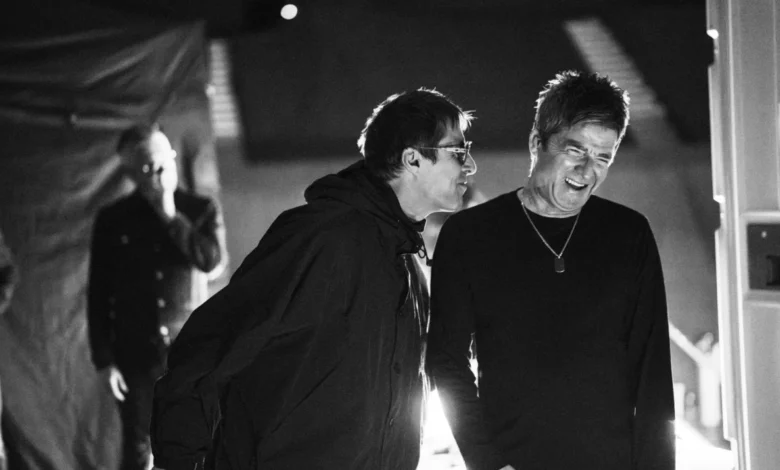
The enduring commercial and cultural legacy of one of Britain’s most iconic rock bands has once again thrust them into the legal and financial spotlight. Oasis, whose era-defining anthems captured the spirit of the 1990s Britpop movement, have raised formal concerns over an upcoming commercial auction featuring a vast, unreleased archive of their live performances, soundchecks, and rehearsal sessions. The collection, which spans the peak years of the band’s initial trajectory, has been valued between £1.2 million and £1.6 million by Littleton Auctions, the Staffordshire-based firm overseeing the high-profile sale.
The material in question was originally captured by Huw Richards, a sound engineer who worked closely with the group during their stratospheric rise between 1994 and 2001. Following Richards’ passing, the physical archive was inherited by his son, Owain Richards. After initial discussions regarding a private repatriation of the tapes to the band’s management broke down, the family decided to take the rare audio collection to the open market. While auctioneers maintain that the sale of the physical media is entirely lawful, the transaction highlights a complex intersection of property law, intellectual property rights, and the immense value of unreleased rock history.
A Comprehensive Archive of Britpop History
The cache slated for the auction block is exceptionally thorough, offering a granular, unfiltered look at the inner workings of Liam and Noel Gallagher during their most creatively fertile and volatile period. The collection comprises a diverse array of legacy recording formats, including analogue cassettes, digital audio tape (DAT) cassettes, and MiniDiscs.
Among the standout items are 63 distinct concert recordings captured directly from the mixing desk during live shows, providing pristine soundboard-quality audio of performances from the mid-to-late 1990s. Furthermore, the archive contains over 100 hours of rehearsal audio and soundchecks. Crucially for historians and die-hard collectors, these tapes capture extensive hours of unscripted dialogue, arguments, and banter between the Gallagher brothers, offering an intimate and unvarnished window into the interpersonal dynamics that fueled both the band’s brilliant output and their legendary volatility.
The Chronology of a Breakdown in Negotiations
The journey of these tapes from the mixing desk to the auction catalog has been a protracted one. Huw Richards recorded the audio organically while on the road with Oasis during their peak touring years, spanning the aftermath of their seminal 1994 debut album Definitely Maybe, through the global phenomenon of 1995’s (What’s the Story) Morning Glory?, and into the subsequent eras of Be Here Now and Standing on the Shoulder of Giants.
Conversations regarding the fate of the recordings initially began several years ago. According to Owain Richards, representatives for the band and the sound engineer’s estate engaged in exploratory talks concerning a potential acquisition deal that would see the tapes returned to the Oasis camp. However, those negotiations ultimately failed to yield an agreement, leading the family to pursue public auction. Ben Homer, head of Littleton Auctions, confirmed that the band’s representatives have formally communicated their apprehensions regarding the sale, a reaction Homer describes as entirely understandable given the magnitude of the material. Nevertheless, Littleton Auctions has pressed forward, emphasizing that the sale is being conducted with verified provenance and strict adherence to legal frameworks.
The Legal Maze: Physical Ownership Versus Intellectual Property
At the heart of this high-stakes auction lies a fundamental legal distinction that often catches collectors and estates unawares: the difference between owning the physical medium and owning the intellectual property embodied within it.
Legal experts point out that while a sound engineer or their heirs may lawfully hold the physical cassettes and digital tapes, possessing the physical object confers virtually no rights to exploit, broadcast, or commercially release the audio contained upon them. Euan Lawson, a partner at London-based media law firm Simkins, emphasizes that sound engineers are routinely engaged under standard contractual terms that grant them no express ownership rights in either the physical source materials or the intellectual property.
Moreover, UK copyright law dictates that the default owner of a sound recording copyright is typically the entity that organized the recording session. In traditional commercial environments, this is usually a record label that funded studio time. In the context of live performances, the landscape becomes significantly more tangled. During the 1990s, Oasis was signed to Creation Records—which was later acquired by Sony Music—before eventually establishing their own independent label, Big Brother Recordings, while maintaining distribution ties with Sony. Huw Richards was not a party to those overarching corporate agreements.
Even if an argument could theoretically be made that Richards "organized" the live soundboard recordings by plugging his equipment into the mixing desk, the hurdle of performer rights remains insurmountable. Under United Kingdom law, capturing a live performance and subsequently exploiting the resulting recording requires the explicit consent of every featured performer. Without the authorization of Liam Gallagher, Noel Gallagher, and their fellow band members, neither the Richards family nor any prospective buyer can legally monetize the audio.
Strategic Dilemmas and Market Implications
This strict legal framework creates a fascinating paradox for prospective buyers and the band alike. For a wealthy collector or institutional archive, purchasing the tapes guarantees possession of unique artifacts of British music history. However, the inability to publicly release, stream, or commercialize the recordings strips away standard avenues of financial return.
Conversely, the auction presents a delicate strategic calculation for Oasis themselves. Ben Gisbey, another legal specialist at Simkins, notes that viewing the event purely as a standard memorabilia sale would be short-sighted. While the band holds the powerful legal leverage of performer rights to block any unauthorized commercial exploitation by a third party, the existence of over 100 hours of unreleased rehearsal dialogue and live masters in private hands introduces long-term vulnerability.
Oasis now faces a classic economic and strategic dilemma: should they intervene and acquire the archive themselves at the projected multi-million-pound valuation, or should they risk a scenario where a private buyer purchases the collection and subsequently attempts to leverage access to the historical recordings down the line? As the auction date approaches, the music industry watches closely, recognizing that the sale is not merely a transfer of vintage plastic and magnetic tape, but a crucial chapter in the ongoing preservation—and monetization—of one of rock’s most turbulent legacies.