Robert Kraft Breaks Silence on the Removal of Macklemore from Ed Sheeran Tour Following Contentious Pro-Palestine Statements

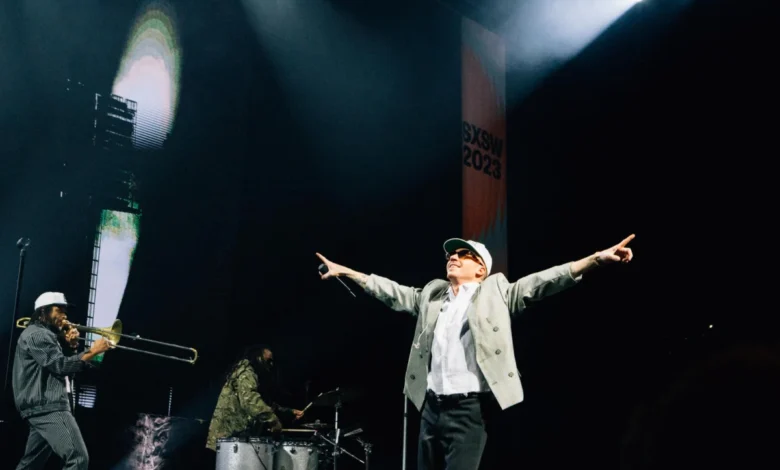
The landscape of live music and stadium touring has been thrust into a complex intersection of geopolitical activism and corporate accountability following the recent removal of rapper Macklemore from Ed Sheeran’s North American "Loop Tour." The decision, which has sparked intense debate regarding the boundaries of political expression in professional venues, was solidified after several major NFL stadium operators, led by Robert Kraft of Gillette Stadium, signaled that they would not accommodate the artist due to his vocal stance on the ongoing conflict in Gaza and the West Bank.
The controversy centers on a series of statements made by Macklemore, born Ben Haggerty, during his performance at MetLife Stadium in New Jersey on September 4. During his set, the Grammy-winning artist addressed the audience directly, stating that his participation in the tour was motivated by a desire to utilize the platform of stadium concerts to advocate for the Palestinian cause. The remarks, which included the phrase "Free Palestine," were presented alongside the performance of his 2024 protest track, "Hind’s Hall."
A Timeline of Escalating Tensions
The friction between the artist’s advocacy and the stadium management groups did not emerge in a vacuum. The timeline of events reveals a rapid escalation that ultimately forced a confrontation between the tour promoters and venue stakeholders:

- September 4: Macklemore performs at MetLife Stadium in New Jersey, where he explicitly calls for the liberation of Palestine and performs "Hind’s Hall."
- September 5–10: Following the performance, various advocacy groups, most notably the Israeli-American Council, initiate a public campaign calling for the artist’s removal from the tour, citing his rhetoric as antisemitic and inflammatory.
- September 11–12: High-profile figures, including singer Pink, draw attention to the controversy by critiquing the appropriateness of using a stadium platform for such divisive political messaging. Pink clarified that her objection was not to the "Free Palestine" sentiment itself, but to the context in which it was delivered to a diverse audience.
- September 13: Messina Touring Group, the promoter for Ed Sheeran’s tour, is informed by representatives of several NFL-affiliated stadiums that the inclusion of Macklemore has become a non-negotiable issue regarding the safety and atmosphere of their venues.
- September 14: The formal announcement is made that Macklemore has been dropped from the remainder of the U.S. leg of the tour.
- September 15–16: Both Macklemore and Robert Kraft release detailed statements outlining their positions, effectively drawing a line in the sand regarding the role of artists in public spaces.
The Stance of Stadium Ownership
Robert Kraft, the chairman and CEO of the Kraft Group and a prominent figure in the fight against rising antisemitism, provided the most comprehensive explanation for the venue operators’ collective decision. In a formal statement, Kraft emphasized that the exclusion of the artist was not a move to silence criticism of Israeli government policy, but rather a reaction to what he described as a failure to acknowledge the complexities of the conflict, specifically the role of Hamas.
"Standing with the Palestinian people and standing against Hamas, antisemitism, and hate should not be mutually exclusive," Kraft wrote. His statement underscored a distinction between humanitarian advocacy and rhetoric that he believes crosses into harmful territory. Kraft noted that for the past decade, he has committed significant resources to combatting hate speech and antisemitism, and he expressed that he felt a responsibility to intervene when he perceived that the "line had been crossed."
The decision by Gillette Stadium and other venues to enforce this boundary highlights the increasing pressure on venue owners to navigate the political leanings of the performers they host. As corporate entities, stadium owners are increasingly forced to balance the First Amendment rights of artists against their own corporate social responsibility (CSR) policies and the comfort of their diverse fanbases.
Macklemore’s Response and the Position of the Artist
In the wake of the announcement, Macklemore took to social media to characterize the situation as a form of coerced censorship. He asserted that Ed Sheeran had been placed in an untenable position, forced to choose between keeping a supporting act and ensuring the tour could proceed across its scheduled U.S. stops.

"Ed was in a f—ed up position," the rapper wrote. He maintained that his advocacy for Palestinian civilians—particularly children—was a moral imperative that outweighed the potential for commercial backlash. He argued that the accusations of antisemitism were being used as a shield to deflect from the human rights crisis in Gaza. The rapper’s position remains that his lyrics and stage presence are an attempt to bring attention to a humanitarian catastrophe, and that conflating anti-Zionism with antisemitism is a fundamental misrepresentation of his platform.
Broader Implications for the Live Music Industry
The incident involving Macklemore and the "Loop Tour" serves as a case study in the evolving relationship between artists and the physical spaces in which they perform. Historically, stadiums have been viewed as neutral grounds for entertainment, but the increasing tendency of artists to use these platforms for socio-political advocacy is challenging this model.
From an industry perspective, this event raises several questions:
- Contractual Clauses: Experts in entertainment law suggest that the incident may lead to more stringent "morality clauses" in booking contracts. Venue operators may begin to include specific language regarding the content of performances to insulate themselves from public backlash.
- The "Safety" Argument: By citing the need to provide a "welcoming environment for all guests," stadium operators are increasingly utilizing their private property rights to enforce ideological boundaries. This creates a precedent where the definition of "hate speech" or "offensive content" becomes determined by the venue’s ownership rather than legal standards of obscenity or incitement.
- Artist Autonomy vs. Commercial Viability: The tension between an artist’s right to self-expression and the commercial viability of a tour is likely to intensify. Major touring acts often rely on a network of high-capacity stadiums, most of which are owned by private groups or NFL franchises. If these groups align their booking policies with specific political stances, artists may find their touring options limited by their public advocacy.
Economic and Cultural Context
The economic impact of such decisions is significant. Stadium tours generate millions of dollars in revenue for local economies, from parking and concessions to hospitality and travel. The removal of a high-profile supporting act can cause disruptions to logistics, ticketing, and marketing strategies. However, for many owners, the perceived risk to their brand equity—and their desire to maintain community cohesion—outweighs the immediate financial considerations of a single tour.

Furthermore, the involvement of figures like Pink, who has been a vocal proponent of Jewish rights and has historically engaged in social activism, highlights the divide within the music community itself. This is not merely a dispute between corporate owners and artists; it is a reflection of a deep-seated cultural disagreement over how the current conflict should be discussed in public forums.
Looking Forward
As the "Loop Tour" moves to its next stops—including Lincoln Financial Field in Philadelphia and Mercedes-Benz Stadium in Atlanta—the absence of Macklemore will remain a focal point of discussion. The tour will continue with other supporting acts, but the conversation surrounding the role of the performer has been permanently altered.
Robert Kraft concluded his statement by extending an invitation to Macklemore for a private dialogue, suggesting that the goal of both parties, at least ostensibly, remains the pursuit of peace and the mitigation of suffering. Whether such a dialogue can bridge the ideological divide remains to be seen. For now, the incident stands as a definitive moment in the 2024 touring season, underscoring the volatility that occurs when global politics, private enterprise, and pop culture collide in the nation’s largest arenas. The precedent set by this event will likely influence venue booking policies for years to come, as stakeholders grapple with the complexities of maintaining a "neutral" space in an increasingly polarized world.
Related posts: