The dynamic landscape of the music industry is in constant flux, shaped by technological advancements, evolving consumption habits, and new avenues for talent discovery. A recent episode of the New Music Business podcast, hosted by Ari Herstand, offered an insightful exploration into these transformations, featuring legendary A&R executive, publisher, and educator Pete Ganbarg. With over three decades of experience, Ganbarg provided a comprehensive breakdown of how the role of Artists and Repertoire (A&R) has evolved, emphasizing that despite seismic shifts, the core mission of connecting great artists with great songs remains paramount.
The Enduring Art of A&R in a Digital Age
Pete Ganbarg, a figure synonymous with hit records and career-defining artist development, has witnessed firsthand the industry’s pivot from a gatekeeper model to a more democratized, data-driven ecosystem. His conversation on the podcast delves into the intricate balance between traditional intuition and modern analytics, offering a masterclass on navigating the complexities of contemporary music creation and talent scouting. From the meticulous cultivation of artists through long-term development deals and live showcases to the rapid-fire discovery fueled by algorithms and social media virality, Ganbarg underscored that the fundamental objective of A&R – identifying, nurturing, and pairing talent with compelling material – persists as the bedrock of success.
From Showcases to Algorithms: A&R’s Transformative Journey
The journey of A&R has been nothing short of revolutionary. Historically, A&R executives were the intrepid scouts, traversing smoky clubs, attending countless live showcases, and sifting through mountains of demo tapes. Their keen ears and gut instincts were the primary tools for identifying potential stars. This era, often romanticized in music lore, was characterized by significant label investment in artist development, allowing acts years to hone their craft, build a regional following, and mature their sound before a major release. Artists like Bruce Springsteen, U2, and countless others benefited from this patient, long-term approach, where labels acted as genuine partners in a creative journey.
The late 1990s and early 2000s began to introduce the internet as a new, albeit nascent, discovery tool. However, the true seismic shift occurred with the advent of digital distribution, streaming platforms, and social media. Today, the landscape is largely algorithm-driven. A&R teams no longer solely rely on traditional scouting; they are armed with sophisticated data analytics tools that track streaming numbers, social media engagement, Shazam tags, and viral trends across platforms like TikTok and YouTube. This data-first approach allows labels to identify burgeoning talent with a quantifiable audience already in place, significantly de-risking the investment. For instance, a song trending on TikTok with millions of user-generated content pieces signals undeniable public engagement, providing a clear data point for A&R to investigate. This has led to an explosion of content; an estimated 100,000 new tracks are uploaded to Spotify daily, making data-driven filtering not just an advantage, but a necessity.
Balancing Longevity with Virality: Artist Development in the Modern Era
One of the central tensions discussed by Ganbarg is the push and pull between comprehensive artist development and the industry’s increasing appetite for "quick hits." In the traditional model, artist development was a multi-year process involving everything from vocal coaching and songwriting workshops to image consulting and rigorous touring schedules. The goal was to build a sustainable career, often through multiple album cycles.
Today, the pressure for immediate returns is immense. Viral moments, while offering unparalleled exposure, often come with a shelf life. An artist can achieve overnight fame with a single viral track, but translating that fleeting moment into a lasting career requires a different kind of strategic intervention. Ganbarg emphasized that labels are now tasked with the delicate act of capitalizing on immediate virality while simultaneously laying the groundwork for long-term artistic viability. This often means identifying an artist who possesses not just a hit song, but also an authentic voice, a compelling persona, and the raw talent to sustain public interest beyond a single track. The challenge lies in discerning whether a viral sensation is merely a one-hit wonder or a nascent superstar capable of evolving and delivering consistent quality over time. Labels, facing heightened financial scrutiny and shorter investment horizons, are less inclined to gamble on unproven talent without demonstrable audience engagement. This has shifted the burden of initial audience building more towards the artists themselves, often through independent efforts before major label interest.
The Unwavering Power of Live Performance
Despite the digital revolution, Ganbarg firmly asserted the enduring importance of live performance. In an era where music can be consumed entirely through headphones or screens, the live stage remains the ultimate crucible for an artist. It’s where authenticity is revealed, charisma is tested, and a true connection with an audience is forged. A compelling live show demonstrates an artist’s ability to command a room, engage fans directly, and prove their staying power beyond studio wizardry or viral snippets.
For labels, observing an artist in a live setting provides invaluable insights into their stage presence, vocal prowess under pressure, and ability to cultivate a loyal fanbase. It’s a tangible measure of their connection with listeners, something algorithms cannot fully quantify. Artists who can consistently deliver captivating live performances are more likely to build a dedicated following, sell merchandise, and embark on profitable tours – all crucial components of a sustainable career. This perspective highlights that while digital metrics open the door, live performance often seals the deal for long-term label investment, serving as a critical differentiator between a fleeting internet personality and a true performing artist.
Decoding Viral Success: TikTok, Songs, Artists, and Careers
TikTok has undeniably become the music industry’s most potent discovery engine, launching countless songs and artists into the global consciousness. The platform’s algorithm, which prioritizes engagement over follower count, allows for rapid virality, turning obscure tracks into global phenomena. Examples abound, from Fleetwood Mac’s "Dreams" experiencing a massive resurgence to new artists like Lil Nas X riding "Old Town Road" to unprecedented chart dominance.
However, Ganbarg cautioned against equating viral success with career longevity. A viral song is not automatically an artist, and a viral artist is not automatically a career. This distinction is critical. Many tracks achieve fleeting virality without necessarily elevating the artist behind them to lasting fame. The challenge for A&R is to identify artists who can leverage a viral moment to build a brand, develop a catalog, and cultivate a loyal fanbase that transcends a single trending soundbite. This involves strategic follow-up releases, consistent engagement, and a clear artistic vision. The "one-hit wonder" phenomenon has taken on new dimensions in the TikTok era, where the speed of ascent can be matched only by the speed of descent if not managed strategically. For every Miley Cyrus with "Flowers" (a song whose success involved a seasoned artist capitalizing on a global moment), there are countless creators whose viral sounds fade as quickly as they emerge.
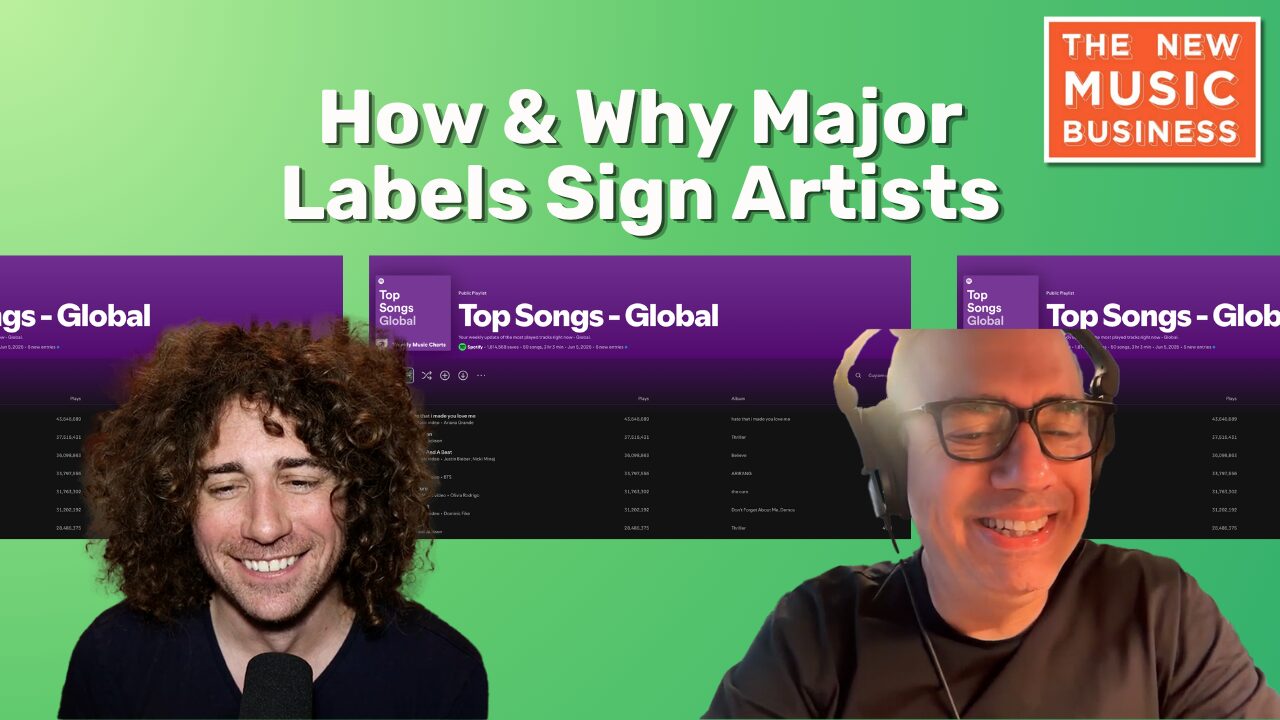
Crafting Hits: The Evolution of Songwriting and Publishing
Pete Ganbarg’s expertise extends deeply into the realm of songwriting and publishing, an often-overlooked but absolutely crucial component of the music business. He elaborated on his methods for discovering and developing songwriters, recognizing that a hit song is the ultimate currency, regardless of who performs it. His approach often involves identifying raw lyrical or melodic talent and then pairing them with other writers, producers, or artists to unlock their full potential.
The journey of Michael Pollack, co-writer of Miley Cyrus’s global smash "Flowers," serves as a compelling case study. Ganbarg likely highlighted Pollack’s dedication, growth, and the collaborative environment that led to such a significant achievement. "Flowers" itself became one of the fastest songs in Spotify history to surpass 1 billion streams, breaking multiple chart records globally. This success wasn’t accidental; it was the culmination of Pollack’s honed craft, strategic co-writing, and the right artist match. This exemplifies the modern songwriting process, where collaboration is king.
"Songwriting by committee" has become a prevalent trend, with many hit songs crediting multiple writers and producers. This collaborative model, while sometimes criticized for diluting individual artistic vision, often leads to more polished and universally appealing tracks. Each contributor brings a unique perspective, a catchy hook, or a fresh beat, resulting in a finely tuned product designed for maximum impact. Data from ASCAP and BMI often shows that the number of credited writers per hit song has steadily increased over the past two decades, reflecting this collaborative shift.
Sampling, another enduring trend, continues to evolve. From legal complexities to creative reinterpretations, sampling allows artists to weave sonic histories into new narratives, creating a bridge between generations of music. The podcast likely touched upon the intricate publishing trends associated with these practices, including fair compensation, licensing agreements, and the ongoing debate surrounding intellectual property rights in an era of rapid digital dissemination and AI-generated content.
Anticipating Tomorrow: AI and the Future of Music Creation
Perhaps one of the most compelling discussions revolved around the integration of Artificial Intelligence (AI) into songwriting and the future of music creation. AI tools are rapidly advancing, capable of generating melodies, lyrics, and even full instrumental tracks. While some view AI as a threat to human creativity, Ganbarg likely expressed a more nuanced and cautiously optimistic perspective. He might see AI as a powerful tool for augmentation, assisting songwriters in overcoming creative blocks, exploring new sonic palettes, or even streamlining the production process.
The ethical implications and copyright challenges posed by AI are profound. Questions arise about ownership, originality, and the very definition of creativity when algorithms are involved. However, the potential for AI to democratize music creation further, allowing more individuals to experiment and produce high-quality content, is undeniable. Ganbarg’s excitement for the future of music, despite these challenges, likely stems from the expanded possibilities for discovery and creativity that technology offers, provided the human element of emotion and narrative remains at the core. He probably envisions a future where AI serves as a collaborator, not a replacement, enhancing the human touch rather than diminishing it. The focus will likely remain on authentic storytelling and genuine connection, qualities that AI, in its current form, struggles to replicate.
Redefining Success: "Making It" in the New Music Business
The definition of "making it" in the music business has undergone a radical transformation. Gone are the days when success was solely measured by platinum album sales, sold-out arena tours, and major label contracts. While these benchmarks still hold significant weight, the modern landscape offers a multitude of pathways to a sustainable and fulfilling career.
Pete Ganbarg likely highlighted that "making it" now encompasses a broader spectrum of achievements:
- Sustainable Income: Earning a living from music, whether through streaming royalties, sync licensing (music in films, TV, ads), merchandise sales, Patreon subscriptions, or a combination thereof.
- Niche Fanbases: Building a dedicated, engaged community, even if it’s smaller than a mainstream audience. The "1,000 True Fans" concept, where a creator needs only a relatively small number of highly committed fans to sustain their career, has become a powerful paradigm.
- Creative Freedom: The ability to create music on one’s own terms, without necessarily conforming to major label pressures or commercial trends.
- Impact and Influence: Having one’s music resonate with listeners, inspiring or moving them, regardless of chart position.
- Independent Success: Many artists now thrive without traditional label deals, leveraging digital platforms for distribution, marketing, and fan engagement. This offers greater control over their art and business.
This redefinition empowers artists to pursue diverse career paths, focusing on authentic connection and sustainable growth rather than solely chasing mainstream stardom. It reflects a more mature and diversified industry where various forms of success are not only possible but celebrated.
Conclusion: The Human Element Endures
The discussion with Pete Ganbarg on the New Music Business podcast painted a vivid picture of an industry in perpetual motion. From the analog days of A&R to the digital frontier of AI, the mechanisms of discovery, development, and distribution have been radically reshaped. Yet, Ganbarg’s extensive experience underscores a timeless truth: while technology may change how we find music and artists, the fundamental human need for connection through compelling songs and authentic performances remains constant.
The role of A&R, though augmented by data and algorithms, continues to be an art form rooted in intuition, passion, and the ability to identify that intangible spark that separates a good song from a hit, and a talented individual from a lasting artist. As the music business continues its rapid evolution, the insights from veterans like Pete Ganbarg serve as crucial guideposts, reminding us that at its heart, music is, and always will be, about human creativity, emotion, and connection. The future promises even more innovative tools and platforms, but the core mission of A&R – fostering the magical alchemy between artists and songs – will undoubtedly endure, ensuring that the next generation of musical legends finds its voice and its audience.