Kanye West and French Montana Face Lawsuit from Paparazzi Agency Over Uncleared Audio Sample in "Where They At"

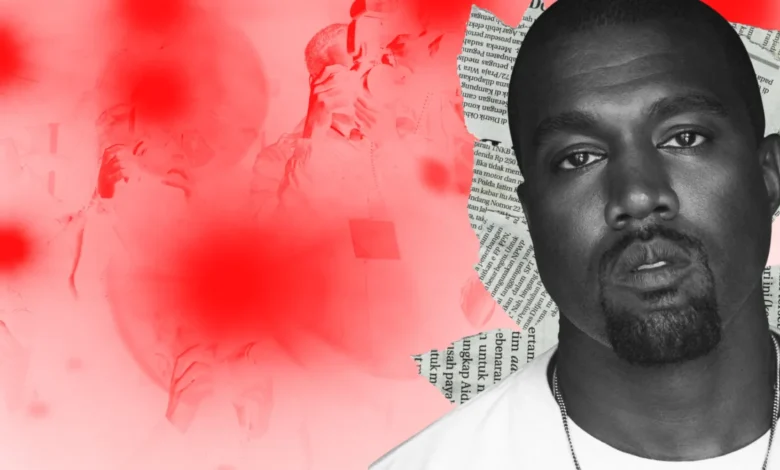
A novel legal challenge has emerged against prominent artists Kanye West, also known as Ye, and French Montana (Karim Kharbouch), alongside their distributor Gamma, stemming from an alleged copyright infringement involving an audio sample. Unlike typical music industry sampling disputes, this lawsuit has been initiated by a paparazzi agency, Bauer-Griffin, which claims its copyrighted video footage was unlawfully used in the 2024 collaborative track "Where They At." The legal action underscores the complex and often contentious intersection of celebrity, media rights, and intellectual property law in the digital age.
The core of the dispute revolves around the opening moments of "Where They At," a track featured on French Montana’s "Mac & Cheese 5" mixtape. The song begins with a distinct audio clip from 2013, capturing a volatile verbal exchange between West and a paparazzo. In the snippet, West is heard exclaiming, "don’t take a fucking nother photo, man!" This audio, according to Bauer-Griffin’s lawsuit, was extracted directly from a video owned by the agency, used without permission, license, or proper credit. The agency alleges that the artists and their distributor "flagrantly and deliberately" infringed upon their copyright by prominently featuring the uncleared sample as the record’s introduction.
A History of Confrontation: Kanye West and the Paparazzi
The incident captured in the 2013 video is far from an isolated event in Kanye West’s public life. His relationship with the paparazzi has been notoriously strained, characterized by numerous confrontations, impassioned public statements, and a consistent demand for privacy despite his global celebrity status. This ongoing tension forms a critical backdrop to the current legal battle, as the lawsuit itself references a "long history of Mr West skirmishing with paparazzi over perceived violations of his privacy and his desire to be left alone."
Over the years, West has frequently voiced his frustrations with the relentless pursuit by photographers, arguing that their actions often cross the line from journalistic documentation into harassment and intrusion. Notable instances include a 2013 altercation at Los Angeles International Airport, separate from the one in question, which led to a misdemeanor battery charge and a plea deal. In subsequent years, West has continued to use various platforms, from social media to interviews, to articulate his views on media scrutiny and the paparazzi’s role in it. He has often framed these encounters as battles for personal space and control over his own image, highlighting the psychological toll of constant surveillance.
This history illustrates a broader societal debate about the rights of public figures versus the rights of the press and the public’s interest in celebrity news. While celebrities undoubtedly benefit from media exposure, the line between public interest and personal privacy remains a contentious and often legally ambiguous one. For paparazzi agencies like Bauer-Griffin, capturing these moments is their business model, with the resulting images and videos holding significant commercial value due to the celebrity involved.
The 2013 Confrontation and Its Media Impact
The specific confrontation from which the audio sample was taken occurred in May 2013. At the time, the incident garnered extensive media attention, circulating widely across news and entertainment outlets. The video captured West’s intense frustration as he confronted a photographer, demanding that he cease taking pictures. This footage quickly became emblematic of West’s often-combative relationship with the press, reinforcing his public image as an artist fiercely protective of his boundaries.
The commercial value of such footage for a celebrity photo agency is substantial. Moments of celebrity vulnerability, anger, or unique interaction are highly sought after by media outlets globally. Bauer-Griffin, a well-established agency specializing in celebrity photography and videography, profited from the distribution and licensing of this particular video in the immediate aftermath of the incident. The agency’s ability to license this content is predicated on its ownership of the copyright to the original recording.
The 2024 Release and Alleged Infringement
Fast forward to 2024, the audio clip resurfaced as the intro to "Where They At," a collaborative track by Kanye West and French Montana. The song’s release on French Montana’s "Mac & Cheese 5" mixtape brought the 2013 confrontation back into the public consciousness, albeit in a new artistic context. The lawsuit claims that the integration of the sample was "purposefully copied" and utilized "prominently" without any attempt to secure the necessary clearances from Bauer-Griffin.
The inclusion of uncleared samples in music is a persistent issue within the industry. Historically, artists have often incorporated snippets of other works into their own, sometimes leading to significant legal battles and financial penalties. While the music industry has largely moved towards a more rigorous sample clearance process in recent decades, instances of alleged infringement continue to arise, particularly with older or less obvious samples, or in cases where artists believe their use falls under "fair use."
The lawsuit names not only West and Montana but also Gamma, the distributor of the mixtape. This inclusion highlights the expanding liability in copyright infringement cases, where distributors and platforms are increasingly held responsible for ensuring that the content they disseminate is legally cleared. This broadens the scope of accountability beyond the primary artists, emphasizing the due diligence required across the entire chain of production and distribution.
Copyright Law and Celebrity Image: A Complex Landscape
The lawsuit highlights a fundamental principle of copyright law: the creator of an original work typically owns the copyright. In the context of paparazzi photography and videography, this means that the photographer or the agency employing them owns the copyright to the images and videos they capture, regardless of who is depicted in them. This legal reality often creates a counter-intuitive situation for celebrities.
While a celebrity’s fame is often the primary driver of the commercial value of a paparazzi image, they do not hold copyright ownership over that image. Consequently, if a celebrity wishes to use a photo or video of themselves taken by a paparazzo – even for personal social media posts – they typically need to obtain a license from the copyright holder. This has led to numerous lawsuits where celebrities like Dua Lipa, Gigi Hadid, Khloé Kardashian, and Justin Bieber have been sued for posting paparazzi photos of themselves on their own social media accounts without permission. These cases underscore that while celebrities have rights related to their privacy and publicity (personality rights), these are distinct from copyright ownership. Privacy laws and personality rights might allow a celebrity to object to certain uses of their image, but they do not grant them the right to use the copyrighted material without the creator’s consent.
By the same logic, West and French Montana, even though West is the subject of the audio clip, would generally be required to secure permission from Bauer-Griffin to use the copyrighted audio in their song. The commercial release of a track featuring an uncleared sample directly impacts the market for the original work, potentially diminishing its value or usurping licensing opportunities for the copyright holder.
The "Fair Use" Defense: A Potential Avenue
A common defense in copyright infringement cases in the United States is "fair use." This doctrine allows for the limited use of copyrighted material without permission for purposes such as criticism, comment, news reporting, teaching, scholarship, or research. The determination of fair use is made on a case-by-case basis, considering four primary factors:
- The purpose and character of the use: Is it transformative? Does it add new meaning or expression to the original?
- The nature of the copyrighted work: Is it factual or creative?
- The amount and substantiality of the portion used: How much of the original work was taken, and was it the "heart" of the work?
- The effect of the use upon the potential market for or value of the copyrighted work: Does the new use harm the market for the original?
In this case, West and Montana’s legal team might argue that the use of the audio clip is transformative, perhaps serving as social commentary on celebrity culture or West’s own public persona, thus falling under fair use. They could contend that the short audio clip, integrated into a new musical composition, adds a new aesthetic and meaning beyond its original context as a news report of a confrontation. However, Bauer-Griffin would likely counter that the use is purely commercial, directly incorporating a commercially valuable segment of their work without adding significant transformative elements, and that it directly exploits the original work’s emotional impact and news value for commercial gain in a new market. The "prominent" placement of the sample as the intro would also be a point of contention, as it suggests the "substantiality" of the portion used. The court would weigh these arguments carefully, as the outcome could have implications for how "found audio" from news sources is treated in artistic works.
Copyright Registration Timeline and Legal Implications
An interesting detail in Bauer-Griffin’s lawsuit concerns the timing of their copyright registration. Although the video documenting the 2013 confrontation was published over a decade ago, the agency only certified its copyright with the U.S. Copyright Office in January 2024. This timing is significant under U.S. copyright law.
Generally, a work must be registered with the U.S. Copyright Office before an infringement lawsuit can be filed. However, the timing of registration affects the types of damages available to the copyright holder. If a work is registered before an infringement occurs, or within three months of its first publication, the copyright holder can seek "statutory damages" (pre-determined amounts set by law, often ranging from $750 to $30,000 per infringement, up to $150,000 for willful infringement) and recover attorney’s fees. These can be substantial and often incentivize settlement.
In this instance, since Bauer-Griffin’s copyright registration occurred after the alleged infringement (the 2024 release of "Where They At"), the agency is precluded from seeking statutory damages or attorney’s fees. Instead, they are limited to claiming "actual damages," which are damages directly connected to the profits West, Kharbouch, and Gamma made from the alleged infringement, and potentially injunctive relief to stop further use of the sample. This requires a more complex accounting of profits attributable to the infringing element, which can be challenging to prove definitively in court. This strategic decision by Bauer-Griffin to register the copyright late suggests they may have prepared for this litigation recently, but it also limits their potential financial recovery compared to if the copyright had been registered earlier.
Broader Impact and Implications for the Industry
This lawsuit, while specific to Kanye West, French Montana, and Bauer-Griffin, carries broader implications for the music industry, media agencies, and the evolving landscape of intellectual property rights.
For artists, it serves as a potent reminder of the necessity for thorough sample clearance, even for seemingly innocuous or "found" audio clips. The digital age has made it easier than ever to access and incorporate various media into new works, but it has also heightened the scrutiny and legal risk associated with uncleared material. Producers and labels will likely reinforce the importance of meticulous clearance processes to avoid similar litigation and the associated financial and reputational costs.
For paparazzi and media agencies, the case reinforces the commercial value and legal protectability of their content, even years after its initial publication. It underscores their right to defend their intellectual property against unauthorized use, particularly when it is exploited for commercial gain by high-profile artists. The outcome could potentially set a precedent for how audio or video snippets of celebrity encounters, originally captured for news purposes, are treated when repurposed in other artistic forms.
Furthermore, the case highlights the ongoing tension between celebrity desire for privacy and the public’s fascination, often fueled by media coverage. While artists frequently draw inspiration from their lives and public personas, integrating elements like a heated exchange with a paparazzo into their art blurs the lines between personal experience, public record, and copyrighted material. The court’s decision on whether such a use constitutes fair use or infringement will contribute to the jurisprudential understanding of these complex boundaries. The involvement of a distributor like Gamma also signals a growing trend of holding all parties in the distribution chain accountable for ensuring copyright compliance, adding another layer of complexity to music releases.
As the legal proceedings unfold, the entertainment and legal communities will closely monitor the arguments and ultimate ruling in this distinctive copyright infringement case. Its resolution could influence future practices concerning sampling, fair use interpretations, and the ongoing dynamic between celebrities, the media, and intellectual property ownership.