Columbia University Financial Disclosures Reveal Hundreds of Thousands in Pro-Israel Grants Amid Crackdown on Pro-Palestinian Student Demonstrations

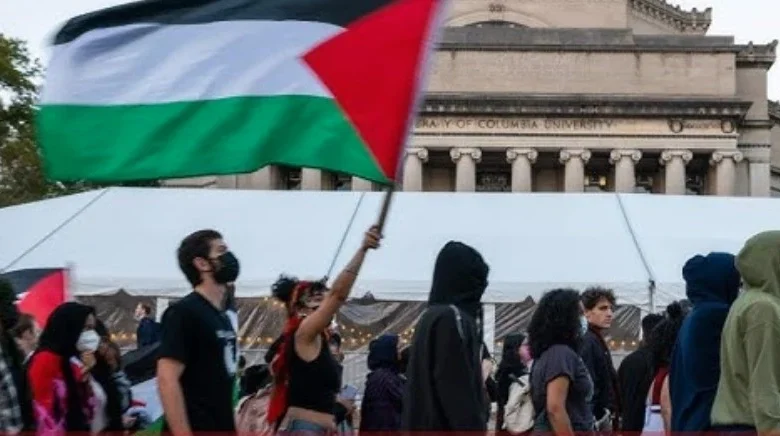
In an investigative report published by The Intercept, financial records indicate that Columbia University funneled hundreds of thousands of dollars to prominent pro-Israel organizations during the exact operational window that its administration was actively dismantling Gaza solidarity encampments and suspending pro-Palestinian student groups. This revelation has intensified an already volatile debate concerning institutional neutrality, the allocation of endowments, and the enforcement of campus speech policies at one of the nation’s most prestigious Ivy League institutions.
The newly unearthed financial disclosures show that grants—including substantial lump sums of $100,000 and $75,000 during the 2024 fiscal year—were channeled toward entities connected to the Israel on Campus Coalition (ICC) and affiliates of the American Israel Public Affairs Committee (AIPAC). While universities routinely manage complex portfolios of donor-advised funds and pass-through donations, the timing of these specific disbursements has triggered sharp criticism from free-speech advocates, student organizations, and faculty members who argue that the financial support for political advocacy groups sharply contrasts with the administration’s hardline suppression of student-led anti-war protests.
The Synchronized Crisis: Protests, Police Interventions, and Suspensions
The release of these financial documents compounds a prolonged period of intense turbulence on Columbia’s Morningside Heights campus. Throughout the 2023–2024 academic year and subsequent terms, campus demonstrations against Israel’s military campaign in Gaza became a focal point of national media attention. As solidarity encampments grew, drawing thousands of students, faculty, and external activists, the university administration—under former leadership and interim successors alike—grappled with how to maintain order.
Rather than pursuing prolonged dialogue, the administration enacted sweeping disciplinary actions. Columbia officials officially suspended the campus chapters of Students for Justice in Palestine (SJP) and Jewish Voice for Peace (JVP), citing violations of event-authorization policies and disruptions to campus operations. When students and allies refused to vacate central campus plazas, university leadership took the unprecedented step of calling the New York Police Department (NYPD) onto campus grounds on multiple occasions.
These interventions resulted in mass arrests, the deployment of riot gear, and the physical clearing of occupied university spaces, including Hamilton Hall. While university administrators defended these measures as necessary steps to restore public safety and ensure that educational functions could proceed without interference, critics argued that the administration was actively weaponizing campus safety policies to silence specific political viewpoints, specifically targeting speech critical of Israeli foreign policy.
The Legal Battle: Mahmoud Khalil’s Federal Lawsuit
The timing of The Intercept’s findings aligns with escalating legal battles involving the university, most notably a federal lawsuit filed by prominent pro-Palestinian activist Mahmoud Khalil. Khalil, alongside the Palestine Working Group and other affected scholars, filed a comprehensive lawsuit in federal court targeting Columbia University and Keren Yarhi-Milo, the Dean of the School of International and Public Affairs (SIPA).
The lawsuit alleges gross and systemic discrimination against Palestinian students and their allies, claiming that the university exhibited "deliberate indifference" to mounting harassment, doxxing, and physical threats directed at pro-Palestinian voices on campus. Khalil’s legal action carries profound personal resonance; the activist spent months in immigration custody following a controversial detention last year that drew fierce condemnation from civil liberties organizations.
According to the complaint, Columbia’s institutional environment laid the groundwork for—or at least tacitly enabled—the hostile climate that culminated in Khalil’s detention and the broader marginalization of Palestinian scholars. The lawsuit seeks not only financial damages but also structural remedies, including the immediate restoration of campus access, the formal reversal of disciplinary suspensions imposed on student organizations, and court-mandated anti-discrimination reforms.
Institutional Defense and the Mechanics of Donor-Advised Funds
In response to the mounting scrutiny surrounding the financial disclosures, representatives for Columbia University have defended the institution’s handling of the grants. University spokespersons emphasized that the transactions identified in the financial records were executed strictly through donor-advised funds (DAFs) and adhered to all applicable Internal Revenue Service (IRS) regulations governing tax-exempt academic institutions.
According to university explanations, donor-advised funds operate under specific legal frameworks where external contributors recommend the distribution of funds to external entities. Administration officials have maintained that processing such grants is a routine administrative function rather than an active ideological endorsement by the university’s central governing body. Furthermore, Columbia reiterated its foundational stance that its primary operational objective remains safeguarding the physical security, well-being, and academic freedom of every member of its diverse campus community, regardless of their political or national affiliations.
However, financial transparency experts and legal scholars point out that while processing DAFs may comply with tax law, the optics of routing significant sums to geopolitical advocacy groups—while simultaneously cracking down on student groups expressing opposing geopolitical views—fundamentally undermines the university’s claim to institutional neutrality.
Broader Implications for Higher Education and Free Expression
The convergence of financial revelations, aggressive disciplinary enforcement, and high-stakes federal litigation marks a critical juncture for Columbia University and the broader landscape of American higher education. Over the past several years, universities across the United States have struggled to navigate the delicate balance between protecting free expression, preventing harassment, and managing donor relations amidst deeply polarized international conflicts.
Critics argue that the financial ties between major academic institutions and politically aligned advocacy networks create an inherent conflict of interest, potentially skewing institutional policies under the influence of external donors. Conversely, defenders of university administration argue that institutions must maintain operational flexibility and protect themselves from liabilities associated with unauthorized campus occupations and escalating rhetoric.
As the federal lawsuit led by Mahmoud Khalil moves forward through the judicial system, it threatens to subject Columbia’s internal decision-making processes to unprecedented judicial discovery. Legal analysts suggest that the proceedings could force university officials to disclose internal communications, donor agreements, and administrative directives that shed light on how institutional policies were formulated during the height of the Gaza war protests.
Ultimately, the controversy at Columbia University transcends local campus politics, serving as a bellwether for the ongoing crisis of free speech, institutional governance, and ideological conflict within contemporary academia. Whether through the courts, internal reform, or continued student activism, the fallout from these financial disclosures and administrative actions will likely resonate across American universities for years to come, forcing institutions to reckon with the true cost of balancing financial endowments against the foundational principles of academic freedom and open debate.