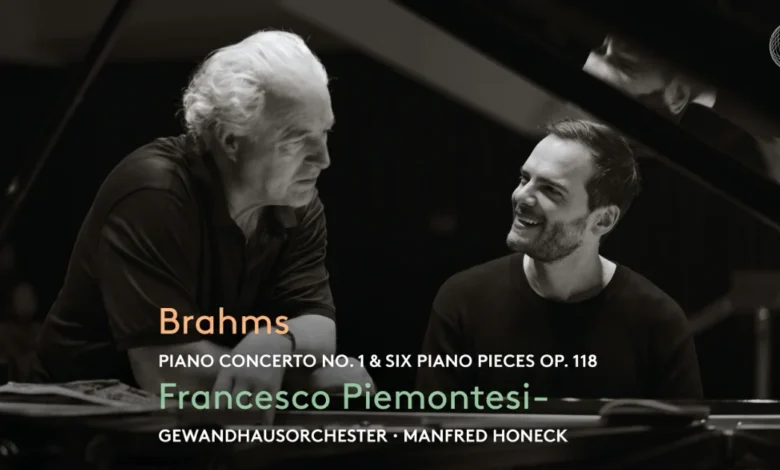
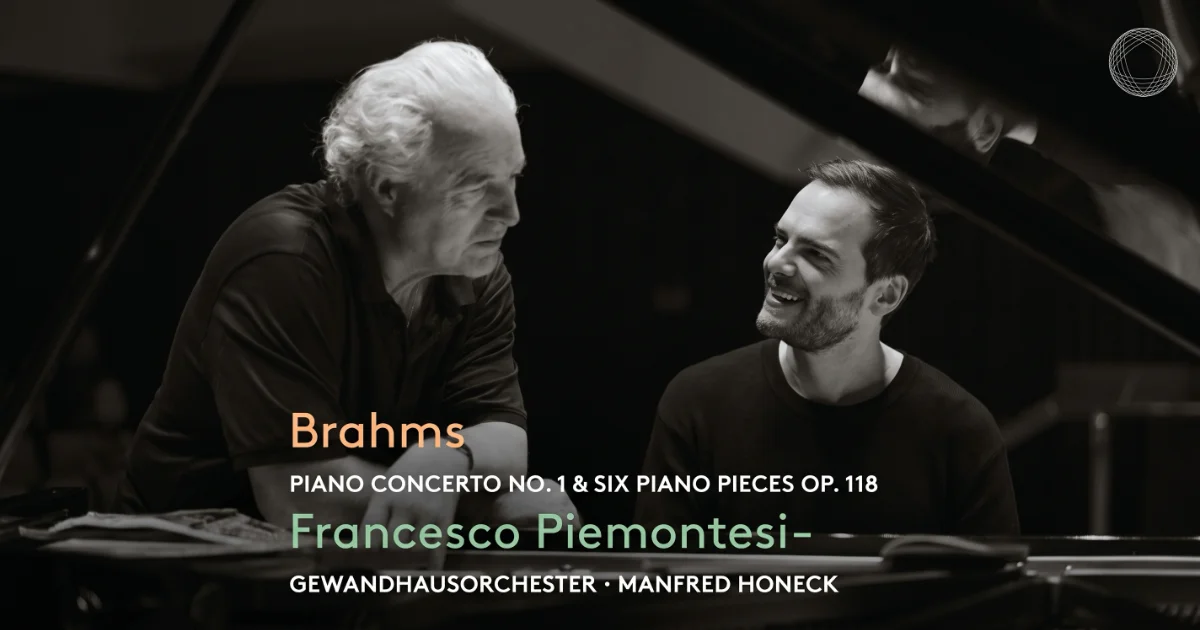
The release of a major classical music recording often serves as a benchmark for contemporary interpretation, and the latest collaboration between Swiss pianist Francesco Piemontesi, conductor Manfred Honeck, and the prestigious Gewandhausorchester Leipzig is no exception. Issued by Pentatone under catalogue number PTC 5187417, this new recording pairs Johannes Brahms’s monumental Piano Concerto No. 1 in D minor, Op. 15, with the intimate Six Piano Pieces, Op. 118. This ambitious project successfully follows up on the critically acclaimed release of Brahms’s Piano Concerto No. 2, effectively completing the duo’s traversal of the composer’s two foundational pillars of the romantic piano concerto repertoire. For classical music enthusiasts, this album arrives with high expectations, bridging the gap between orchestral grandeur and deeply personal, introspective solo piano writing.
Main Facts and Album Overview
At the core of this release is a deliberate juxtaposition of public scale and private reflection. The album couples the dense, symphonic architecture of the First Piano Concerto with the delicate, autumnal miniatures of Op. 118. Recorded under the auspices of Pentatone, the album features the world-renowned Gewandhausorchester Leipzig, an ensemble with deep historical ties to the Austro-German classical tradition.
The physical and digital release includes comprehensive liner notes designed to enrich the listening experience. These features include forewords by both soloist Francesco Piemontesi and conductor Manfred Honeck, alongside a detailed musicological analysis penned by critic Jan Brachmann. The album is broadly accessible to modern audiences, distributed physically through major classical retailers like Presto Music and digitally integrated into streaming ecosystems such as Apple Music Classical.
Historical Context and Chronological Background
To understand the weight of Brahms’s Piano Concerto No. 1, one must look back at the tumultuous period of its creation. Approximately two decades separate Brahms’s first and second piano concertos. While the Second Piano Concerto, composed much later in life, radiates a sense of autumnal optimism and pastoral serenity, the First Concerto reflects a time of profound personal crisis, grief, and emotional upheaval for the young composer.
Brahms began sketching the work in 1854 during a period defined by the mental collapse and subsequent institutionalization of his mentor, Robert Schumann, followed closely by Schumann’s death in 1856. The piece also captures the complex emotional landscape of Brahms’s relationship with Clara Schumann. Originally conceived as a symphony, the work underwent several structural metamorphoses before Brahms repurposed the material into a monumental concerto for piano and orchestra.
Because of its symphonic genesis, the work rejects the traditional concerto format of soloist-versus-orchestra virtuosity. Instead, it treats the piano as an integral, integrated strand within the broader orchestral fabric. The premiere in Hanover in January 1859, with Brahms himself at the keyboard, was famously met with mixed reactions from audiences accustomed to the lighter, more brilliant showpieces of the era. Over time, however, the concerto has come to be recognized as a revolutionary masterpiece of the romantic era, requiring immense technical endurance and profound emotional maturity from any artist brave enough to tackle it.
Musical Analysis: The First Concerto
The performance captured on this Pentatone release reveals a fascinating dynamic between the conductor and the soloist. Listening to the orchestral introduction of the opening movement, listeners familiar with historical interpretations—such as George Szell’s legendary recording with the London Symphony Orchestra featuring Clifford Curzon, or Wolfgang Sawallisch with the London Philharmonic and Stephen Kovacevich—might initially find Honeck’s approach unexpected.
In traditional landmark recordings, the opening movement’s introduction is characterized by a heady, powerful menace, complete with weighty accents, thunderous timpani swells, and piercing horn blasts that underscore the work’s inherent angst. By contrast, Honeck and the Gewandhausorchester Leipzig opt for a more smoothly blended, homogenous sound profile. While polished, this approach occasionally mutes the raw urgency and dramatic confrontation that define the movement’s psychological underpinnings.
However, the musical narrative shifts dramatically the moment the soloist enters. Francesco Piemontesi takes up the heavy lifting, establishing an immediate, staunch presence through a resonant tone and meticulously structured phrasing. Piemontesi’s assertive entrance appears to revitalize the orchestra, prompting the ensemble to adopt a more deliberate articulation and a harder-edged character that finally aligns with the music’s high emotional stakes. By the conclusion of the sprawling first movement, the ensemble achieves a powerful synergy, a cohesive momentum that may well be a testament to the organic energy of a live performance setting.
Moving into the Adagio (Track 2), the Gewandhaus strings and wind players demonstrate an exquisite awareness of horizontal counterpoint. They deftly illustrate how individual musical lines move and intertwine to form Brahms’s signature polyphonic texture. Piemontesi matches this sophistication with remarkable depth, utilizing delicate gradations of soft dynamics while retaining the capacity to lean into thicker, more resonant sonorities. This balance preserves the movement’s inherent dignity. Particularly notable is a passage commencing around the six-minute and eighteen-second mark, which features intimate, conversational exchanges between instrumental sections, though critics note that the clarinet lines could occasionally project with greater definition.

The final movement (Rondo) regains a sense of relentless momentum, spurred by Piemontesi’s unapologetic, forceful entrance. The orchestra responds in kind, building energy organically as the movement progresses. The suspense of the Rondo relies heavily on the distinct personality of its recurring episodes. Particularly striking is the orchestral fugato starting around the five-minute and sixth-second mark, executed with a high degree of clarity and intricacy by the string section. The subsequent cadenza provides a seamless harmonic bridge, shifting effortlessly from minor to major modes and setting the stage for a meteoric, thrilling conclusion. By the final measures, pianist and orchestra generate an exhilarating force that leaves a lasting impression.
The Intimate Counterpart: Six Piano Pieces, Op. 118
In his accompanying foreword, Francesco Piemontesi explains his programmatic rationale for pairing the concerto with Brahms’s late-career masterpiece, the Six Piano Pieces, Op. 118. Composed in 1893 during the twilight of Brahms’s life, these miniatures offer an intentional psychological counterweight to the open, public anguish of the D minor concerto. Yet, as Piemontesi’s performance illustrates, Op. 118 is itself a study in duality—constantly balancing extroversion against introversion, and unbridled rhapsody against quiet reflection.
In the Intermezzo in A minor (Track 4), Piemontesi delivers sweeping musical phrases that successfully negotiate the line between expressive power and refined lyricism, even if it lacks the specific persuasive rhetorical weight found in classic accounts by Murray Perahia.
The Intermezzo in A major (Track 5) highlights the pianist’s structural intelligence, displaying a keen awareness of long-range architectural lines and carefully timed emotional climaxes. Nevertheless, minor interpretive critiques arise regarding the treatment of micro-details. While the overarching continuity is admirably maintained, the performance might have benefited from more delicate responsiveness to sudden harmonic shifts and more pronounced agogic pauses to help contour individual phrases, preventing certain passages from sounding overly uniform.
The sole interpretive misstep on the album appears in the Ballade in G minor (Track 6). Piemontesi’s relatively legato approach strips the piece of its necessary rhythmic bite, rendering the texture somewhat heavy-handed. Where pianists like Perahia, or even slower interpreters such as Emanuel Ax and Igor Levit, maintain a drier, more angular touch to preserve the music’s inherent verve and forward momentum, this specific reading leans toward a softer, more rounded profile.
Conversely, the Romance in F major (Track 8) successfully captures a gentle yet structurally robust orchestral profile. Through carefully voiced chords and the seamless integration of independent voice-leading, Piemontesi brings out the best in the piece. The central section is particularly noteworthy, featuring an active, fluttering dialogue that provides an engaging contrast to the placid warmth of the outer framework.

Implications and Broader Cultural Impact
The release of this recording holds significant weight within the contemporary classical music landscape. By pairing one of the most demanding concertos in the canon with late-period solo piano works, Piemontesi, Honeck, and the Gewandhausorchester provide listeners with a comprehensive snapshot of Brahms’s emotional evolution across his creative life.
Pentatone’s commitment to high-resolution audio production ensures that the rich, historic acoustics of the Gewandhaus are faithfully captured, offering an immersive listening experience that appeals to both traditional audiophiles and modern digital consumers. While certain interpretive choices—such as Honeck’s blended orchestral intro or Piemontesi’s smoother approach to the G minor Ballade—may spark debate among purists accustomed to the starker, more aggressive performances of the mid-20th century, the overall project succeeds as a cohesive, deeply thoughtful artistic statement.
Ultimately, this album stands as a valuable addition to the modern Brahms discography. It invites listeners to re-evaluate familiar scores through the lens of contemporary execution, proving that even the most thoroughly recorded masterpieces continue to harbor fresh interpretive possibilities when placed in the hands of musicians of this caliber.