Review: Alex Weitz Delivers Cinematic Depth and Lyrical Mastery on His Sophomore Quartet Album Luma

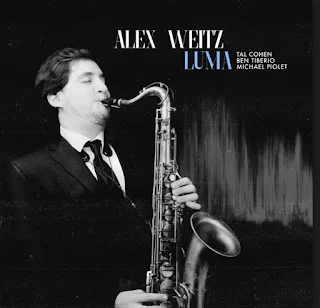
The contemporary jazz landscape continues to evolve through the contributions of emerging artists who bridge the gap between traditional idioms and modern intellectual exploration. Among these torchbearers is tenor saxophonist and composer Alex Weitz, whose second studio album, Luma, stands as a testament to the power of structured improvisation and deeply personal artistic expression. Released to critical acclaim following his lauded debut, Chroma, Luma captures a young virtuoso operating at the intersection of historical reverence and forward-thinking creativity. Supported by a stellar rhythm section comprising pianist Tal Cohen, bassist Ben Tiberio, and drummer Michael Piolet, Weitz crafts a nine-track journey that is at once intimately reflective and expansively cinematic.
The Genesis and Artistic Evolution of Luma
To understand the weight and maturity of Luma, one must examine the trajectory of Alex Weitz as an artist firmly rooted in the rich lineage of jazz history while actively charting his own course. Weitz first captured the attention of the jazz community with his debut album, Chroma, a project that established his signature clean, dry saxophone tone and his penchant for complex, narrative-driven compositions. While Chroma introduced listeners to his technical proficiency and compositional ambition, Luma represents a distinct refinement of his artistic vision.
The album’s development reflects a deliberate effort to synthesize real-world philosophies, emotional states, and intellectual concepts into cohesive musical suites. Recorded with his tightly knit quartet, Luma relies heavily on the telepathic interplay between Weitz and his collaborators. Pianist Tal Cohen, known for his harmonic ingenuity and rhythmic fluidity, brings a sophisticated palette that complements Weitz’s linear phrasing. Meanwhile, bassist Ben Tiberio and drummer Michael Piolet anchor the ensemble with a dynamic foundation that shifts effortlessly from propulsive swing to ambient, open-ended textures.
Rather than relying on predictable song structures, Weitz approaches each composition as a moving canvas. The nine tracks—comprising "Did You Know," "Outer Noise," "Song For Peace – Part 1," "Song For Peace – Part 2," "Let It Go," "Luma," "Equilibrium," "Azalea," and "Reminiscence"—flow seamlessly into one another, creating an overarching listening experience that functions almost like an epic film score. This cinematic quality is not merely a stylistic veneer; it is built into the architecture of the arrangements, where orchestral voicings and subtle swing rhythms underpin intricate horn lines and spontaneous dialogue.
Chronology of a Modern Jazz Production
The rollout and reception of Luma follow a meticulous timeline that highlights Weitz’s methodical approach to his career. Having built a reputation as an active sideman and a promising bandleader on the contemporary scene, Weitz spent months workshopping the material that would eventually become Luma. By testing these compositions in live settings before entering the studio, the quartet developed a rare unity of purpose.
Following the mixing and mastering phases, Luma was introduced to critics and jazz radio programmers, quickly generating momentum for its sophisticated blend of melancholy and optimism. The album’s central centerpiece, the two-part "Song For Peace," exemplifies the meticulous pacing of the record. Structured to allow both spacious reflection and explosive catharsis, the piece mirrors the broader thematic arc of the album: a journey from contemplation to resolution, anchored firmly in the realities of the present moment.
Musical Architecture and Performance Analysis
A defining characteristic of Weitz’s playing on Luma is his deliberate restraint. In an era where instrumental pyrotechnics can sometimes overshadow emotional resonance, Weitz exercises remarkable discipline. His use of vibrato is sparing, and his tone remains refreshingly unadorned. This stylistic choice allows the harmonic complexities of the compositions to breathe, giving listeners clear access to the underlying emotional currents of the music.
Throughout the album, Weitz utilizes short-form improvisations that feel both spontaneous and deeply calculated. Instead of lengthy, meandering solos that exhaust a theme, his improvisational style is conversational. He introduces an idea, tests its limits, deconstructs it, and hands the narrative thread over to his bandmates.
Tal Cohen’s piano contributions are particularly noteworthy in this regard. Whether providing sparse, haunting chord voicings or engaging in rapid-fire counterpoint with the saxophone, Cohen acts as an equal partner in shaping the album’s sonic topography. Rhythmically, Ben Tiberio and Michael Piolet maintain a delicate balance between driving the tempo and creating expansive spaces for exploration. Piolet’s drumming avoids heavy-handed clatter, opting instead for textural shading and subtle propulsion that keeps the music buoyant even during its most somber movements.
The tracks themselves vary widely in emotional weight. "Outer Noise" introduces an urban, restless energy, while pieces like "Azalea" and "Reminiscence" offer a lyrical, pastoral beauty. Underpinning all of this is a subtle yet pervasive swing feel. Even when the music ventures into avant-garde territory or incorporates modern classical voicings, the rhythmic heartbeat of jazz remains the gravitational center.
Critical Reception and Industry Implications
In the wake of its release, Luma has drawn praise from jazz critics and educators alike for demonstrating a level of maturity rarely found in artists of Weitz’s generation. Industry analysts note that albums of this caliber underscore the ongoing viability of the acoustic quartet format in the 21st century. By refusing to pander to commercial trends or watered-down crossover appeal, Weitz has reinforced the artistic boundaries of modern creative jazz while maintaining an accessible, welcoming aesthetic.
Peers and mentors within the jazz community have frequently pointed to Weitz’s historical awareness as his greatest asset. He understands the contributions of the tenor saxophone titans who came before him—from Coleman Hawkins and John Coltrane to modern practitioners—yet he channels that knowledge without falling into pastiche. His tone is his own; his phrasing is unmistakably contemporary.
Broader Impact on the Contemporary Jazz Ecosystem
The arrival of Luma arrives at a crucial juncture for the contemporary jazz genre, which continues to navigate the digital landscape, shifting distribution models, and changing audience demographics. Albums that demand active, engaged listening—such as those produced by Weitz and his contemporaries—play a vital role in sustaining the intellectual rigor of the art form.
Furthermore, the collaborative synergy displayed on Luma highlights the importance of the modern touring ensemble. In an industry where studio projects are frequently assembled via file-sharing and remote recording, Weitz’s commitment to a cohesive, road-tested quartet yields a palpable organic warmth. The interplay between Weitz, Cohen, Tiberio, and Piolet demonstrates the irreplaceable value of real-time musical communication.
As Weitz continues to promote Luma through live performances and regional tours, the broader implications for his career point toward sustained national and international recognition. He is increasingly viewed as a standard-bearer for a new generation of instrumentalists who view jazz not as a museum piece, but as a living, breathing language capable of addressing complex human emotions and contemporary realities.
Conclusion
Alex Weitz’s Luma is much more than a follow-up album; it is a definitive artistic statement that solidifies its creator’s place in the upper echelon of modern jazz tenor saxophonists. By blending intellectual curiosity with unbridled emotional honesty, Weitz has crafted a recording that rewards repeated, attentive listening. Supported by an elite rhythm section and driven by an unwavering commitment to his own artistic voice, Weitz has delivered a masterclass in modern composition and improvisation. As Luma continues to find its audience across global jazz platforms, it stands as a shining example of how contemporary artists can honor tradition while boldly pushing the music into uncharted territory.